
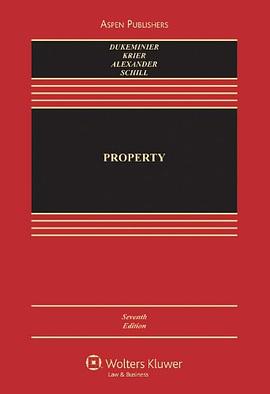

具体描述
Widely regarded as one of the best casebooks available for any law school course, Property, now in its Seventh Edition, combines a traditional doctrinal approach with wit, erudition, and an engaging human-interest perspective that make teaching and learning Property Law a great pleasure.
Admired for generations, his landmark casebook features:
a dynamic yet traditional pedagogy that includes cases, text, questions, problems, visual illustrations, and vibrant examples
a flexible, modular organization that allows the book to easily adapt to a range of syllabi and course credit hours
comprehensive coverage that encompasses the full range of property topics , with in-depth treatments of estates and future interests, servitudes, and land-use controls
cartoons and photographs that present humorous asides and visual commentary at appropriate intervals within the text
an accessible and unobtrusive “economic lens” for critically thinking about property issues
www.dukeminier-property.com, a substantial companion website for adopters and their students that features videos, photos, links, and other online resources providing additional background, illustrations, and explanations of the materials covered in the casebook; icons placed throughout the casebook indicate that the website contains information of interest to the particular material
an excellent and detailed Teacher’s Manual that briefs every principal case and reading in the book, answers every question and problem in the book, and provides the authors’ analyses and observations regarding the material at hand
Updated throughout, the Seventh Edition provides:
major changes to the proposed new Restatement (Third) of Property —highlighted, to simplify the system of estates and future interests
additional visual aids and problems in the estates and future interests chapters
a fresh look at marital property law, including the recent gay marriage case from the Iowa Supreme Court
simplified coverage of servitudes, particularly covenants and equitable servitudes
new signposts in every chapter that link topics in the casebook to sources on the website
recent developments in the law governing the landlord-tenant relationship in government-assisted housing
a timely view of the mortgage crisis and changes in real estate financing
streamlined coverage of zoning flexibility
a new case and material on Religious Land Use and the Institutionalized Persons Act
updates in land use regulation, environmental law, climate change, and “smart growth”
icons added throughout the text to indicate which materials have online counterparts on the companion website,
www.dukeminier-property.com
An iconic book with a contemporary feel, Property, Seventh Edition, resonates with the late Jesse Dukeminier’s original wit and wisdom. New co-authors Gregory Alexander and Michael Schill keep it fresh, sharp, and up to date with this thoughtful and thorough revision.
作者简介
目录信息
读后感
用户评价
我发现这本书最令人耳目一新的地方,在于其对历史语境的尊重,以及对未来趋势的审慎预测。它不像有些教材那样,将现行法律视为理所当然的终点,而是将其置于一个动态演变的历史长河中进行审视。通过对中世纪封建继承法到现代公司法人格演变的梳理,读者可以清晰地看到“人身”与“物”之间的法律关系是如何一步步被抽象和工具化的。这种历史的纵深感,极大地增强了对现有法律框架的批判性理解。此外,作者在讨论到虚拟资产和数据所有权的前瞻性章节中,表现出了令人称赞的洞察力,他没有急于给出绝对的答案,而是提出了多个可供辩论的法律模型,引导读者参与到这场正在发生的法律革命中。这本书的语言风格是沉稳而富有韵律的,阅读起来有一种庄严感,仿佛在参与一场严肃的智力对话,而不是被动地接受信息灌输。它成功地在保持学术严谨性的同时,激发了读者对未来法律形态的想象力。
评分坦白讲,这本书的厚度一度让我望而生畏,但一旦真正沉浸进去,时间感似乎就扭曲了。它最大的价值,我觉得在于其跨学科的整合能力。很多产权教科书只停留在法律文本的层面,但这本书却不断地将经济学原理、政治哲学思潮以及人类学的视角编织进来。比如,它探讨土地私有化对集体身份认同的影响时,引用的社会学模型非常具有启发性。我尤其对其中关于“公共资源悲剧”的反思部分印象深刻,作者并没有简单地套用奥尔森的理论,而是结合了水权和大气污染的实际管理困境,提出了比传统解决方案更为精细化的治理路径。这使得这本书不仅仅是法律人的工具书,也为政策制定者和环境经济学家提供了宝贵的参照系。阅读体验上,排版清晰,图表设计直观有力,这在如此密集的专业书籍中实属难得。它要求读者投入精力,但回报却是丰厚的——你会获得一个更广阔、更具包容性的世界观,理解产权不仅仅是界限,更是一种社会契约的持续谈判。
评分说实话,我最初是带着一种“完成任务”的心态翻开这本书的,毕竟这是某门高级选修课的指定教材。但很快,我的态度就转变成了强烈的求知欲。这本书的叙述方式非常“人性化”,它擅长设置场景,将抽象的法律原则置于具体的、有时甚至是戏剧性的冲突场景中进行展示。例如,书中对邻里纠纷中“采光权”的分析,不是枯燥地引用法条,而是通过一个生动的城市重建案例,清晰地阐释了“相邻关系”中利益衡量的艺术。这种叙事技巧使得即便是第一次接触产权法的读者,也能迅速建立起感性认知。我最欣赏的是它对“无主物”的讨论,这部分内容极具哲学思辨的色彩,探讨了人类社会如何从混沌中建立起第一个私有标记的原始冲动。这本书的整体风格是导向性的,它不直接给你鱼,而是教你如何用不同的“网”去捕捞不同种类的“鱼”。它无疑是一部结构严谨、内容丰富、并且极具引导性的专业著作,是我书架上绝对不会轻易移开的一本参考书。
评分这本书简直是本时代的里程碑,它以一种近乎于禅定的清晰度,剖析了产权的核心脉络。我记得上次读到如此结构精妙的著作,还是在研读康德的《纯粹理性批判》时,当然,这里的“精妙”指的是逻辑的严密而非晦涩难懂。作者仿佛是一位技艺高超的钟表匠,将那些看似散乱、充满历史泥沙的法律概念,一颗颗打磨成运作精准的齿轮,组装成一个既能反映现实复杂性,又能坚守基本原则的知识体系。特别是对于“共有”与“排他性”这组永恒的张力,书中不仅给出了教科书式的定义,更深入挖掘了它们在不同经济体和社会结构下的动态平衡。举例来说,它对数字时代知识产权的探讨,远超出了许多同类书籍的浅尝辄止,而是真正触及了“界限”的消融与重建这一根本问题。阅读过程中,我时常感到需要停下来,不是因为难以理解,而是因为信息的密度太大,需要时间来消化和内化。这本书不仅仅是供学生应试的工具,更像是一份沉甸甸的智力投资,它改变了我对“所有权”这个看似日常却又无比深奥的概念的底层认知框架。对于任何想要在现代社会中清晰界定自己权利边界的人来说,它都是一份不可或缺的地图集。
评分我得说,这本书的阅读体验就像是爬一座精心规划过的山峰。起初的坡度或许有些陡峭,那些关于罗马法渊源和早期英国公地制度的论述,初看之下显得有些干燥和遥远,但正是这些坚实的基础,才使得后续的论证能够岿然不动。作者的叙事节奏把握得极好,他巧妙地在案例研究和理论推导之间切换,使得晦涩的判例法变得鲜活起来。我特别欣赏它对于“合理使用”(Fair Use)这一模糊地带的深度解析,作者没有简单地给出一个非黑即白的结论,而是通过对几组里程碑式案件的对比分析,展示了这种灵活性本身就是适应社会进步的必要机制。我个人在处理一些复杂的知识产权许可协议时,常常会回溯到书中的某个章节,那里对“用益权”(Usufruct)的现代引申讨论,提供了绝佳的思维拐杖。这本书的语言风格是极其克制和精准的,没有多余的情绪渲染,所有的力量都凝聚在论证的重量上,读起来让人感到一种智力上的满足感——就像是解开一个复杂的数学难题后,最终得到的那个简洁而优美的答案。它确实是该领域的权威之作,不仅仅是罗列知识,更是在构建一个思考的系统。
评分this case book already encompassed a significant historical dimension of property law, don't know what it's like for other case books
评分this case book already encompassed a significant historical dimension of property law, don't know what it's like for other case books
评分this case book already encompassed a significant historical dimension of property law, don't know what it's like for other case books
评分this case book already encompassed a significant historical dimension of property law, don't know what it's like for other case books
评分this case book already encompassed a significant historical dimension of property law, don't know what it's like for other case books
相关图书








本站所有内容均为互联网搜索引擎提供的公开搜索信息,本站不存储任何数据与内容,任何内容与数据均与本站无关,如有需要请联系相关搜索引擎包括但不限于百度,google,bing,sogou 等
© 2026 onlinetoolsland.com All Rights Reserved. 本本书屋 版权所有