

具体描述
Book Description
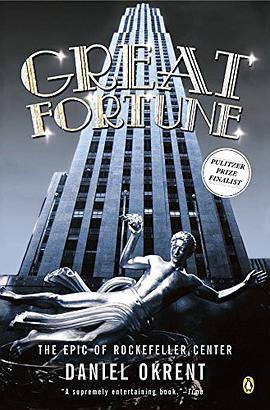
In this hugely appealing book, a finalist for the Pulitzer Prize, acclaimed author and journalist Daniel Okrent weaves together themes of money, politics, art, architecture, business, and society to tell the story of the majestic suite of buildings that came to dominate the heart of midtown Manhattan and with it, for a time, the heart of the world. At the center of Okrent’s riveting story are four remarkable individuals—tycoon John D. Rockefeller, his ambitious son Nelson Rockefeller, real estate genius John R. Todd, and visionary skyscraper architect Raymond Hood. In the tradition of David McCullough’s The Great Bridge, Ron Chernow’s Titan, and Robert Caro’s The Power Broker, Great Fortune is a stunning tribute to an American landmark that captures the heart and spirit of New York at its apotheosis.
Amazon.com
Those of us who love New York tend to love the city passionately, for its past as well as its present. Daniel Okrent's Great Fortune: The Epic of Rockefeller Center is a book for New Yorkers from Ashtabula to Zimbabwe: a study of ambition, audacity, and deal-making on a grand scale that led to the construction of some of the most famous skyscrapers in the world. The cast of characters includes not only the many and diverse members of the Rockefeller family, but other powerful New York institutions such as Columbia University, the Metropolitan Opera, the Museum of Modern Art, and The New York Times--not to mention the radical Mexican artist Diego Rivera, the New Yorker cartoonist William Steig, the Marx Brothers, and a bevy of "Rockettes." Okrent's narrative neatly balances the epic and the intimate; he offers both authoritative pronouncements on modern architecture and reams of good gossip. Like New York itself, Great Fortune contains multitudes: densely packed, it remains surprisingly--and welcomingly--commodious.
--Tim Page
From Publishers Weekly
Just as Okrent's Nine Innings beautifully telescoped all of baseball into a single game in 1982 between the Milwaukee Brewers and the Baltimore Orioles, so the former Life editor and Time Inc. executive finds in the creation of Rockefeller Center a good deal of New York and many of the contradictions in American life as the country worked to emerge from the Depression. Built for profit on a run-down stretch of midtown between Fifth and Sixth Avenues called the Upper Estate-myriad lots that underwriter John D. Rockefeller Jr. slowly and inexorably leveraged into an available whole-the seven-year project was second only to the WPA in temporary job creation, though as Okrent shows, the project was far from worker-centered. While one of its originally intended (and abandoned) roles was to provide a new home for the Metropolitan Opera, the sprawling complex came to house a hydra-headed media center anchored by NBC, RKO and RCA, yet saw its gorgeous Center Theatre torn down in 1954 (though Radio City Music Hall and the Rainbow Room remain). But the real stories here come from individual contributions to the huge project, from Junior (and his six children) to hired-artist Georgia O'Keeffe and her apparently abusive photographer-gallerist husband, Alfred Stieglitz; the Roxyettes and the Glee Club singers; engineer O.B. Hanson (inventor of "studio audiences"); and Ray Hood (who ascends from radiator-cover designer to architect of the "Radiator Building"). That the Rockefeller Center Christmas tree tradition began during construction in 1931 as a "modest balsam" decorated by site workers with cranberries, "garlands of paper and... a few tin cans" is just one of thousands of details (including the famous commissioning and destruction of Diego Rivera's murals) that make this magisterial account, itself seven years in the making, fascinating and immediate.
From Booklist
Rockefeller Center, a complex of buildings in Manhattan built over an eight- to ten-year period the during Great Depression, was the result of a philanthropic gesture by John D. Rockefeller Jr. that took on a life of its own. It took a coterie of legal firms, bankers, architects, and real estate moguls, not to mention thousands of laborers, to create the most ambitious construction project since the pyramids. The scale was unprecedented for its time: 154,000 tons of structural steel; 1,000,000 square feet of window glass; 200 miles of brass pipe; and so on, with 42 elevators in five separate banks necessary to carry its occupants on their appointed rounds. With more office space than the much taller Empire State Building, this architectural marvel was produced to make optimal use of light and air flow before the advent of fluorescent lighting and air-conditioning. The individual characters and their stories form the backbone of this feat, including the famous episode of the controversial Diego Rivera wall mural that was never seen by the public.
David Siegfried
About Author
Daniel Okrent is a prizewinning journalist, author, and television commentator. For many years he was a senior editorial executive at Time Inc. In 2003 he was appointed the first Public Editor of the New York Times.
Book Dimension:
length: (cm)23.5 width:(cm) 16
作者简介
目录信息
读后感
用户评价
关于《机械之心与锈蚀之歌》,我的第一反应是“太有创意了”。这根本不是一本小说,它更像是一本精心制作的、充满蒸汽朋克美学的艺术品。故事设定在一个被巨大齿轮和永不停歇的工厂烟囱笼罩的反乌托邦都市,但它的核心却异常柔软和人性化。那个渴望拥有真正情感的仿生人“零号”,他的挣扎和对“活着”的定义,比许多真正拥有血肉的人类角色更令人动容。我特别着迷于作者如何将复杂的机械结构与抽象的情感概念进行类比,比如“情感过载导致系统崩溃”、“记忆碎片如同磨损的轴承”。文字风格充满了机械的精准感,但又不失诗意的韵律,读起来有一种奇特的快感,仿佛能听到金属摩擦发出的美妙声响。这部作品成功地探讨了“什么是灵魂”这一宏大命题,而且是以一种非常新鲜、充满视觉冲击力的方式呈现的。读完后,我盯着家里的电风扇看了很久,开始思考它是否也有自己的“心跳”。
评分这本书,暂且称之为《边境之外的牧羊人》,风格异常的简洁,简直可以用“朴素的哲思”来概括。它讲述的或许只是一个关于迁徙和坚守的故事,但作者的笔触却拥有某种近乎宗教般的宁静力量。叙事非常缓慢,几乎是按照自然界的节律在推进——风的走向、羊群的移动、季节的更迭,都被赋予了某种神圣的意义。书中几乎没有对话,一切情绪都通过对环境的细致入微的观察来传达,这要求读者必须全神贯注,摒弃掉现代生活中那种对即时满足的渴望。那片广袤、荒凉却又充满生机的边境,与其说是地理位置,不如说是一种精神上的隐喻。它让人反思现代社会对“效率”和“意义”的肤浅追逐。每次翻开这本书,都像是在进行一次深入内心的冥想,将那些被生活琐事打乱的思绪重新排列整理。对于那些在喧嚣世界中寻找立足之地的灵魂来说,这本书提供了一种罕见的、令人心安的力量,它告诉你,有些事情,无需急于求成,只需静待花开。
评分这本《迷雾之城》简直是一部令人心神不宁的杰作。作者对那种渗透在空气中的、挥之不去的压抑感的描摹,精准得如同外科手术刀。故事的主角,那位总是游走在光明与阴影边缘的侦探,他的内心世界比书中描绘的那些蜿蜒曲折、终不见天日的巷道还要复杂幽深。我特别欣赏的是,叙事节奏的处理——它不是那种一蹴而就的爆发,而是像潮水一样,缓慢而坚定地、层层叠叠地将你推向一个无法逃脱的结局。当你以为自己已经掌握了线索,看穿了布局时,作者总能用一个轻描淡写却掷地有声的细节,将你抛入更深的迷雾。这本书的配乐(如果它有配乐的话)一定是低沉的大提琴和不和谐的爵士乐混合体,充满了宿命论的悲凉。我花了整整一个周末才读完,读完后,我不得不拉开窗帘,让阳光照进来,试图驱散那种停留在皮肤上的寒意。这本书不仅仅是在讲述一个悬案,它更是在探讨人性的脆弱与城市对灵魂的吞噬,值得每一个热爱深度心理描写的读者细细品味,那种回味无穷的苦涩感,久久不散。
评分读完《星河渡者》,我感觉自己像是刚刚结束了一场漫长而艰辛的星际航行,疲惫,但内心充满了对未知宇宙的敬畏与好奇。这部作品在世界构建上的宏大与细腻达到了一个惊人的平衡点。它没有陷入传统科幻小说里那些枯燥的技术参数堆砌,而是将重点放在了“人”与“时间”的哲学探讨上。那艘被遗忘在时空夹缝中的飞船,以及船上那些固守着旧日誓言的船员,他们的存在本身就是对“永恒”这个概念最有力的反驳。我尤其喜欢作者对于不同文明交流方式的设定,那种基于情感共振而非语言逻辑的沟通,读起来有一种返璞归真的震撼力。文字的运用极其典雅,尤其是描述那些跨越了光年距离的思念时,笔触轻柔却力量十足,让人忍不住会想象,如果真的有那么一天,我们能够触及宇宙的尽头,我们又将用什么来定义“家园”?这本书是送给所有仰望星空的人,以及那些在喧嚣生活中渴望片刻宁静的灵魂的一份厚礼。
评分《橡木下的低语》绝对是近年来我读到过最令人心碎的家族史诗。它巧妙地避开了传统年代文的刻板印象,而是将视角聚焦在一个古老庄园里,那些被时间尘封的秘密如何像藤蔓一样,紧紧缠绕着几代人的命运。叙事手法是碎片化的,充满了回忆的闪回和不可靠的叙述者,这反而增强了故事的真实感——毕竟,我们对过去的回忆本身就是充满缺憾和偏见的集合体。书中那个患有失忆症的老妇人,她的每一次遗忘,都像是在揭开一层血淋淋的真相。我几乎能闻到那些潮湿泥土和腐朽木材的气味,感受到壁炉里微弱的火光。作者对“继承”的理解也极具洞察力:它不仅仅是财产的转移,更是痛苦、愧疚与未竟之事的代代相传。如果你期待一个快速的、有明确善恶区分的故事,这本书可能不适合你;但如果你喜欢在层层叠叠的暗示中挖掘人性深处的灰色地带,那么,请准备好迎接一场情绪的洗礼。
评分非常精彩 作者的幽默感又对我胃口 不过作为地铁读物足足看了半个月哈哈! 三教九流各显身手 洛克菲勒家族的性格也都很有趣 岁月的推进 时代的变迁 延续至今的活力 无不让楼群与故事同等迷人 洛克菲勒中心实则已成为通勤日常近水楼台 一定要抽时间去体验观景台冰场餐厅与节日演出的魅力!
评分非常精彩 作者的幽默感又对我胃口 不过作为地铁读物足足看了半个月哈哈! 三教九流各显身手 洛克菲勒家族的性格也都很有趣 岁月的推进 时代的变迁 延续至今的活力 无不让楼群与故事同等迷人 洛克菲勒中心实则已成为通勤日常近水楼台 一定要抽时间去体验观景台冰场餐厅与节日演出的魅力!
评分非常精彩 作者的幽默感又对我胃口 不过作为地铁读物足足看了半个月哈哈! 三教九流各显身手 洛克菲勒家族的性格也都很有趣 岁月的推进 时代的变迁 延续至今的活力 无不让楼群与故事同等迷人 洛克菲勒中心实则已成为通勤日常近水楼台 一定要抽时间去体验观景台冰场餐厅与节日演出的魅力!
评分非常精彩 作者的幽默感又对我胃口 不过作为地铁读物足足看了半个月哈哈! 三教九流各显身手 洛克菲勒家族的性格也都很有趣 岁月的推进 时代的变迁 延续至今的活力 无不让楼群与故事同等迷人 洛克菲勒中心实则已成为通勤日常近水楼台 一定要抽时间去体验观景台冰场餐厅与节日演出的魅力!
评分非常精彩 作者的幽默感又对我胃口 不过作为地铁读物足足看了半个月哈哈! 三教九流各显身手 洛克菲勒家族的性格也都很有趣 岁月的推进 时代的变迁 延续至今的活力 无不让楼群与故事同等迷人 洛克菲勒中心实则已成为通勤日常近水楼台 一定要抽时间去体验观景台冰场餐厅与节日演出的魅力!
相关图书















本站所有内容均为互联网搜索引擎提供的公开搜索信息,本站不存储任何数据与内容,任何内容与数据均与本站无关,如有需要请联系相关搜索引擎包括但不限于百度,google,bing,sogou 等
© 2026 onlinetoolsland.com All Rights Reserved. 本本书屋 版权所有