
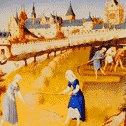

具体描述
As the last millennium dawned, Europe didn't amount to much.
Illiteracy, starvation, and disease were the norm.
In fact, Europe in the year 1000 was one of the world's more stagnant regions—an economically undeveloped, intellectually derivative, and geopolitically passive backwater.
Three short centuries later, all this had changed dramatically. A newly invigorated cluster of European societies revived city life, spawned new spiritual and intellectual movements and educational institutions, and began, for reasons both sacred and profane, to expand at the expense of neighbors who traditionally had expanded at Europe's expense.
The Revival of Europe
In this course you examine how and why Europeans achieved this stunning turnaround. By its conclusion, you will be able to describe and analyze the social, intellectual, religious, and political transformations that underlay this midsummer epoch of the medieval world.
But why were "the Middle Ages"—the period from 1000 to 1300—so designated?
Petrarch, writing in the 1300s, defined the period of "literary and artistic rot" in Europe after the sack of Rome in A.D. 410 as an Age of Darkness. The idea of the Middle Ages originates with Petrarch's concept, even though he did not use the term himself. The Latin term "medium aevum" (the Middle Age) first appeared in the 15th century.
Themes and Topics You'll Cover
The first eight lectures treat medieval society: the warrior aristocracy of knights, castellans, counts, and dukes; the free and unfree peasants whose work in the fields made the existence of medieval society possible; and the townspeople, the artisans and merchants who represented the newest arrivals on the medieval scene.
Lectures 9–16 examine the intellectual and religious history of high medieval Europe. You study monks and the monastic life, charismatic preachers such as Francis of Assisi, and theologians such as Thomas Aquinas. You examine the lives of those who found themselves outside the religious mainstream, especially the heretics and Jews of high medieval Europe.
The final eight lectures discuss the major political developments and events between 1000 and 1300, including the First Crusade, the Norman Conquest of England, and the granting of Magna Carta.
The key events, entities, and personalities you will learn about include:
The demographic, climatic, and technological changes that set the stage for Europe's resurgence
The three groups—"those who work, those who fight, and those who pray"—who formed the backbone of medieval society
An in-depth look at the renewed world of cities, artisans, merchants, and commercial exchange that shaped the high-medieval scene in crucial ways
The ongoing struggles between popes and emperors
The significance of figures as diverse as William the Conqueror, Pope Gregory VII, Abelard, Emperor Frederick II, King Philip II Augustus of France, Saint Benedict, Bernard of Clairvaux and Hildegard of Bingen
The institutions of knighthood, feudalism, the church and monasticism, the Scholastic university, and the urban guild
The situations of marginalized groups such as peasants, urban workingfolk, women, Jews, and heretics.
Attention to Detail Makes the Difference
Professor Philip Daileader's course is filled with memorable details as he unfolds this story. For example:
Europe's population doubled between 1000 and 1300. Life expectancies were probably not much higher than age 25 around 1000, but closer to 35 by 1300. In addition to the unexplained disappearance of bubonic plague and dry, warm climatic conditions known as the "little optimum," the most important factors in this growth spurt were simple farming implements—the newly introduced heavy plow and the horse collar. This allowed a growing population to have enough to eat for the first time ever.
The aristocracy's violence, especially its private wars and robbery and treatment of peasantry, was one of the great social problems of the High Middle Ages. To tame and civilize the warrior aristocracy, medieval clergy devised various methods such as the Peace and Truce of God movements, that granted immunity from nobles' violence to certain defenseless groups. Such movements were generally ineffective because clerics had to rely on religious sanctions and, ultimately, the nobles' own consciences—pledges for good behavior were generally forgotten almost immediately.
Around the year 1000, to become a knight one merely had to secure the necessary equipment. The original tournaments for knights were nothing but huge and deadly free-for-alls held in open areas with no regard for any nearby personal property. Chivalry was invented to diminish this violence. By 1300, the European nobility was a largely hereditary class with specific legal privileges. Nobles proudly proclaimed their bloodlines through coats of arms and family names (which had not existed in 1000). Knighthood was restricted to those who had undergone a specific dubbing ceremony.
The first books for manners were called "courtesy books" and written by clergy trying to curb the nobility's revolting table manners. Unfortunately, hardly anyone the books were meant for could read, so they were a complete failure.
Professor Daileader comments on the question: "Why study medieval history?"
"This question might be, and has been, answered in many ways. Let me suggest just one:
"To understand what is truly distinctive about the world in which we live, you need to know what came before.
"The modern world is the product of the medieval world. ... It is impossible to understand the thoughts and actions of Luther, Galileo, or Voltaire, for example, without understanding that in the Middle Ages all were very conscious of medieval history, and the medieval period informed what they wrote and did.
"Likewise, in order to understand such important modern events as the French Revolution or the 19th-century unifications of Germany and Italy, one must understand the Middle Ages as well, because these events were informed by the medieval past and were attempts to deal with its legacy.
"Most importantly, I hope that by the end of this course, you will share my own desire to learn and understand more about the Middle Ages, and that you will use this course as a springboard from which to launch your own deeper investigations into medieval history."
Harold McFarland, editor of Readers Preference Reviews, writes: "In a series of 24 well-crafted lectures, Philip Daileader, a professor at the College of William and Mary, leads the listener on a fascinating trip through the facts and fables of the history of the High Middle Ages. An excellent lecturer whose knowledge and enthusiasm for the subject shows through at all times, it was a pleasure to listen to the lectures."
作者简介
目录信息
读后感
评分
评分
评分
评分
用户评价
这本书《High Middle Ages》简直就像一场精心策划的文化盛宴,让我应接不暇,却又回味无穷。我被书中对当时社会经济变革的细致描绘所深深吸引,从农业技术的进步到商业贸易的繁荣,再到城市生活的日新月异,作者为我呈现了一个充满生机和活力的中世纪。我仿佛能看到手工业者们在作坊里忙碌的身影,听到市场上商贩们的叫卖声,感受到城镇中涌动的人潮。书中关于封建制度瓦解和民族国家兴起的讨论,也极具前瞻性,它为理解现代欧洲的形成奠定了坚实的基础。作者的写作风格如同潺潺流水,自然而流畅,将看似复杂的历史事件娓娓道来,让我沉浸其中,无法自拔。我特别喜欢书中关于艺术和音乐的章节,那些色彩斑斓的壁画,那些悠扬的格里高利圣咏,都让我感受到了当时人们对美的追求和精神的寄托。阅读这本书,我不再是被动地接受历史信息,而是主动地参与到历史的思考之中,去理解那个时代的逻辑和情感。它拓展了我的视野,刷新了我对中世纪的认知,让我对其产生了由衷的敬意。
评分这本《High Middle Ages》简直是一扇通往过去的大门,它不仅仅是文字的堆砌,更是一场身临其境的体验。我曾以为自己对中世纪的历史已有所了解,但阅读这本书后,我才惊觉自己之前的认知有多么浅薄。作者的笔触细腻入微,仿佛一位经验丰富的导游,带领我穿梭于熙熙攘攘的市集,感受着手工艺人的辛勤劳作,倾听着吟游诗人低语的传说。我沉浸在宏伟的哥特式大教堂建筑群中,惊叹于当时的工匠如何将石头雕琢成如此令人敬畏的艺术品。书中对社会阶层、宗教信仰以及日常生活细节的描绘,都栩栩如生,让我仿佛能闻到空气中弥漫的香料和泥土的气息。我特别喜欢书中关于骑士精神的探讨,它并非简单地将骑士描绘成勇猛的战士,而是深入剖析了其背后所承载的荣誉、忠诚、以及在复杂政治斗争中的挣扎。读完这本书,我对中世纪不再是模糊的历史概念,而是充满活度、情感和思想的时代。每一个章节都像是一幅精心绘制的油画,色彩斑斓,细节丰富,让人久久不能忘怀。作者的叙事功力非凡,总能在宏大的历史叙事中抓住最动人的细节,让每一个人物都鲜活起来,他们的喜怒哀乐,他们的爱恨情仇,都仿佛在我眼前上演。
评分《High Middle Ages》这本书,就像是打开了一扇尘封已久的密室,里面陈列着的是一个时代最精美的珍宝。我被书中对当时政治格局的梳理所折服,从神圣罗马帝国的兴衰,到英法两国王权的崛起,再到意大利城邦的繁荣,作者用清晰的逻辑和丰富的史料,勾勒出了一个复杂而充满张力的欧洲大陆。我仿佛看到了国王们在幕后运筹帷幄,贵族们在战场上挥洒热血,而教会的唱诗班则在宏伟的教堂里回响。书中对于知识传承和文化发展的论述,也让我耳目一新。我惊叹于当时学者们在哲学、神学、医学等领域的探索,以及手抄本的珍贵和文化的传播方式。作者的文笔优雅而富有感染力,他能够将抽象的概念具象化,让读者能够深刻理解当时人们的思想世界。我特别享受阅读书中关于中世纪大学的章节,那些知识的殿堂,那些为探求真理而聚集的青年学子,他们的求知欲和创造力,至今仍令人感动。这本书不仅仅是一部历史著作,更是一部关于人类文明发展历程的史诗,它展现了中世纪的智慧、勇气和不懈追求。
评分第一次翻开《High Middle Ages》,我本以为会是一本枯燥乏味的学术著作,毕竟“中世纪”这个词本身就带有一种遥远的、甚至有些阴暗的色彩。然而,这本书彻底颠覆了我的想象。它以一种近乎戏剧化的叙事方式,将我拉入了一个充满活力和变革的时代。我被书中生动的语言所吸引,仿佛置身于罗马教皇的权力斗争之中,感受着教廷与世俗君主之间的博弈,以及由此引发的深刻社会动荡。书中对十字军东征的描绘,尤其令人震撼,它不仅仅记录了战争的残酷,更深入地探讨了不同文化之间的碰撞与融合,以及宗教狂热如何驱动着人们做出非凡的决定。作者的考证严谨,但叙述却充满激情,让历史的脉络清晰可见,同时又充满了引人入胜的故事性。我尤其欣赏书中对普通民众生活的关注,从农民的耕作到商人的贸易,再到城镇的兴起,无不展现了一个真实而多样的中世纪社会。阅读过程中,我经常会停下来,想象着当时的场景,感受着人们的呼吸和心跳。这本书让我意识到,中世纪并非是人们想象中的“黑暗时代”,而是一个充满挑战、创新和文化繁荣的时代。它提供了一个全新的视角,让我重新审视这个被误读的千年。
评分《High Middle Ages》这本书,让我重新认识了一个曾经被忽视却又无比重要的时代。它的内容之丰富,视角之独特,都让我叹为观止。书中关于当时法律体系和政治制度的分析,让我对中世纪的社会组织有了更深刻的理解。我看到了司法体系的演变,看到了教会法与习惯法的交织,以及不同权力中心之间的制衡与斗争。作者的论证严谨而有条理,他能够将大量的史实进行梳理和整合,形成一个逻辑清晰的整体。我特别欣赏书中对于宗教在社会生活中扮演角色的深入剖析,不仅仅是信仰层面的,更是其在政治、文化、教育等方方面面的深远影响。作者以一种冷静而客观的笔调,展现了宗教的复杂性,既有其神圣的一面,也有其世俗的一面。阅读这本书,我仿佛经历了一场思想的洗礼,对历史的理解更加全面和深刻。它让我明白,每一个时代都有其独特的魅力和价值,即使是那些在后世看来充满挑战的时期,也孕育着文明的火种和进步的动力。这本书的价值,在于它能够激发读者对历史的兴趣,并提供一个深入探究的入口。
评分 评分 评分 评分 评分相关图书













本站所有内容均为互联网搜索引擎提供的公开搜索信息,本站不存储任何数据与内容,任何内容与数据均与本站无关,如有需要请联系相关搜索引擎包括但不限于百度,google,bing,sogou 等
© 2026 onlinetoolsland.com All Rights Reserved. 本本书屋 版权所有