
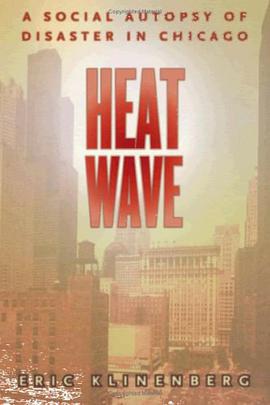

具體描述
On Thursday, July 13, 1995, Chicagoans awoke to a blistering day in which the temperature would reach 106 degrees. The heat index, which measures how the temperature actually feels on the body, would hit 126 degrees by the time the day was over. Meteorologists had been warning residents about a two-day heat wave, but these temperatures did not end that soon. When the heat wave broke a week later, city streets had buckled; the records for electrical use were shattered; and power grids had failed, leaving thousands of residents without electricity for up to two days. Any by July 20, over 700 people had perished - more than twice the number that died in the Chicago Fire of 1871, twenty times the number of those struck by Hurricane Andrew in 1992 - in the great Chicago heat wave, one of the deadliest in American history. Heat waves in the United States kill more people during a typical year than all other natural disasters combined. Until now, no one could explain either the overwhelming number or the heartbreaking manner of the deaths resulting from the 1995 Chicago heat wave. Meteorologists and medical scientists have been unable to account for the scale of the trauma, and political officials have puzzled over the sources of the city's vulernability. In "Heat Wave", Eric Klinenberg takes us inside the anatomy of the metropolis to conduct what he calls a "social autopsy", examining the social, political and institutional organs of the city that made this urban disaster so much worse than it ought to have been. Starting with the question of why so many people died at home alone, Klinenberg investigates why some neighbourhoods experienced greater mortality than others, how the city government responded to the crisis, and how journalists, scientists and public officials reported on and explained these events. Through a combination of years of fieldwork, extensive interviews and archival research, Klinenberg uncovers how a number of surprising and unsettling forms of social breakdown - including the literal and social isolation of seniors, the institutional abandonment of poor neighbourhoods, and the retrenchment of public assistance programmes - contributed to the high fatality rates. The human catastrophe, he argues, cannot simply be blamed on the failures of any particular individuals or organizations. For when hundreds of people die behind locked doors and sealed windows, out of contact with friends, family, community groups and public agencies, everyone is implicated in their demise. As Klinenberg demonstrates in this account of the contemporary urban condition, the widening cracks in the social foundations of American cities that the 1995 Chicago heat wave made visible have by no means subsided as the temperatures returned to normal. The forces that affected Chicago so disastrously remain in play in America's cities, and we ignore them at our peril.
作者簡介
目錄資訊
讀後感
第四章 公共關係治理 1.政府如何不作為地解決公共危機 2.好像沒瞭,因為沒看到傳媒的作用在哪裏 第五章 引人注目的城市:災難中的新聞機構和發言人 1.記者:總在框架中寫新聞,並有路徑依賴行為 2.圖片,確實重要,但未能促進新聞完成其目標的圖片就可疑瞭 3.記者隻藉他人隻口...
評分1995 年7 月中旬,一場高溫熱浪襲擊瞭芝加哥。在短短的一個星期左右(7 月14 日至20 日) ,有700 餘人因為高溫中暑而死亡。芝加哥一度成為“死亡城市”(the city of death) 。下麵是芝加哥居民驚心動魄生死經曆的幾個鏡頭: 瑪格麗特·奧蒂茨在自己傢裏開設瞭一個小型的幼兒園。星...
評分1995 年7 月中旬,一場高溫熱浪襲擊瞭芝加哥。在短短的一個星期左右(7 月14 日至20 日) ,有700 餘人因為高溫中暑而死亡。芝加哥一度成為“死亡城市”(the city of death) 。下麵是芝加哥居民驚心動魄生死經曆的幾個鏡頭: 瑪格麗特·奧蒂茨在自己傢裏開設瞭一個小型的幼兒園。星...
評分讀這本書是看到某個公眾號推薦書單,覺得這本書關照的災難和背後的社會學思考對這次疫情有一些可供參考之處。 整本書分五章,前兩章通過兩個社區的比對研究確定瞭這次熱浪災難中的死者畫像:貧睏年老獨居的少數族裔男性。後三章分彆從政府理政思路、社會互動和媒體建構三個角度...
評分用戶評價
相關圖書


















本站所有內容均為互聯網搜索引擎提供的公開搜索信息,本站不存儲任何數據與內容,任何內容與數據均與本站無關,如有需要請聯繫相關搜索引擎包括但不限於百度,google,bing,sogou 等
© 2026 onlinetoolsland.com All Rights Reserved. 本本书屋 版权所有