具体描述
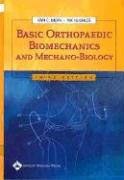
Completely revised and updated, the Third Edition of this classic text reflects the latest advances in research on orthopaedic biomechanics and the successful applications of biomechanical principles in fracture fixation, prosthetic implant design, and hip and knee arthroplasty. For this Third Edition, Dr. Mow is joined by new co-editor Rik Huiskes, PhD, an Editor-in-Chief of the Journal of Biomechanics and an internationally renowned authority in the field. New chapters cover biomaterials, biomechanical principles of cartilage and bone tissue engineering, and biomechanics of fracture fixation and fracture healing.
Biomechanical Insights into Musculoskeletal Health and Disease This comprehensive volume delves into the intricate biomechanical principles governing the function, adaptation, and failure of the musculoskeletal system. It offers an in-depth exploration of how mechanical forces—both internal and external—shape tissue structure, influence cellular behavior, and dictate the progression of orthopedic pathology. Far removed from purely descriptive anatomy, this text emphasizes the quantitative analysis of biological systems under load, providing a rigorous foundation for understanding movement, injury mechanisms, and the rationale behind modern therapeutic interventions. The initial sections establish the fundamental concepts of continuum mechanics as applied to biological tissues. We begin with a detailed exposition on material properties, distinguishing carefully between the linear elastic, viscoelastic, and poroelastic behaviors characteristic of soft tissues such as tendons, ligaments, and cartilage. The orthotropic nature of many biological structures, particularly bone, is thoroughly examined, providing the necessary framework for understanding direction-dependent mechanical responses. Readers will find exhaustive treatments of stress, strain, and deformation measures tailored specifically for biological matrices, addressing the complexities introduced by tissue anisotropy and heterogeneity. A significant portion of the book is dedicated to the mechanics of connective tissues. Tendons and ligaments are analyzed through the lens of their hierarchical structure, linking collagen fibril architecture to macroscopic force-displacement relationships. Discussions on creep, stress relaxation, and hysteresis are critical here, emphasizing the time-dependent nature of these structures under physiological loading regimes. Similarly, articular cartilage receives extensive coverage, detailing the biphasic mechanical model essential for describing fluid flow and load support within this avascular tissue. Finite element modeling approaches used to simulate joint contact mechanics and the resultant interstitial fluid pressurization are reviewed, highlighting their role in predicting cartilage wear and fatigue failure. The mechanics of bone tissue are explored from the macro to the micro-scale. The structure-property relationships of cortical and trabecular bone are meticulously detailed, including the effects of porosity, mineralization, and microdamage accumulation on apparent stiffness and strength. A central theme revolves around Wolff’s Law, but treated through modern mechanistic lenses: the mechanotransduction pathways that translate mechanical stimuli into adaptive remodeling responses. The analysis moves beyond static loading to incorporate fatigue behavior, fracture mechanics, and the influence of microdamage accumulation on the long-term durability of skeletal structures. Specific attention is paid to bone healing processes, viewing fracture repair as a mechanically-regulated biological cascade. Biomechanics of joints—the functional units of the musculoskeletal system—form another major cornerstone. Joint kinematics and kinetics are analyzed using coordinate systems and mathematical formulations that describe the motion and force transmission across articulations such as the hip, knee, and spine. The role of muscle forces, ligamentous constraints, and contact mechanics in achieving joint stability and facilitating locomotion are integrated. This section moves into practical applications, examining how altered joint loading patterns contribute to osteoarthritis development. Modeling techniques used to evaluate implant fixation and joint replacement performance are introduced, focusing on achieving load transfer compatibility between prosthetic materials and host bone. The application of biomechanical principles to clinical problems is woven throughout the text. The evaluation of spinal mechanics covers fundamental concepts of segmental stability, intervertebral disc mechanics (including internal disc pressure and annular integrity), and the biomechanical rationales underpinning spinal fusion and instrumentation. Similarly, sports injury biomechanics is addressed, utilizing established models to analyze the mechanisms of common acute injuries (e.g., ACL rupture, ankle sprains) and chronic overuse syndromes, linking specific mechanical environments to tissue failure thresholds. Furthermore, the text provides a thorough grounding in the emerging field of mechanobiology. This involves bridging the gap between physical forces and cellular signaling. Detailed chapters explore how mechanical strain influences tenocyte, chondrocyte, and osteoblast phenotype expression, matrix synthesis, and degradation pathways. The influence of fluid shear stress and substrate stiffness on stem cell differentiation is examined, providing the biological context for regenerative strategies in orthopedic science. Advanced analytical techniques relevant to the field are also presented. Readers are introduced to the necessary tools for computational modeling, including an overview of discretization methods, constitutive modeling selection, and the interpretation of complex simulation results derived from Finite Element Analysis (FEA) applied to musculoskeletal structures. This provides a necessary bridge for practitioners wishing to engage critically with contemporary literature relying heavily on computational prediction. Finally, the book concludes by synthesizing these elements into clinical decision-making frameworks. It explores how quantifying mechanical behavior informs implant design criteria, surgical planning, and the prescription of physical rehabilitation protocols aimed at optimizing tissue recovery and functional adaptation. The objective is to equip the reader with a robust, quantitative understanding of musculoskeletal mechanics, enabling them to analyze complex orthopedic challenges from first principles.