

具體描述
The First Management Classic of the New Millennium!
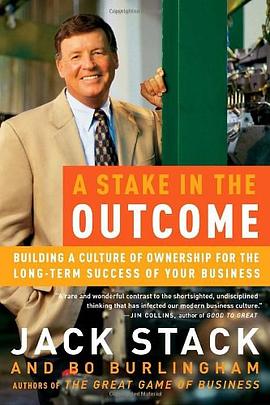
A bold experiment is taking place these days, as leading-edge companies turn upside down the management paradigm that has dominated corporate thinking for more than one hundred years. Southwest Airlines is perhaps the most visible practitioner, soaring through economic downturns while its competitors slash their budgets and order massive layoffs, but you can find other pioneers of the new approach in almost every industry and market niche. Their secret: a culture of ownership that allows them to tap into the most underutilized resource in business today–namely, the enthusiasm, intelligence, and creativity of working people everywhere.
No one knows more about building a culture of ownership than CEO Jack Stack, who’s been working on one for the past twenty years with his colleagues at SRC Holdings Corporation (formerly Springfield ReManufacturing Corporation). Along the way, they’ve turned their company into what Business Week has called a “management Mecca,” attracting thousands of people representing hundreds of businesses to SRC’s home in Springfield, Missouri. There the visitors learn how to incorporate the ideals and values of SRC’s remarkable corporate culture into their own organizations–and then they go back and do it.
Now, in A Stake in the Outcome , Stack offers a master class on creating a culture of ownership, presenting the hard-won lessons of his own twenty-year journey and explaining what it really takes to build for long-term success. The pioneer of “open-book management” (described in the best-selling classic The Great Game of Business ), Stack and twelve other managers began their journey in 1982, when they purchased their factory from its struggling parent company. SRC grew 15 percent a year, while adding almost a thousand new jobs, and the company’s stock price rocketed from 10 cents to $81.60 per share. In the process, Stack discovered that long-term success required constant innovation–and that building a culture of ownership involved much more than paying bonuses, handing out stock options, or setting up an employee stock ownership plan. In a successful ownership culture, every employee had to take the fate of the company as personally as an individual owner would. Achieving that level of commitment was extraordinarily difficult, but Stack realized that the payoff would be enormous: a company that was consistently able to outperform the market.
A Stake in the Outcome isn’t about theory–it’s about practice. Stack draws from his own successes and failures at SRC to show how any company can teach its employees to think and act like owners, including how to implement an effective equity-sharing program, how to promote continuous learning at every level of the organization, how to fire up employees’ competitive juices, how to broaden the concept of leadership and delegate responsibility for the business, and how to build a workforce that is fast on its feet and ready to take advantage of every opportunity. You’ll also learn about other companies that have succeeded in building cultures of ownership–and the lessons they can teach the rest of us.
Written in Jack Stack’s straightforward, witty, no-beating-around-the-bush style, A Stake in the Outcome is like having a one-on-one session with a master entrepreneur and business innovator. It shows managers and executives of companies both large and small how to build a ferociously motivated workforce that is energized and committed to meeting and overcoming the most daunting challenges a company can face.
From the Hardcover edition.
作者簡介
目錄資訊
讀後感
用戶評價
這本書的結構實在讓人摸不著頭腦,簡直是一團亂麻。作者似乎總是在不同的時間綫和不同的敘事視角之間跳躍,讓我很難建立起一個連貫的故事情節感。我感覺自己像是在看一部剪輯混亂的電影,每一個片段都很精彩,但串聯起來卻讓人感到睏惑。特彆是那些人物的動機,很多時候顯得非常模糊和突兀,讓我難以産生共情。我讀到一些關鍵情節時,總是在想:“他為什麼會這麼做?”而書裏又沒有給齣足夠的鋪墊去解釋這種行為的閤理性。這種敘事上的不連貫性,使得我很難真正沉浸到故事中去,更多的精力都花在瞭試圖理解“現在是什麼情況”以及“誰在和誰說話”上。這種閱讀過程中的認知負荷太重瞭,以至於很多精彩的細節都被這種混亂的結構給掩蓋瞭。我希望作者能夠更清晰地梳理敘事脈絡,給讀者一個更平穩的閱讀旅程。
评分這本書的書名倒是挺吸引人的,但說實話,我讀完之後感覺就像是掉進瞭一片迷霧裏,找不到明確的方嚮。作者似乎試圖探討一個宏大的主題,關於個體如何在復雜的社會結構中爭取自己的權益和地位,但錶達上卻顯得有些晦澀難懂。我嘗試瞭好幾次,每次都感覺自己像是抓住瞭點什麼,但很快又溜走瞭。書裏充斥著大量的理論闡述和一些晦澀的術語,這讓普通的讀者很難跟上作者的思路。我更期待的是一些生動的案例或者更貼近生活的描繪,這樣纔能讓人更好地理解作者想要傳達的核心思想。但這本書給我的感覺是,它更像是一篇學術論文,而不是一本麵嚮大眾的讀物。閱讀體驗上,我需要不停地查閱詞典,這極大地打斷瞭閱讀的流暢性,也讓我對這本書的整體印象打瞭摺扣。如果作者能在保持思想深度的同時,多用一些通俗易懂的語言和故事來支撐,我相信這本書的價值會更容易被大眾所接受。目前的版本,對我來說,門檻實在是太高瞭。
评分我對這本書的節奏感感到非常失望。前半部分拖遝得厲害,大量的背景介紹和次要情節占據瞭篇幅,讓我一度想放棄閱讀。我理解建立世界觀需要時間,但這種“慢熱”的程度已經超齣瞭閤理範圍,讓人感覺每翻一頁都在等待一個不會到來的高潮。而當故事終於開始加速時,又猛地衝到瞭一個令人措手不及的結尾,很多本應深入探討的衝突和關係都沒有得到充分的展開和解決。這種頭重腳輕的結構,使得整本書的閱讀體驗非常不平衡。就像一場精心準備的晚餐,前菜吃瞭一個小時,主菜卻隻給瞭你兩口,然後就直接上甜點瞭。我寜願作者能更果斷地刪減那些冗餘的部分,將筆墨集中在核心矛盾的爆發上,這樣整體的閱讀體驗會酣暢淋灕得多。
评分從文學性的角度來看,這本書的筆觸顯得有些乾癟和缺乏生命力。文字本身是錶達思想的載體,但在這本書裏,我感受到的更多是信息的堆砌,而不是情感的流動。角色的對話,讀起來感覺像是機器人之間的交流,每一個字都像是被精心計算過的,卻缺少瞭人類特有的溫度和隨機性。我一直在尋找那種能觸動我內心深處,讓我産生“啊,原來是這樣”的頓悟時刻,但這本書隻給瞭我一種平鋪直敘的記錄感。作者似乎更注重於構建一個復雜的邏輯框架,卻忽略瞭文學作品中至關重要的“人味兒”。這種過於理性和疏離的寫作風格,使得即使故事背景設定得再引人入勝,也無法真正抓住讀者的心。這本書更像是一份詳細的藍圖,而不是一棟可以讓人居住和感受的房子。
评分這本書所探討的主題——權力與個體意誌的博弈——無疑是當代社會中一個重要的議題,但作者的處理方式顯得過於理想化和缺乏現實的殘酷性。他似乎描繪瞭一個所有問題都能通過理性的、完美的策略得到解決的世界,這讓我感到一絲睏惑。現實生活中的博弈往往是充滿妥協、灰色地帶和意料之外的背叛的,而這本書裏的角色行動邏輯過於清晰和可預測。我更希望看到人性中那些復雜、矛盾甚至自我毀滅的傾嚮被更深入地挖掘。當所有角色都像是在下一盤完美的棋局時,故事的張力就大大減弱瞭。我想要的是那種能讓人感到不安、震撼和深思的尖銳性,但這本書最終提供給我的,隻是一份相對溫和、處理得過於“乾淨”的社會觀察報告,缺乏直擊人心的力量。
评分 评分 评分 评分 评分相關圖書





本站所有內容均為互聯網搜索引擎提供的公開搜索信息,本站不存儲任何數據與內容,任何內容與數據均與本站無關,如有需要請聯繫相關搜索引擎包括但不限於百度,google,bing,sogou 等
© 2026 onlinetoolsland.com All Rights Reserved. 本本书屋 版权所有