

具体描述
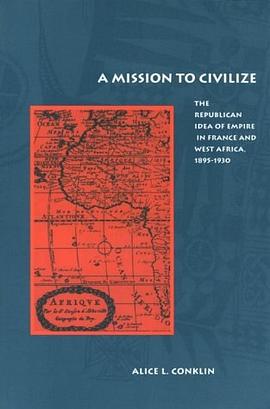
This book addresses a central but often ignored question in the history of modern France and modern colonialism: How did the Third Republic, highly regarded for its professed democratic values, allow itself to be seduced by the insidious and persistent appeal of a “civilizing” ideology with distinct racist overtones? By focusing on a particular group of colonial officials in a specific setting—the governors general of French West Africa from 1895 to 1930—the author argues that the ideal of a special civilizing mission had a decisive impact on colonial policymaking and on the evolution of modern French republicanism generally.
French ideas of civilization—simultaneously republican, racist, and modern—encouraged the governors general in the 1890’s to attack such “feudal” African institutions as aristocratic rule and slavery in ways that referred back to France’s own experience of revolutionary change. Ironically, local administrators in the 1920’s also invoked these same ideas to justify such reactionary policies as the reintroduction of forced labor, arguing that coercion, which inculcated a work ethic in the “lazy” African, legitimized his loss of freedom. By constantly invoking the ideas of “civilization,” colonial policy makers in Dakar and Paris managed to obscure the fundamental contradictions between “the rights of man” guaranteed in a republican democracy and the forcible acquisition of an empire that violates those rights.
In probing the “republican” dimension of French colonization in West Africa, this book also sheds new light on the evolution of the Third Republic between 1895 and 1930. One of the author’s principal arguments is that the idea of a civilized mission underwent dramatic changes, due to ideological, political, and economic transformations occurring simultaneously in France and its colonies. For example, revolts in West Africa as well as a more conservative climate in the metropole after World War I produced in the governors general a new respect for “feudal” chiefs, whom the French once despised but now reinstated as a means of control. This discovery of an African “tradition” in turn reinforced a reassertion of traditional values in France as the Third Republic struggled to recapture the world it had “lost” at Verdun.
作者简介
目录信息
Introduction 1
1 The Setting: The Idea of the Civilizing Mission in 1895 and the Creation of the Government General 11
2 Public Works and Public Health: Civilization, Technology, and Science (1902-1914) 38
3 Forging the Republican Sujet: Schools, Courts, and the Attack on Slavery (1902-1908) 73
4 "En faire des hommes": William Ponty and the Pursuit of Moral Progress (1908-1914) 107
5 Revolt and Reaction: World War I and Its Consequences (1914-1930) 142
6 "Democracy" Reinvented: Civilization Through Association (1914-1930) 174
7 Civilization Through Coercion: Human Mise en Valeur in the 1920's 212
Conclusion 246
Notes 259
Bibliography 327
Index 355
· · · · · · (收起)
读后感
用户评价
这本书的语言风格极其古朴典雅,但绝不是故作高深那种令人却步的风格。它更像是一位饱经风霜的智者,用最精炼、最富哲理的词句,向后人诉说他的洞见。词汇的选择上,能明显感觉到作者对传统修辞手法的娴熟运用,那些排比、对仗,不是简单的辞藻堆砌,而是服务于思想的表达,让思想本身更具穿透力和回味性。我常常需要放慢速度,去咀嚼那些精心雕琢的句子,因为每一个词语似乎都承载了深厚的文化底蕴。阅读过程中,我感觉自己的语言库得到了极大的扩充,对于中文表达的精妙之处有了更深一层的体悟。这种文风,让人由衷地感受到作者深厚的文学功底和对文字近乎虔诚的态度。
评分这本书的封面设计简直是视觉的盛宴,那种沉稳的色调配上烫金的字体,初看之下,便让人心生敬畏。装帧的质感一流,捧在手里沉甸甸的,仿佛握住了历史的重量。我尤其欣赏作者在排版上的用心,那些大量的留白处理得恰到好处,使得原本可能显得枯燥的文本呼吸顺畅,阅读体验非常舒适。它不是那种快餐式的读物,更像是一件精心打磨的工艺品,值得收藏。每次翻开它,都能感受到一种仪式感,仿佛要潜入一个截然不同的时代深处去探寻。纸张的触感细腻而有韧性,即便是长时间阅读,指尖也不会感到疲乏。装订线处理得非常牢固,看样子能经受住反复翻阅的考验。这本书的实体感本身就是一种阅读体验的延伸,它不像电子书那样轻盈飘忽,而是拥有坚实的物质存在,让人愿意花时间去品味和珍藏。
评分这本书最让我震撼的,是它所蕴含的巨大思想冲击力。它不是简单地陈述事实,而是提供了一种全新的、颠覆性的视角来审视既有的认知框架。读完之后,我感觉自己看待周遭世界的方式都发生了微妙的改变,像是有一层长期蒙蔽眼睛的薄雾被瞬间吹散了。作者提出的那些核心观点,极具原创性和前瞻性,它们不仅是对历史或某一领域的深刻剖析,更是对人类自身境遇的终极追问。这种思想的穿透力,会长时间地在你的脑海中回荡,驱使你不断反思和探索。它像一块投入平静湖面的巨石,激起的涟漪久久不能平息,迫使你跳出舒适区,去拥抱更复杂、更深刻的真理。
评分作者在论证过程中展现出的那种近乎偏执的求证精神,令人肃然起敬。他似乎不满足于任何一个孤立的证据,而是穷尽一切可能去交叉验证,构建起一个几乎无懈可击的逻辑链条。当我跟随他的思路一步步深入时,会发现他总能预见到读者可能会产生的疑问,并提前在后续的章节中给出严密的解答。这种前瞻性的写作思维,使得整本书的结构异常稳固。即便是面对那些存在争议的议题,作者也保持了一种惊人的客观性,清晰地呈现了各方观点,然后以无可辩驳的事实和逻辑导向一个更合理的结论。这种对真理的执着追求,让这本书不仅仅是一部阅读材料,更像是一堂关于如何进行批判性思考的实践课。
评分我被作者叙事的节奏感深深吸引住了。他似乎掌握了一种奇特的魔法,能够将那些看似零散的史料碎片,编织成一张宏大而又精致的叙事之网。那种娓娓道来的语调,既保持了学术的严谨性,又充满了文学的感染力。读到某些关键转折点时,情节的推进简直让人屏息凝神,仿佛亲眼目睹了历史洪流的巨大漩涡。叙述者的高超技巧在于,他总能在宏观的历史脉络和微观的个体命运之间自由切换,让冰冷的概念变得有血有肉,让遥远的事件仿佛近在眼前。这种叙事张弛有度的把控能力,让原本可能枯燥的理论探讨,读起来却像是一部扣人心弦的史诗。我发现自己常常因为情节的跌宕起伏而忘了时间,沉浸在他所构建的世界里无法自拔。
评分 评分 评分 评分 评分相关图书










本站所有内容均为互联网搜索引擎提供的公开搜索信息,本站不存储任何数据与内容,任何内容与数据均与本站无关,如有需要请联系相关搜索引擎包括但不限于百度,google,bing,sogou 等
© 2026 onlinetoolsland.com All Rights Reserved. 本本书屋 版权所有