

具体描述
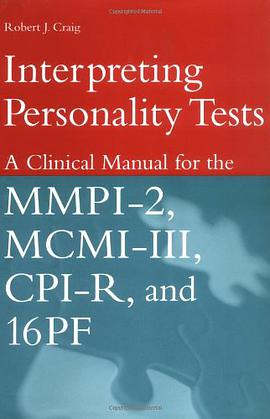
Personality assessment is a major component of many mental health practices, as well as a required course in most graduate programs in psychology. Interpreting Personality Tests is a clear, succinct guide that offers practicing clinical psychologists and graduate students precise interpretive guidelines for the four main personality inventories MMPI-2, MCMI-III, CPI-R, and 16PF. This accessible book provides step-by-step procedures for clinical personality interpretation, helping mental health professionals determine the psychological health of their clients, ascertain maladjustment and problem behaviors, and ultimately reach a diagnosis. The book is divided into four chapters devoted to each of the key personality tests: Minnesota Multiphasic Personality Inventory-2(MMPI-2) Chapter One includes the history and development of the original MMPI, along with original MMPI norms, MMPI-2 norms, and transformed scores. There is a full interpretation of the MMPI-2 validity scales, including the Lie Scale, F Scale, Backside F Scale, K Scale, True Response Inconsistency Scale, Variable Response Inconsistency Scale, Dissimulation Index, Superlative Self-Assessment Scale, Infrequency-Psychopathology Scale, Weiner s Subtle and Obvious Items, and Mean Profile Elevation. Also covered is interpretation of MMPI-2 Code Types for One-Point and Two-Point Codes. Millon Clinical Multiaxial Inventory-III (MCMI-III) Chapter Two explores the background and history of this test, including information on test development and Base Rate scores. It explains how to interpret the MCMI-III scales, including Disclosure (Scale X), Desirability (Scale Y), and Debasement (Scale Z). There are also full interpretations for One-Point and Two-Point Codes, which includes information on Millon s current thinking about subtypes of personality disorders. California Psychological Inventory-Revised (CPI-R) Chapter Three provides a general overview of the test and its philosophical basis. It explains how to achieve correct interpretation of the test by inspecting patterns of elevations on different classes of scales, which are subdivided into one of four classes: Class I, to assess interpersonal adequacy; Class II, to assess interpersonal controls, values, and beliefs; Class III, to assess intellectual achievement and academic ability; and Class IV, to assess measures of personal styles. There is also information on scale interaction interpretations. Sixteen Personality Factors (16PF) Beginning with the test s background and history, Chapter Four outlines all steps in the interpretive process of the 16PF basic scales, including Impression Management, Acquiescence, and Infrequency. Also covered is configural interpretation, with a detailed list of configurations presented as hypotheses for further consideration and verification. Clear and concise, Interpreting Personality Tests is an invaluable resource for everyone in the assessment field. The only concise guide to address each of the four most frequently used personality tests. Personality assessment is a crucial part of the mental health process. Interpreting Personality Tests is the ultimate guide for psychologists, counselors, and students who want to learn how to interpret the four key personality inventories. Offering hundreds of interpretive data profiles, this volume is a valuable source of information for these major objective personality tests: Minnesota Multiphasic Personality Inventory-2 (MMPI-2) Millon Clinical Multiaxial Inventory-III (MCMI-III) California Psychological Inventory-Revised (CPI-R) Sixteen Personality Factors (16PF) For definitive, precise guidance on clinical personality interpretation, Interpreting Personality Tests is the reference the assessment field has been waiting for.
作者简介
目录信息
读后感
用户评价
这本书的深度和广度令人印象深刻,它绝非市面上那些肤浅的“心灵鸡汤”可以比拟的。作者似乎拥有一种近乎冷峻的客观性,在探讨积极心理学的同时,也毫不回避人格缺陷和消极适应的机制。我尤其赞赏作者对文化相对性的重视,书中多次强调,任何一套人格模型都不可能普适于所有文化背景,这种谦逊和审慎的态度,正是严肃学术应有的风范。在讨论不同流派的观点冲突时,作者的处理方式非常高明,既没有偏袒任何一方,而是将其视为对人类经验的不同侧面描述,鼓励读者形成自己整合性的理解。我花了大量时间去对比书中提到的几种主要人格理论的差异点和交集,这种对比阅读的体验极大地拓展了我的分析维度。整本书读下来,感觉自己的分析工具箱被彻底清空并重新装填了一遍,充满了更锋利、更可靠的工具。对于任何希望超越表面现象,探究行为深层逻辑的人来说,这本书提供了一个坚实的、多维度的视角。
评分坦白说,我对心理学类书籍的阅读体验通常是“期望很高,实则枯燥”。但这次的体验完全颠覆了我的固有印象。这本书的文字功底达到了一个令人赞叹的水平,它成功地在学术的严谨性和文学的流畅性之间找到了一个近乎完美的平衡点。作者在论述复杂的认知偏差或人格特质时,所使用的比喻和类比,精准得让人拍案叫绝,瞬间就能抓住核心要义。我尤其喜欢其中关于“自我叙事”构建的部分,它提醒我们,我们对自身的理解往往是被选择性记忆和后设认知修饰过的产物。这本书的价值在于,它不提供简单的答案,而是提供了一套强大的、可供实践的思维工具箱。阅读过程中,我发现自己开始主动地去挑战那些根深蒂固的信念,去质疑那些不假思索的反应。它带来的不是知识的灌输,而是一种心智模式的升级。那些复杂的统计学概念或实验设计,都被巧妙地融入到流畅的叙述中,既保证了专业性,又完全没有阅读障碍,这对于非专业背景的读者来说,简直是福音。
评分阅读这本书的过程,更像是一场与作者智力上的深度对话,而非单向的信息接收。作者在行文间展现出的那种对心理学史的熟稔,以及对当代前沿研究的敏锐捕捉,让人由衷敬佩。我个人对其中关于“情境力量”与“个体特质”相互作用的论述特别感兴趣,作者没有陷入过去那种二元对立的争论,而是通过一系列精妙的实验设计解读,展示了二者动态、复杂的交互机制。这部分内容对我理解团队动力和组织行为学产生了巨大的启发。而且,本书在引用和参考文献的处理上也极为考究,每一处关键论断都有据可查,这为读者提供了深入探究的便捷路径。我花了将近两周的时间才细细品读完,每读完一章都会停下来,试图在自己的经历中寻找印证,这种互动性阅读让知识的内化程度大大提高。这本书的价值在于它能持续激发你的好奇心和批判性思维,它不是一本读完就束之高阁的书,而是会成为一本经常被翻阅的参考手册。
评分这本书简直是心理学爱好者和专业人士的“灯塔”!从我翻开第一页开始,就被作者那种娓娓道来的叙事方式深深吸引住了。它没有那种高高在上的学术腔调,反而像一位经验丰富的老朋友,耐心地引导你去探索人类复杂心灵的迷宫。书中的案例分析尤其精彩,那些看似日常却又暗藏玄机的行为模式,被作者抽丝剥茧地剖析得淋漓尽致。我特别欣赏作者在介绍各种理论时,总是能巧妙地结合现实生活中的情境,让人在阅读过程中不断产生“原来如此”的豁然开朗感。它不仅仅是一本理论书籍,更像是一本操作手册,教你如何用更具同理心和洞察力的眼光去看待你身边的人,甚至是你自己。那种对人性深层次动机的挖掘,让人不得不重新审视自己过去的一些判断和结论。全书结构安排得极其合理,从宏观的理论框架到微观的实证研究,层层递进,逻辑严密,读起来毫不费力,但回味无穷。对于想深入理解人类行为驱动力的读者来说,这本书无疑是近期读到的最值得推荐的一本力作。
评分如果非要用一个词来形容这本书给我的感受,那就是“结构清晰的智慧结晶”。作者在处理从生物学基础到社会文化影响这一庞大跨度时,展现出了惊人的组织能力。书中对于如何设计一个有效的、伦理上无可指摘的心理评估工具的讨论,非常具有实操性,这对于我们这些需要进行人员评估的领域人士来说,是宝贵的财富。它教会我们识别那些看似科学实则漏洞百出的测量方法,并提供了一套评估工具有效性的清晰标准。我尤其欣赏作者在讨论“正常与异常”的界限时所持有的谨慎立场,没有简单粗暴地贴标签,而是强调了一个连续统一体的概念。这种细致入微的视角,极大地提升了阅读的愉悦感,因为你感觉自己正在学习一种更具人文关怀的科学。这本书的排版和注释系统也做得非常优秀,使得在需要跳转查阅专业术语或原始文献时,体验非常流畅。总而言之,这是一次非常充实且富有成效的阅读旅程。
评分读得我头都痛了
评分读得我头都痛了
评分读得我头都痛了
评分读得我头都痛了
评分读得我头都痛了
相关图书












本站所有内容均为互联网搜索引擎提供的公开搜索信息,本站不存储任何数据与内容,任何内容与数据均与本站无关,如有需要请联系相关搜索引擎包括但不限于百度,google,bing,sogou 等
© 2026 onlinetoolsland.com All Rights Reserved. 本本书屋 版权所有