
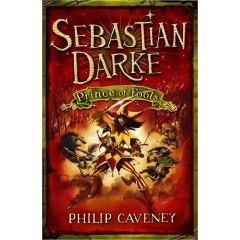

具体描述
Sebastian Darke has the world on his narrow shoulders. The son of a human father and an elvish mother, he is deperately trying to become the family breadwinner and has taken on his late father's job - celebrated jester, Prince of Fools. Trouble is, Sebastian can't tell a joke to save his life. Dressed in his father's clothes and accompanied by his talking (and endlessly complaining) buffalope, Max, he sets off for the fabled city of Keladon, where he hopes to be appointed court jester to King Septimus. On the way he encounters a tiny but powerful warrior called Cornelius; the beautfiul Princess Kerin; blood-thirsty Brigands and enough perils to make him wonder why he ever decided to leave home. This book is a hilarious and swashbuckling adventure!
作者简介
All about me
I was born in 1951 in Prestatyn, North Wales.
My father was in the R.A.F, so I went through one of those strange, transitory childhoods where the family moved to a new military base every couple of years. The result was that I went through the anxiety of the first day at school over and over again. I still find it hard to establish real friendships.
I was a poor student but I somehow scraped through my 11 Plus (I still have the mathematical ability of a hamster) and while my parents headed off to a new base in Malaya, as it was then called, I opted to go to The Kings School, an austere boarding establishment in Peterborough, East Anglia, a city which was close to our last posting. There I underwent a harsh regime of tyranny and oppression (yeah, I know it sounds melodramatic, but believe me at 11 years of age, that's how it felt). At one stage, I and some of my schoolmates staged a breakout. We were picked up in Lichfield and later we were given 'six of the best' by the headmaster, Mr Wheeler or 'Spoke' as he was far from affectionately known. The pain of the beating was enough to convince me that corporal punishment was not the best way to deal with such behaviour. But bad experiences were a common occurrence there. I vividly remember witnessing a brutal mock hanging staged by the prefects on an unsuspecting youngster, an event which would later find its way into the pages of the novel Burn Down Easy.
It wasn't all bad news. Twice a year I got to fly out to visit my parents in Malaya, where I witnessed sights, sounds and smells that were light years beyond my narrow experience. The subsequent recollections would one day form the basis for an early novel called Tiger, Tiger. The other positive thing was that I began to enjoy my English classes, particularly compositions. I soon proved adept at turning the most boring essay title - 'holidays', 'pets', 'it was a dark and dreary night' - into a succession of horror stories so lurid that looking back I wonder how I had the nerve to do it. Instead of being showered with acclaim for my efforts, my teacher took every opportunity to belittle me, reading out my work in a sneering voice to a sniggering class while I sat there humiliated. But writing was my escape and no matter how much he laid in to me, the purple prose kept flowing copiously. Now, every time I get published, I feel I'm thumbing my nose at that teacher, who's name if memory serves me correctly, was Mr Long. And if he should, by any freak chance, be reading this... Up yours!
At sixteen, after a disastrous showing at the O levels, I left school and went directly to Kelsterton Art College in North Wales. After years of discipline, here was my chance to kick up the traces and in 1968, there was already a tried and tested route to rebellion. I grew my hair long, coaxed a beard from my chin and naturally joined a rock 'n' roll band. I started out drumming with them but somehow graduated to being their singer. They were called Hieronymous Bosch (cool name, we thought) and the more observant of you may have noticed that my novel Bad To The Bone was dedicated to them. Not surprisingly, it's based around a rock 'n' roll band only their singer is a woman. Freudians, make of this what you will.
The band kept threatening to get somewhere but never really did. In my last year at college, I started a first novel, a little thing called Nathan Storm. It never did get published but it found me an agent. What happened was, around 1973, the band's bass player, Steve and I went to London to seek our fortune. Fortune's being in somewhat short supply, we ended up sleeping in a Hillman Imp for a couple of weeks. Every night we would park up behind Doctor Barnardo's in Ilford and the kids there would sneak out stolen sandwiches for our supper (now that's poverty for you!). Anyhow, I got the address of an agent from somebody I met who had the dubious honour of being 'Diddy' David Hamilton's wardrobe assistant; and one fine day I took my manuscript up to the agents offices in Tottenham Court Road.
I chose an unusual approach. Overcome with shyness, I went in, dumped the manuscript on the receptionist's desk, then before she could even ask me what my business was, I legged it out again. I didn't stop running till I reached the nearest tube station. Luckily, I had the presence of mind to leave a friend's phone number where I could be reached, should stardom beckon.
It didn't. But the agent, a lovely lady named Janet Freer, phoned me back and assured me that though the manuscript was unsellable, she'd detected 'a spark' of something worth nurturing. (Whatever happened to agents like that?) Anyhow, she told me to bring her my next effort. By this time I'd taken up residence in London, in a proper house and everything. Just as well, it's hard to keep clean in a Hillman Imp. I even had a job of a sort, as a (get this!) Literature Collation and Distribution Officer (i.e. clerk) for a marine electronics firm called Kelvin Hughes. Needless to say, I was the world's most inept LCDO, the job was pretty much a front for my desperate attempts to break in to publishing. An electric typewriter and all the A4 paper I needed. Heaven!
After two years toil, I had finished my next magnum hopeless, a kind of spooky occult adventure entitled Magic Sam. I took it up to Janet who deliberated at length and informed me that though it was a definite improvement on my first novel, it still fell a bit short of the mark. Curses!
This was my lowest point. I really wasn't sure if I could put myself through such torture again. After much soul-searching I decided I still wanted this more than anything else in the world, even a recording contract. So gritting my teeth, I went back out to bat for one last time, and eventually (in 1977) came up with a manuscript called The Sins Of Rachel Gurney (later changed to The Sins Of Rachel Ellis, for reasons I will recount elsewhere.) I took it in to Janet and headed homewards feeling distinctly pessimistic about the whole venture. Then, a week or so later, I got a telegram telling me to ring her urgently. Why a telegram? Well, it may seem unlikely, but at this stage in my career I was so poor, I didn't actually have a telephone at home. I ran out to the nearest phone box clutching my last few pennies and phoned her number with a trembling finger.
Down the crackling line, I could hear her distinctive Canadian tones saying eleven words I'll never forget.
"Good news, kid. I think I finally got you a deal..."
And the rest, as they say, is elsewhere on this site...
目录信息
读后感
评分
评分
评分
评分
用户评价
我必须得说,这本书的**人物塑造达到了炉火纯青的地步**。那些配角,哪怕只出场短短几个章节,他们的形象也栩栩如生地烙印在了我的脑海里。他们不是为了推动主角剧情而存在的工具人,他们有着自己的历史、自己的恐惧和自己的小小的胜利。特别是那位亦正亦邪的导师角色,他的每一次指导都充满了双关语和看似无意义的箴言,但当你回味时,才会发现那才是通往真理的唯一路径。角色的对话简直是一场文学盛宴,机智、尖锐,充满了那个时代特有的腔调,读起来既有古典的韵味,又不失现代的流畅性。我很少见到一部作品能如此成功地平衡宏大的史诗背景和微观的个人情感。我甚至对着其中一个次要角色的命运感到一阵强烈的悲伤,那份不公和无力感,让我久久不能平静。这本书的魅力,很大程度上就源自于这些有血有肉、呼吸着真实情感的个体群像。
评分我是在一个连绵阴雨的周末读完这本巨著的,感觉它与外界的氛围完美契合。这部作品的**核心主题**探讨的是“选择与宿命的悖论”,这使得它远超了一部单纯的冒险故事。主角面临的每一个抉择,都像是在天平的两端放置了无法权衡的重量,无论选择哪边,都意味着某种形式的牺牲或永恒的遗憾。书中对于权力腐蚀人心的描绘,是如此的真实和令人不寒而栗,它揭示了即使是最纯粹的意图,在接触到宏大机构的运作时,也会被扭曲成难以名状的怪物。这本书的结尾处理得非常高明,它没有给出任何廉价的圆满结局,而是留下了一个悬而未决的、充满哲学意味的开放式空间。这迫使读者在合上书本后,依然要继续思考这些角色未来的命运,以及我们自身在面对类似困境时会如何抉择。这种深刻的反思性,才是真正区分优秀作品和普通娱乐作品的关键所在。
评分这部作品的**叙事节奏**简直让人欲罢不能!从翻开扉页的那一刻起,我就被深深地卷入了一个充满阴谋与光怪陆离的魔法世界。作者对环境的描绘极其细腻,那些古老的街道、弥漫着神秘气息的酒馆,甚至连空气中漂浮的尘埃,都仿佛触手可及。主角的内心挣扎与外部世界的残酷形成了鲜明的对比,那种在绝望边缘徘徊却又紧紧抓住一丝希望的坚韧,着实让人为之动容。我尤其欣赏作者对于**道德灰色地带**的探讨,没有绝对的好人与坏人,每个人物的动机都复杂得像一团缠绕的丝线,需要读者全神贯注地去解开。情节上的反转设计得非常巧妙,每一次以为自己猜到了真相,下一章就会彻底颠覆我的预判。阅读过程中,我好几次情不自禁地发出惊叹声,生怕错过任何一个细微的伏笔。总而言之,这是一次酣畅淋漓的精神冒险,读完后,我感觉自己像是刚刚经历了一场漫长而艰苦的朝圣之旅,身心俱疲却又无比满足。这种层次感和深度,是许多同类奇幻小说所难以企及的。
评分对于我这种沉迷于**世界观构建**的读者来说,这本书简直是发现了一座宝藏!作者并没有采用那种一上来就倾泻所有设定的老套路,而是像一位技艺高超的工匠,将这个奇幻世界的规则、历史、宗教信仰和地理环境,通过角色的日常行为和不经意的对话中缓缓渗透出来。我喜欢那种需要“拼图”才能看到全貌的阅读体验。例如,关于“低语之潮”的传说,第一次出现时只是一个恐怖故事,但随着故事的推进,我们逐渐了解到它对社会结构、经济体系乃至魔法理论的深远影响。这种层层递进的揭示,极大地增强了阅读的探索感和智力上的满足感。魔法系统的逻辑性也处理得非常成熟,它不是随心所欲的“万能钥匙”,而是有其代价和限制的,这使得每一次力量的展示都显得尤为珍贵和紧张。我花了好几个小时去研究书中的附录和地图,试图捕捉每一个细节,这本身就是一种享受。
评分这本书的**文笔风格**非常独特,它带着一种古老而略显忧郁的美感。不同于时下流行的那种快节奏、口语化的叙事,作者的措辞考究,句子结构复杂而富有音乐性。有一种段落,我不得不放慢速度,反复咀嚼那些词语的选择和排比的运用,仿佛在品尝一杯年份久远的烈酒。这种文学性的厚重感,使得即便是描述一场简单的战斗,也充满了史诗般的重量。但有趣的是,这种略显“古典”的笔调,却奇妙地没有造成阅读障碍,反而增添了一种距离感,让读者能够以一种更客观、更具思辨性的角度去审视故事中的残酷与美丽。它更像是一部被精心雕琢的艺术品,而不是一份流水账式的记录。对于追求文字之美的读者来说,这本书绝对是不可多得的佳作,它证明了奇幻文学同样可以拥有顶级的文学价值。
评分看了三分之一,后面实在没意思看不下去,抱歉
评分看了三分之一,后面实在没意思看不下去,抱歉
评分看了三分之一,后面实在没意思看不下去,抱歉
评分看了三分之一,后面实在没意思看不下去,抱歉
评分看了三分之一,后面实在没意思看不下去,抱歉
相关图书


















本站所有内容均为互联网搜索引擎提供的公开搜索信息,本站不存储任何数据与内容,任何内容与数据均与本站无关,如有需要请联系相关搜索引擎包括但不限于百度,google,bing,sogou 等
© 2026 onlinetoolsland.com All Rights Reserved. 本本书屋 版权所有