
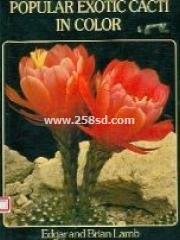

具体描述
Introduction
the importance of a hobby is increasing as people have more and more leisure time, and
hobbies connected with natural history are booming. The increase in the number of cacti
enthusiasts around the world is reflected by the number of societies which are now in existence
in almost every country from England, where this hobby started, to countries such as Russia
and Japan. Fortunately this growing interest has made people more aware of their native
flora and the need for conservation.
Another factor is that most cacti and other succulents originate in the type of environment
where the degree of atmospheric humidity is very low, so these plants are far more suited to
centrally heated homes than many of the house plants which have been grown in recent years.
Although the majority of cacti do not actually need a high minimum temperature in winter,
they will not die as a result of it, although it can adversely" affect their flowering qualities in the
following season. Ideally these plants will do best in a small greenhouse, a conservatory or a
sunroom; it is also possible to grow them very well in a cellar using artificial lighting, whilst a
variety of carefully chosen species can be grown in a raised rockery in the garden for twelve
months of the year, even though they will be subjected to snow and ice during the winter.
Many people may not realise that although cacti are only native to the Americas or the New
World a vast range of other succulent plants are to be found in almost every country in the
world including, believe it or not, such chilly parts of the world as Greenland, the alpine areas
of Switzerland and the Caucasus, and even in the Himalayas. It is true to say that by far the
majority of these succulent plants are to be found in Africa and the surrounding islands as well
as in the Americas, but there are also many species in India, Sri Lanka (Ceylon), Burma,
China, many of the islands in the Pacific Ocean and Australia.
This book illustrates one plant from each of one hundred different genera, with a page or
half page of text describing not only where the species in a certain genus occur in habitat, but
also the basic features of that genus. It should be possible to place a plant in its correct genus
(shown by the first name) with the aid of the non-technical text which accompanies each of
the illustrations.
The main problem has been the selection of the genera to be included, and we are quite
certain that someone will say, 'Why did you not include such and such a genus?' We have
included more true cacti than other succulents, but we have endeavoured to include flowering
plants, wherever this is really important for easy identification. We have also shown a selection
of genera of which certain members are suitable for use as house plants. A few genera such as
Sedums and Sempervivums, many of which can be grown outside rather like alpine plants, are
included as well as some species of hardy cacti.
The text and illustrations are arranged as far as possible in alphabetical sequence by the
作者简介
目录信息
读后感
用户评价
我得说,这本书的排版和设计简直达到了艺术品的级别,每一次翻阅都像是在欣赏一场精心策划的视觉盛宴。我是一个极度注重美学体验的读者,很多专业的园艺书籍虽然内容详实,但往往因为版式沉闷、图片质量低下而让人望而却步。然而,这本彩色图鉴完全颠覆了我的预期。它巧妙地运用了留白和色彩对比,使得每一株仙人掌的形态特征都能被最大化地凸显出来。那些特写镜头,简直是微观世界的奇迹展示,无论是刺座上绒毛的细腻纹理,还是茎干上不同生长期的疣点的排列方式,都清晰可见,让人忍不住想用手指去触摸屏幕(当然,我克制住了!)。编排上,它似乎遵循了一种非线性的美学逻辑,不同科属的植物交错出现,避免了传统图鉴那种枯燥的分类堆砌感。阅读的过程中,我感觉自己更像是在逛一个顶级的植物博物馆的特展,而不是在研读一本参考书。对于那些将植物视为室内装饰元素的读者来说,这本书的价值已经超越了信息本身,它提供了一种关于如何“展示”和“欣赏”这些多刺宝石的全新视角。这本书的印刷质量也值得称赞,即便是最深的墨绿色和最鲜艳的红色都能被准确地捕捉和重现,这对于辨别不同品种的细微色差至关重要。
评分作为一个对园艺工具和辅助材料也颇有研究的人,我对书中关于介质配方和容器选择的章节留下了极其深刻的印象。很多入门书籍往往一笔带过,只说“使用透气性好的土壤”,但这本书则提供了至少三种针对不同生长阶段(幼苗期、成熟期、休眠期)的详细介质配方,精确到了粗砂、珍珠岩、泥炭土的体积比例。这种对细节的执着,体现了作者深厚的实战经验。更妙的是,它还专门辟出了一章来探讨不同材质花盆(陶盆、塑料盆、瓷盆)对土壤水分蒸发速度和根系呼吸的影响,甚至用图表对比了不同透气性对根腐病风险的直接关联。这对我这种喜欢尝试不同盆器的“强迫症”患者来说,简直是如获至宝的参考资料。通过阅读这些内容,我明白了选择一个合适的“家”和“食物”与选择植物本身同样重要。这种系统性的、全方位的指导,让这本书从一本单纯的“图鉴”升级为了一个全面的“养护手册”,极大地提升了我的养护效率和成功率。
评分这本书的深度和广度,超出了我最初对一本“流行”读物的想象,它在娱乐性和学术性之间找到了一个非常微妙的平衡点。我原本以为它会停留在介绍那些常见的、随处可见的品种,但惊喜地发现,作者在一些相对小众但极具观赏价值的“潜力股”上也投入了相当的笔墨。特别是关于一些具有特殊球形变异体(Monstrose forms)的介绍部分,讲解得非常专业且深入,不仅描述了它们的观赏价值,还简要提及了其发生的概率和园艺界对它们的追捧原因。这让我意识到,即便是“流行”的品种,背后也有着复杂的遗传和培育历史。书中对不同地区气候对仙人掌形态影响的讨论,也让我受益匪浅,它让我开始思考如何根据我所在地的微气候来调整我的养护策略,而不是盲目照搬书上的通用指南。这种鼓励读者进行“批判性阅读”和“个性化实践”的写作风格,是优秀园艺书籍的标志。它没有直接给出“标准答案”,而是提供了一套完整的思考框架,引导我们去观察、去实验,从而真正理解这些沙漠植物的生命哲学。
评分这本关于流行异域仙人掌的彩色图鉴,简直是为我这种入门级爱好者量身定制的宝藏!我刚开始接触仙人掌养护时,面对市场上琳琅满目的品种,常常感到无从下手,不知道哪些是既漂亮又容易打理的“新手友好型”植物。这本书的开篇就精准地解决了我的痛点,它没有罗列那些动辄需要特殊温室和复杂介质的珍稀品种,而是聚焦于那些在普通家庭环境下也能茁壮成长的明星物种。我特别喜欢它对“流行”这个概念的解读,作者似乎非常明白我们这些爱好者追求的不仅仅是生存能力,更重要的是视觉冲击力和话题性。比如,它对某些“星球状”或具有奇特毛刺结构的品种的介绍,配图极其精美,色彩还原度高得令人惊叹,让我忍不住想立刻去花市淘一个回来摆在窗台上。更贴心的是,书里对光照、浇水频率的建议不是那种冷冰冰的科学术语,而是用生活化的语言描述,比如“当土壤表层摸起来干燥并略微发硬时,才是给它喝水的好时机”。这种接地气的指导,极大地增强了我养护的信心,让原本有些畏惧的园艺工作变得充满了乐趣和期待。它成功地将复杂的植物学知识转化为实用的家庭园艺技巧,对于希望快速建立起自己“多肉王国”的读者来说,这本书无疑是一剂强心针。
评分这本书的叙事节奏和情感投入是其他园艺书籍难以比拟的,它读起来完全不像是在阅读一本技术手册,而更像是在聆听一位资深园艺家在温暖的午后,与你分享他多年来与这些带刺朋友们相处的点点滴滴。作者在描述某些特定品种的习性时,总会穿插一些非常个人化的观察和体会,比如描述某款仙人掌在清晨第一缕阳光下颜色变化时的那种“瞬间的魔力”,或者描述养护过程中如何应对一次突如其来的病虫害并最终取得胜利的“心路历程”。这种充满人情味的叙述,使得冰冷的植物介绍充满了生命力和故事感。它让我感受到,养护仙人掌不仅仅是满足于看到它们开花结果,更重要的是与它们一同经历时间流逝和季节更迭的过程。这种情感上的共鸣,激励着我更加耐心地去观察我的藏品,去发现它们身上那些不易察觉的微小变化。这本书成功地将园艺从一种任务,转化为一种深入人心的生活方式的体验,让我对未来继续探索这个奇妙的仙人掌世界充满了持久的热情和敬意。
评分 评分 评分 评分 评分相关图书













本站所有内容均为互联网搜索引擎提供的公开搜索信息,本站不存储任何数据与内容,任何内容与数据均与本站无关,如有需要请联系相关搜索引擎包括但不限于百度,google,bing,sogou 等
© 2026 onlinetoolsland.com All Rights Reserved. 本本书屋 版权所有