
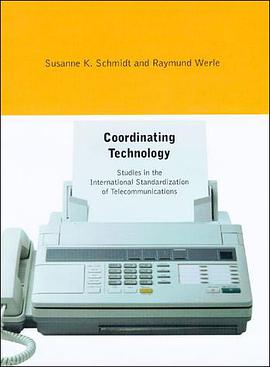

具体描述
Reviewed by Ken Krechmer
Technical Editor, Communications Standards Review
Subtitled "Studies in the International Standardization of Telecommunications," this book provides an excellent background of the International Telecommunications Union (ITU) organization and process. It analyzes four significant ITU standardization projects (from the time when the ITU was called CCITT): Videotex, Group 3 facsimile, Group 3 digital facsimile, and X.400 Message Handling Service (MHS). This background and analysis is developed with extensive references to the current standards literature.
The authors, social scientists, use an actor (ITU standards' meeting participant) centered model of standards development and game theory as a tool to develop their analysis of standards development. Unfortunately this approach does not appear to shed new light on the standards development processes. They note that the actor's multiple motivations (company, career, relationship to other participants, technical, and ITU rules) make the problem difficult to model.
While the book offers an excellent background in the ITU standards process including interaction with related organizations, it is very much removed from market reality. The authors do not address any of the significant patent issues that affected the standards they analyze (e.g., Codex V.29 patent in Group 3 facsimile), nor do they present the standards development within the market forces of the period. The authors note that Group 3 digital facsimile standards development was an attack on Group 4 facsimile standards. But the authors neglect explaining that this occurred due to the weak support in the market for ISDN which is the bearer service for Group 4 facsimile. The authors note that videotex was based on the concept of fixed function terminals, but omit explaining that in the early 1980s the market was beginning to move away from fixed function terminals to personal computers. Failures in the ITU standard's development process often seem (to this writer) to occur when the market moves in different directions than the standards under development suggest.
The authors explain the major power of the Public Telephone and Telegraph (PTT) companies in the ITU but do not explain the PTTs' deployment of the technology they standardize. ITU standards have usually been less successful in the marketplace when the standards support expanded services with in-network capabilities (videotex, ISDN and MHS) and more successful when they support customer premise equipment (G3 facsimile and telephone modems) or in-network capabilities for internal network use (Signalling System 7, Synchronous Digital Hierarchy, Asynchronous Transfer Mode). It appears to this writer that PTTs generally have been marketing risk-adverse, usually not willing to deploy the standards they develop, unless they are also the customer. The one successful deployment of videotex (as noted by the authors), Minitel, occurred when France Telecom decided to fund the deployment of Minitel terminals with savings from a planned reduction in telephone books.
For those interested in ITU standards development, this is one of the few works to address in considerable and accurate detail this large, 133 year old, telecommunications standards leader. However, the author's extensive analysis is not followed with significant synthesis. Those looking for new insights into the process of ITU standards development will need to look further.
作者简介
Research Fellow at the Max-Planck-Institute for the Study of Societies, Cologne, Germany.
目录信息
读后感
这是从技术争论的视角来剖析标准化经验案例的研究成果,Schmidt和Werle做了一些很有启发意义的工作。前不久向Knut教授打听Schmidt的近况,听说他在这个领域已经不复活跃了。
评分这是从技术争论的视角来剖析标准化经验案例的研究成果,Schmidt和Werle做了一些很有启发意义的工作。前不久向Knut教授打听Schmidt的近况,听说他在这个领域已经不复活跃了。
评分这是从技术争论的视角来剖析标准化经验案例的研究成果,Schmidt和Werle做了一些很有启发意义的工作。前不久向Knut教授打听Schmidt的近况,听说他在这个领域已经不复活跃了。
评分这是从技术争论的视角来剖析标准化经验案例的研究成果,Schmidt和Werle做了一些很有启发意义的工作。前不久向Knut教授打听Schmidt的近况,听说他在这个领域已经不复活跃了。
评分这是从技术争论的视角来剖析标准化经验案例的研究成果,Schmidt和Werle做了一些很有启发意义的工作。前不久向Knut教授打听Schmidt的近况,听说他在这个领域已经不复活跃了。
用户评价
这本书的价值,我认为在于它提供了一种“系统性思维”的框架,而不是零散的“最佳实践清单”。它引导读者去思考,为什么在特定的组织结构下,某些技术集成会失败,而不仅仅是记录下失败的原因。作者构建了一个多维度的评估模型,用于衡量一个技术生态系统内部的“连接健康度”。这个模型似乎考虑到了技术栈的异构性、人员流动率,甚至是知识产权壁垒等多个微妙的因素。我尤其欣赏它对“遗留系统现代化”的论述,没有采用一刀切的激进策略,而是提供了一系列渐进式的、风险可控的集成路径图。这本书读完之后,不会让你立刻成为某项技术的专家,但它会让你成为一个更出色的“技术架构师”和“项目协调官”,因为你知道如何从宏观层面审视和优化整个技术协同的复杂网络。它是一本能提升职业视野和决策质量的深度参考书。
评分这本书的排版和图表运用达到了一个很高的水准,这是我读过的技术书籍中少有的。那些用来解释复杂流程图和数据流向的插图,线条清晰,逻辑分明,即便是初次接触相关概念的人,也能通过视觉辅助快速抓住核心脉络。我发现作者在描述一些长周期、多层级技术集成项目时,会穿插一些简洁的“案例快照”,虽然篇幅不长,但每一个快照都精准地勾勒出了协作中的痛点和突破口。这极大地提升了阅读的流畅性和代入感。相比那些纯文字堆砌的技术手册,这本书显然在如何“呈现信息”上下了很大功夫。我特别喜欢其中关于“技术债务与沟通效率”那部分的图示,它用一个非常直观的模型,清晰地展示了沟通不畅是如何加速技术负债累积的。对于需要向非技术高层汇报项目进度的我来说,这本书提供了一套极佳的、基于视觉逻辑的沟通工具箱。
评分这本书的行文风格,说实话,有点像是一位经验极其丰富但又极其严谨的工程师在给我们上“实战课”。它不追求华丽的辞藻,而是用一种近乎教科书式的精确性来阐述每一个技术概念和流程。我特别欣赏作者在论述某项技术决策时,会列举出正反两方面的考量,这种平衡的视角让读者能够更全面地评估每一种“协调”策略的潜在风险和收益。举例来说,关于敏捷开发与瀑布模型的结合点分析,书中没有简单地给出“应该怎么做”,而是提供了不同组织文化下可以采取的几种混合模型,并分析了每种模型的适用场景和关键成功要素。这种深入骨髓的实用主义,让人感觉这不是一本纸上谈兵的书籍,而是从无数次失败和成功中提炼出来的智慧结晶。读起来虽然需要高度集中注意力,但每读完一个章节,都有一种豁然开朗的满足感,仿佛自己真的参与了一次高难度的技术整合项目。
评分这本书的封面设计真是让人眼前一亮,深邃的蓝色调搭配着银色的字体,给人一种沉稳而又充满未来感的感觉。拿到手里的时候,感觉分量十足,纸张的质感也相当不错,很适合长时间阅读。从目录上看,内容涵盖了从基础理论到前沿应用的广阔范围,特别是关于跨部门协作和技术融合的部分,让我非常期待。我注意到作者在引言中强调了“协同”在现代项目管理中的核心地位,这正是我目前工作中最需要深入理解和掌握的。书中似乎对不同行业的技术标准进行了深入的剖析,这对于我这种需要处理多领域技术对接的专业人士来说,无疑是一笔宝贵的财富。我尤其好奇作者是如何将复杂的系统架构图转化为易于理解的叙述方式的,希望它能真正帮助我理清那些错综复杂的依赖关系。整体感觉,这是一本既有理论深度,又不失实践指导意义的力作,翻阅之初就已经能感受到其蕴含的巨大价值。
评分让我印象深刻的是作者对“软技能”在技术协调中所扮演角色的强调。这在很多纯粹侧重于工具和协议的书籍中是很少被提及的,或者只是浅尝辄止。这本书却用了相当大的篇幅来讨论不同技术团队之间的文化差异、权力结构对技术决策的影响,以及如何通过有效的冲突解决机制来确保技术路线的一致性。这不仅仅是关于“如何让代码跑起来”的问题,更是关于“如何让人与人之间高效合作”的艺术。书中关于建立跨职能团队共享词汇表和统一指标体系的建议,非常有启发性。我尝试着将书中的一个关于“需求澄清阶段的正式评审流程”拿来与我团队的现有流程对比,发现我们的流程在“风险识别的责任划分”上存在明显的模糊地带,这本书的论述直接指出了我们可以优化的方向。这本书记载的,是关于技术治理和团队心理学的深刻洞察。
评分 评分 评分 评分 评分相关图书















本站所有内容均为互联网搜索引擎提供的公开搜索信息,本站不存储任何数据与内容,任何内容与数据均与本站无关,如有需要请联系相关搜索引擎包括但不限于百度,google,bing,sogou 等
© 2026 onlinetoolsland.com All Rights Reserved. 本本书屋 版权所有