

具体描述
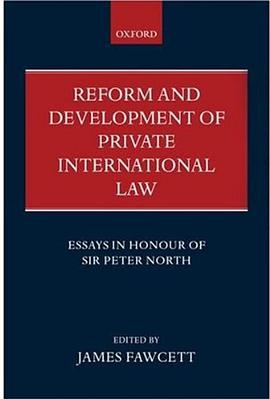
This collection of essays by his friends and colleagues honours Sir Peter North's remarkable career and outstanding contribution to private international law. It takes as its theme the reform and development of private international law, reflecting the three different levels at which the development and reform of private international law takes place. Robin Morse discusses the creeping codification of private international law. Trevor Hartley draws attention to an area of private international law, that relating to matrimonial property, which is entirely judge-made. Joost Blom shows how quickly the judges, in this case in the Supreme Court of Canada, can develop private international law once they set their mind to it. Sir Lawrence Collins discusses the concept of comity in modern private international law. Writers too have had their part to play in the development of private international law; this is the subject of the contribution by Ole Lando. Kurt Siehr looks at the impact of international instruments on national private international law and the problems that this throws up. A number of contributors discuss various aspects of the ever-growing Europeanization of private international law. Ian Fletcher focuses on the EC Regulation on Insolvency Proceedings and its impact upon established law and practice in England and Wales. Paul Beaumont examines questions of legal basis and external competence and the best way for the UK and Europe to be represented in issues of private international law globally as well as offering a technical analysis of the contract provision of the Brussels I Regulation. Hans Ulrich Jessurun d'Oliveira examines the uneasy relationship between the European Union and private international law and the movement towards eroding the latter. Peter Nygh compares declining jurisdiction under the Brussels I Regulation and the preliminary draft Hague Judgments Convention. Other contributors have concentrated on aspects of the reform of private international law on a world-wide basis. Jonathan Harris discusses the Hague Convention on the Law Applicable to Trusts and on their Recognition 1985 in his examination of the trust in private international law. Not surprisingly there is much discussion in this book of the ambitious project that has been absorbing the Hague Conference for nearly ten years, namely a Hague Convention on Jurisdiction and Foreign Judgments in Civil and Commercial Matters. David McClean discusses the history of the project and, if it does fail, a possible way forward. Ron Brand suggests a more modest goal at the Hague Conference, namely a choice of court plus recognition convention. Whatever the fate of the Hague Judgments Convention, the work undertaken at the Hague can still be used in the future. It can inform the discussion of what we should do in intellectual property cases in private international law, which is the subject of James Fawcett's contribution.
作者简介
目录信息
读后感
用户评价
这本书的装帧和排版也值得称赞,这对于一本学术专著而言是难得的加分项。内页的纸张质量上乘,字体大小适中,最关键的是,注释系统做得极为详尽和规范。很多时候,我们阅读专业书籍,经常被冗长而分散的脚注打断思路,但这本书的注释处理得非常得体,它既能提供必要的引文出处,又不至于喧宾夺主。我注意到,作者在引用一些冷门的或早期学者的观点时,标注得非常精确,这体现了一种对学术传统的尊重和严谨治学的态度。另外,书中的图表和流程图的使用,也极大地帮助了复杂概念的消化。比如,在解释不同国家对于“损害赔偿”的适用规则链条时,那个逻辑树的呈现方式,清晰明了地展现了层层递进的判断过程,比纯文字的描述要高效得多。总的来说,从阅读体验的角度来看,这本书兼顾了学术的深度与阅读的友好性,让学习过程本身也成为了一种享受,而不是煎熬。
评分说实话,我拿到这本书的时候,内心是抱着一种审视和挑剔的态度去阅读的。毕竟,涉及到“改革”和“发展”这种宏大命题的学术著作,往往容易陷入空泛的口号式论述,或是沉湎于纯粹的理论构想而脱离实际的司法困境。然而,这本书最让我眼前一亮的地方,在于它对现实挑战的直面态度。作者似乎并不满足于描绘静态的法律框架,而是将笔触伸向了数字经济、跨境数据流动、以及全球供应链重组这些当代国际商事活动的核心领域。他对于现有私法规则在应对这些“新物种”问题时所暴露出的滞后性,进行了毫不留情的批判性审视。尤其是在关于管辖权和承认执行的章节,那种深入到具体商业争议中去剖析法律适用逻辑的写法,让我这个长期关注国际贸易实务的人士感到非常亲切。他提出的诸多改革路径,既有宏观的制度设计建议,又不乏具体到条文层面的微调构想,显示出作者深厚的法学功底和敏锐的现实洞察力,这绝非闭门造车之作,更像是一份面向未来、可操作性极强的行动纲领。
评分坦率地说,这本书的观点并非完全没有争议性,而这恰恰是我认为它价值所在的关键。作者在某些章节提出的某些激进的改革设想,比如对某些传统冲突规范的彻底重构,无疑会引发法律界内部的激烈辩论。他没有采取那种和稀泥的折中主义立场,而是旗帜鲜明地表达了自己的学术立场和对未来方向的判断。我尤其欣赏他敢于挑战既有权威和僵化教条的勇气。例如,他对某些国际公约在特定商业实践中的“反作用力”分析,观点犀利,论据扎实,足以促使任何持有不同看法的学者重新审视自己的基础预设。对于读者而言,这本书提供了一个绝佳的平台,去思考:我们到底需要一个怎样的国际私法体系来适应二十一世纪的全球化需求?它不只是提供答案,更是提供了一套高质量的“提问”方式。读完之后,我感觉自己对这个学科的理解上升到了一个新的台阶,不再满足于记住规则,而是开始思考规则背后的“为什么”和“应如何”。
评分阅读这本书的过程,与其说是在学习,不如说是在进行一场智力上的“攀登”。这本书的论述密度之高,绝对不是可以轻松“翻阅”的类型。它要求读者必须保持高度的专注力,因为作者在构建其理论体系时,大量采用了比较法的视角。他穿梭于大陆法系和英美法系之间,甚至不时引入一些新兴市场国家的法律实践作为参照,这种多维度的比较分析,使得全书的论证立体感十足。我特别留意了其中关于“公共政策保留条款”的讨论,作者不仅梳理了不同法域对该概念的解释边界,更重要的是,他探讨了在全球化背景下,各国“公共政策”的内涵是否正在趋同或异化的问题,这触及到了主权与国际合作的深层张力。对于希望进行跨国法律研究或从事复杂国际诉讼的法律人来说,这本书提供了极其宝贵的思维工具箱。它教会我们如何跳出单一法域的思维定式,从更广阔的国际法理制高点去审视和解决具体的法律冲突,绝对是提升分析深度的利器。
评分这本书的封面设计着实抓人眼球,那种略显古典的字体配上深沉的底色,让人立刻联想到那些厚重的法学经典。我原本对私法领域的著作抱持着一种敬而远之的态度,总觉得其中充斥着晦涩难懂的术语和繁复的案例分析,但翻开这本书的扉页,那种强烈的学术气息扑面而来,却又带着一种令人安心的逻辑脉络感。作者的叙事方式非常老练,仿佛一位经验丰富的导游,引领着初学者缓缓深入这片复杂的法律丛林。开篇部分,对历史演进的梳理尤为精彩,他没有简单地罗列时间点和判例,而是深入挖掘了不同历史时期社会经济结构变迁对国际私法理论基础的冲击与重塑。那种对学科脉络的清晰勾勒,使得原本在我脑海中模糊不清的“冲突规范”和“准据法选择”等概念,一下子变得具象化起来。我尤其欣赏作者在论述中那种克制而精准的语言风格,每一个论断都有坚实的理论支撑,绝不故作高深,这对于希望系统学习国际私法体系的读者来说,无疑是一份极佳的入门指南,它为你打下了坚实的地基,让你有信心去探索更高、更深层次的学术殿堂。
评分 评分 评分 评分 评分相关图书














本站所有内容均为互联网搜索引擎提供的公开搜索信息,本站不存储任何数据与内容,任何内容与数据均与本站无关,如有需要请联系相关搜索引擎包括但不限于百度,google,bing,sogou 等
© 2026 onlinetoolsland.com All Rights Reserved. 本本书屋 版权所有