具體描述
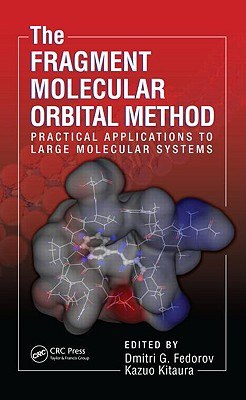
Quantum Insights: Delving into the Microscopic World with Advanced Computational Chemistry This book offers a comprehensive exploration of cutting-edge computational chemistry techniques, focusing on the intricate details of molecular behavior at the quantum mechanical level. While not directly discussing the Fragment Molecular Orbital Method, it lays the foundational knowledge and explores adjacent computational paradigms that are crucial for understanding and developing such advanced methodologies. The work is designed for researchers and advanced students in chemistry, physics, and materials science seeking to deepen their understanding of molecular electronic structure and reactivity. Part I: The Quantum Mechanical Underpinnings of Molecular Structure The journey begins with a rigorous review of the fundamental principles of quantum mechanics as applied to chemical systems. This section establishes the bedrock upon which all advanced computational methods are built. Chapter 1: The Schrödinger Equation and Its Implications: We revisit the time-independent and time-dependent Schrödinger equations, discussing their central role in describing the state of quantum systems. The concept of wavefunctions, probability density, and operators will be thoroughly examined. The limitations of exact solutions for multi-electron systems will be highlighted, motivating the need for approximations. Chapter 2: Approximations in Quantum Chemistry: This chapter delves into the key approximations that make solving the Schrödinger equation computationally tractable. The Born-Oppenheimer approximation, separating nuclear and electronic motion, will be explained in detail. We will also discuss the Hartree-Fock method, introducing the concept of self-consistent field (SCF) calculations and the limitations of the mean-field approximation. The discussion will naturally lead to the need for electron correlation. Chapter 3: Electron Correlation: Beyond the Mean Field: Here, we explore various theoretical frameworks designed to account for electron correlation, a critical factor in accurately describing molecular properties. This will include a detailed examination of Configuration Interaction (CI) methods, from the simplest CIS to full CI, and their associated computational costs. Perturbation theory, specifically Møller-Plesset perturbation theory (MPn), will be introduced as an alternative approach to capturing correlation effects. The strengths and weaknesses of these methods will be critically assessed, providing context for the development of more efficient approaches. Part II: Advanced Electronic Structure Theories and Their Applications Building upon the foundational principles, this section ventures into more sophisticated computational methodologies, showcasing their power in predicting and understanding molecular phenomena. Chapter 4: Density Functional Theory (DFT): A Powerful Alternative: This chapter provides a thorough introduction to Density Functional Theory, a widely used and highly successful computational approach. We will explore the fundamental theorems of DFT, including the Hohenberg-Kohn theorems and the Kohn-Sham ansatz. A detailed discussion of various exchange-correlation functionals, from LDA to hybrid functionals, will be presented, along with an analysis of their performance for different chemical problems. The advantages of DFT in terms of computational efficiency for large systems will be emphasized. Chapter 5: Post-Hartree-Fock Methods for Enhanced Accuracy: This section elaborates on methods that go beyond the Hartree-Fock approximation to achieve higher accuracy. We will revisit CI in more detail, focusing on truncated CI methods like CISD and CCSD. Coupled cluster (CC) theory will be presented as a highly accurate and systematic hierarchy of methods, including CCSD and CCSD(T), which are considered gold standards for many chemical properties. The computational scaling of these methods will be discussed, highlighting their limitations for very large systems. Chapter 6: Basis Sets: The Building Blocks of Calculation: The selection of appropriate basis sets is paramount for obtaining reliable computational results. This chapter will explore the concept of atomic orbitals and their representation by mathematical functions. We will discuss various types of basis sets, including Pople-style split-valence and polarization basis sets, as well as correlation-consistent basis sets. The impact of basis set size and quality on calculated properties will be analyzed, guiding the reader in choosing suitable basis sets for their research. Part III: Computational Approaches for Large and Complex Systems This part of the book addresses the challenges of applying quantum chemical methods to increasingly larger and more complex molecular systems, often encountered in areas like condensed matter physics, materials science, and biochemistry. Chapter 7: Linear Scaling Methods: Taming the Computational Beast: As system size increases, the computational cost of traditional quantum chemical methods often scales poorly, typically as N^4 or higher (where N is a measure of system size). This chapter focuses on methodologies designed to overcome this limitation by achieving linear scaling (O(N)). We will explore techniques such as the divide-and-conquer (DC) approach, the domain-based local pair-interaction (DLPI) method, and linear scaling DFT algorithms. The underlying principles and practical implementation of these methods will be discussed. Chapter 8: Fragment-Based Approaches in Quantum Chemistry: This section delves into strategies that break down large molecular systems into smaller, manageable fragments. The inherent idea is to perform computationally intensive calculations on these fragments and then appropriately reassemble the results to approximate the properties of the entire system. We will discuss the conceptual frameworks behind fragment-based methods, including the challenges of fragment coupling and error control. Various strategies for fragment decomposition and the treatment of inter-fragment interactions will be explored. This section will provide a strong conceptual foundation for understanding how specialized fragment-based methods function. Chapter 9: Applications in Diverse Fields: To illustrate the practical utility of these computational techniques, this chapter presents case studies and examples from various scientific disciplines. This may include applications in predicting reaction mechanisms, understanding electronic properties of materials, characterizing the behavior of biomolecules, and designing new catalysts. The focus will be on how the discussed computational methods provide valuable insights into these complex systems, enabling predictions and explanations that are often inaccessible through experimental means alone. This book serves as a valuable resource for anyone interested in the fundamental principles and advanced techniques of computational chemistry. By providing a thorough understanding of quantum mechanical foundations, various electronic structure methods, and strategies for tackling large systems, it equips readers with the knowledge to critically evaluate and apply computational tools in their own research endeavors, ultimately fostering a deeper comprehension of the molecular world.