

具体描述
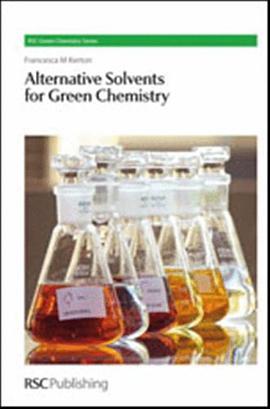
Everyone is becoming more environmentally conscious and therefore, chemical processes are being developed with their environmental burden in mind. This also means that more traditional chemical methods are being replaced with new innovations and this includes new solvents. Solvents are everywhere, but how necessary are they? They are used in most areas including synthetic chemistry, analytical chemistry, pharmaceutical production and processing, the food and flavour industry and the materials and coatings sectors. However, the principles of green chemistry guide us to use less of them, or to use safer, more environmentally friendly solvents if they are essential. Therefore, we should always ask ourselves, do we really need a solvent? Green chemistry, as a relatively new sub-discipline, is a rapidly growing field of research. Alternative solvents - including supercritical fluids and room temperature ionic liquids - form a significant portion of research in green chemistry. This is in part due to the hazards of many conventional solvents (e.g. toxicity and flammability) and the significant contribution that solvents make to the waste generated in many chemical processes. Solvents are important in analytical chemistry, product purification, extraction and separation technologies, and also in the modification of materials. Therefore, in order to make chemistry more sustainable in these fields, a knowledge of alternative, greener solvents is important. This book, which is part of a green chemistry series, uses examples that tie in with the 12 principles of green chemistry e.g. atom efficient reactions in benign solvents and processing of renewable chemicals/materials in green solvents. Readers get an overview of the many different kinds of solvents, written in such a way to make the book appropriate to newcomers to the field and prepare them for the 'green choices' available. The book also removes some of the mystique associated with 'alternative solvent' choices and includes information on solvents in different fields of chemistry such as analytical and materials chemistry in addition to catalysis and synthesis. The latest research developments, not covered elsewhere, are included such as switchable solvents and biosolvents. Also, some important areas that are often overlooked are described such as naturally sourced solvents (including ethanol and ethyl lactate) and liquid polymers (including poly(ethyleneglycol) and poly(dimethylsiloxane)). As well as these additional alternative solvents being included, the book takes a more general approach to solvents, not just focusing on the use of solvents in synthetic chemistry. Applications of solvents in areas such as analysis are overviewed in addition to the more widely recognised uses of alternative solvents in organic synthesis. Unfortunately, as the book shows, there is no universal green solvent and readers must ascertain their best options based on prior chemistry, cost, environmental benefits and other factors. It is important to try and minimize the number of solvent changes in a chemical process and therefore, the importance of solvents in product purification, extraction and separation technologies are highlighted. The book is aimed at newcomers to the field whether research students beginning investigations towards their thesis or industrial researchers curious to find out if an alternative solvent would be suitable in their work.
作者简介
目录信息
读后感
评分
评分
评分
评分
用户评价
这本书的内容深度和广度着实让人惊喜,它绝对不是那种浮于表面的科普读物,而是真正深入到了理论核心。我花了整整一个周末研读了关于CO2作为反应介质的那几章,作者对超临界流体动力学和热力学性质的讲解细致入微,简直是教科书级别的严谨。他没有停留在“二氧化碳是安全的”这种浅显论断上,而是详细分析了压力、温度对反应选择性和产率的精确影响曲线,这对于在实验室做实验的科研人员来说,简直是宝贵的财富。更让我佩服的是,作者在讨论新溶剂体系时,总能穿插实际的工业案例——比如在药物中间体制备中,如何通过调控深共晶溶剂的组分比例,实现了对传统有机合成路线的颠覆性改进。我感觉自己不是在读一本学术专著,而是在听一位资深行业专家在娓娓道来他的“秘密武器库”。语言风格方面,虽然技术性很强,但作者在关键转折点会插入一些富有洞察力的评论,这些评论像是灯塔一样,指引着读者穿越复杂的化学术语迷雾。阅读体验流畅且充满智力上的满足感,每次合上书本,都感觉自己的知识边界又向外拓宽了一圈。
评分我必须得说,这本书在视觉呈现上达到了一个令人难以置信的高度。它不仅仅是信息的载体,更是一件具有美感的作品。不同于以往的化学专著那种单调的黑白文本,这本书大量使用了高质量的彩图,尤其是关于分子间作用力模型的模拟图,那些五彩斑斓的电子云分布和精确到皮米的分子间距,让人仿佛能“看见”化学反应正在发生。我注意到作者对字体和字号的选择也非常考究,即便是长达数页的公式推导,也保持了极佳的易读性。有一处关于生物基溶剂溶解度的三维热力学图表,色彩的渐变处理得极为柔和而准确,即使是第一次接触这类数据图表的读者,也能迅速把握溶解度的变化趋势。这种对细节的执着追求,反映了作者本人对“完美”工艺的极致向往。这本书在设计上所投入的资源和心力,无疑为它作为一本里程碑式著作的地位提供了坚实的物质基础,它让枯燥的学术内容变得赏心悦目,实属难得。
评分这本书的实用性简直超出了我的预期,它不仅仅停留在“应该怎么做”的层面,而是给出了“具体怎么做”的路线图。我尤其关注了其中关于溶剂回收与再利用的章节,这通常是绿色化学中一个容易被忽视的“灰色地带”。作者详尽地对比了不同替代溶剂在蒸馏、膜分离和萃取等回收技术下的表现,并提供了不同回收效率下的成本效益分析模型。这对于我们实验室在设计新工艺时进行经济性评估至关重要。此外,书中还收录了大量最新的专利和前沿研究的引文,这使得本书的参考价值极高,几乎可以作为我未来五年研究方向的文献综述基础。当我对比书中对某些新型离子液体的描述和我的初步实验结果时,发现书中对热稳定性的预测极其精准,这大大节省了我大量试错的时间。总而言之,这本书的价值不在于它教给你多少已知的知识,而在于它如何构建一个思维框架,让你能够系统性地、批判性地评估和选择下一代反应介质。对于任何想在可持续化学领域做出实际突破的人来说,这都是一本必备的工具箱。
评分这本书的叙事节奏把握得非常到位,它巧妙地平衡了理论的深度与可读性之间的关系。开篇部分如同电影的慢镜头推进,精心构建了二十世纪化学工业对环境造成影响的宏大背景,让读者产生一种强烈的代入感和责任感。但当进入核心技术讨论时,节奏陡然加快,数据和公式如瀑布般倾泻而下,这要求读者必须保持高度集中的注意力。有趣的是,作者似乎非常了解读者的疲劳点,总是在连续阅读了几个复杂的相平衡图表后,突然插入一段关于某项技术突破如何改变了某个传统行业的轶事,这种张弛有度的处理方式,极大地提升了阅读的耐受性。特别是关于水作为“万能溶剂”的重新审视那一章,作者没有盲目地歌颂水,而是细致地分析了水在某些非极性反应中的局限性,并提出了利用表面活性剂或微乳液来克服这些障碍的巧妙设计,这种辩证的视角,让我对“绿色”这个概念有了更成熟的理解——绿色不是教条,而是最优化的权衡。
评分这本书的封面设计得非常专业,那种深邃的蓝色调和简洁的版式,一下子就抓住了我的眼球。我本来对“替代溶剂”这个听起来有点枯燥的领域不太感冒,但这本书的标题——《Alternative Solvents for Green Chemistry》——却带着一种引人入胜的承诺感,仿佛在说:“你以为化学就只有那些老掉牙的溶剂吗?大错特错!” 拿到书后,我首先翻阅了目录,发现它涵盖了从超临界流体到离子液体,再到深共晶溶剂的广泛主题。我特别留意了关于生物可降解性聚合物合成中应用的部分,那一段的摘要描述得极其生动,提到如何用一种新型的生物基溶剂取代了传统的、高毒性的二甲基甲酰胺(DMF),这让我立刻对接下来的内容充满了期待。这本书的排版非常清晰,图表和化学结构式的绘制精度极高,即便是一些复杂的反应机理图,也能一目了然。作者在引言中用了很大的篇幅来强调可持续性在现代化学工业中的核心地位,这不仅仅是一本技术手册,更像是一份面向未来的行动指南。我尤其欣赏它对历史背景的梳理,没有急于抛出新技术,而是先让读者理解为什么需要这些替代方案,这种循序渐进的叙述方式,让读者能更深层次地理解“绿色化学”的真正含义和紧迫性。
评分 评分 评分 评分 评分相关图书











本站所有内容均为互联网搜索引擎提供的公开搜索信息,本站不存储任何数据与内容,任何内容与数据均与本站无关,如有需要请联系相关搜索引擎包括但不限于百度,google,bing,sogou 等
© 2026 onlinetoolsland.com All Rights Reserved. 本本书屋 版权所有