

具体描述
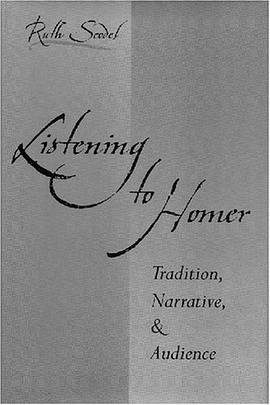
The Homeric poems were not intended for readers, but for a listening audience. Traditional in their basic elements, the stories were learned by oral poets from earlier poets and recreated at every performance. Individual nuances, tailored to the audience, could creep into the stories of the Greek heroes on each and every occasion when a bard recited the epics.For a particular audience at a particular moment, "tradition" is what it believes it has inherited from the past--and it may not be particularly old. The boundaries between the traditional and the innovative may become blurry and indistinct. By rethinking tradition, we can see Homer's methods and concerns in a new light. The Homeric poet is not naive. He must convince his audience that the story is true. He must therefore seem disinterested, unconcerned with promoting anyone's interests. The poet speaks as if everything he says is merely the repetition of old tales. Yet he carefully ensures that even someone who knows only a minimal amount about the ancient heroes can follow and enjoy the performance, while someone who knows many stories will not remember inappropriate ones. Pretending that every detail is already familiar, the poet heightens suspense and implies that ordinary people are the real judges of great heroes."Listening to Homer" transcends present controversies about Homeric tradition and invention by rethinking how tradition functions. Focusing on reception rather than on composition, Ruth Scodel argues that an audience would only rarely succeed in identifying narrative innovation. Homeric narrative relies on a traditionalizing, inclusive rhetoric that denies the innovation of the oral performance while providing enough information to make the epics intelligible to audiences for whom much of the material is new."Listening to Homer" will be of interest to general classicists, as well as to those specializing in Greek epic and narrative performance. Its wide breadth and scope will also appeal to those non-classicists interested in the nature of oral performance.Ruth Scodel is Professor of Greek and Latin, University of Michigan, and former president of the American Philological Association."Ruth Scodel's Listening to Homer proves it is still possible to explore the workings of epic without recourse to a battery of jargon or technicalities. This is not a 'one big idea' book but a rich . . . set of reflections; it makes refreshing reading . . . ."---Greece and Rome"This is an important book, putting the receiving rather than the sending side of the performance of the Homeric epics center stage. The many observations on narrative technique are often new and worthwhile."---Irene J.F. de Jong, Gnomon
作者简介
目录信息
读后感
用户评价
这部作品的结构设计简直是鬼斧神工,它像一个精密的万花筒,每一个转动都会折射出全新的图案和色彩。我常常惊叹于作者是如何在如此庞杂的素材和错综的人物关系中,依然保持叙事的流畅和情感的连贯性。这本书并非以情节的跌宕起伏取胜,而是以其内在的逻辑张力和氛围的营造占据上风。它成功地营造了一种弥漫着宿命感和无力感的氛围,让你在为书中人物的命运揪心时,又不得不接受某种不可抗拒的力量。我必须承认,阅读初期需要一个适应的过程,那些略显晦涩的典故和象征意义需要读者具备一定的背景知识,但一旦跨过那道门槛,等待你的就是一片广阔而丰饶的精神原野。作者对细节的关注近乎偏执,无论是环境的描摹还是角色的微小动作,都经过了深思熟虑,没有一处是多余的。这种对文本密度的极致追求,使得每一次重读都会有新的发现。它不仅仅是在讲述一个故事,更像是在构建一个完整的世界观,一个关于人类经验的微缩宇宙,值得反复咀嚼和品味。
评分这本书的文体实验性令人印象深刻,它大胆地挑战了传统小说的界限,融合了诗歌的韵律、随笔的思辨以及剧本的对白张力。我被作者驾驭这种复杂混合体的方式深深折服。它读起来像是一部精心编排的交响乐,不同的乐章(叙事视角、时间跳跃、主题探讨)和谐共存,共同推向一个高潮,但这个高潮并非是爆炸性的,而是一种对真理的温柔揭示。虽然部分篇章的跳跃性很大,需要读者主动去连接那些看似松散的线索,但这恰恰是它魅力所在——它邀请读者成为意义的共同创造者,而非被动的接受者。书中关于知识的获取与流传的讨论,尤其贴合当下信息爆炸的时代背景,给人以强烈的现实警醒。它让你思考,在浩如烟海的信息中,我们究竟如何辨识出真正的智慧?总而言之,这是一部需要慢读、精读、并带着思考去阅读的杰作,它所给予读者的回报,远远超出了故事本身所能承载的重量。
评分这部作品的叙事节奏令人着迷,它以一种近乎耳语的方式,将读者缓缓引入一个充满古老智慧与现代困惑交织的世界。作者的笔触细腻而富有穿透力,总能在不经意间抛出一个直击人心的哲学思辨。我特别欣赏作者在构建人物弧光时的那种克制与精准,每一个角色的挣扎与成长,都仿佛在我们的日常生活中真实上演,只是披上了一层更具史诗感的帷幕。阅读过程更像是一场深度冥想,每一次停顿都让人忍不住回味先前读到的那些充满张力的对话和场景描写。那种对人性深处隐秘角落的探索,既令人不安,又充满了启迪。我几乎能感受到作者在遣词造句时所投入的巨大心力,那些看似简单的词汇,组合起来却能引发海啸般的共鸣。它不是那种追求快速情节推进的小说,而更像是一块需要细细品味的陈年佳酿,每一口都有不同的层次感和回甘。尤其是对于那些关注社会结构变迁和个体在宏大历史洪流中如何自处的读者来说,这本书提供了一个极为丰富和复杂的参照系。它成功地将古典的庄严感与当代的疏离感融为一体,创造出一种独一无二的阅读体验,让人在合上书页后,仍久久无法抽离其构建的那个世界。
评分读完这本书,我感觉自己仿佛经历了一场漫长而艰苦的智力攀登,每一步都充满了挑战,但也因此带来了无与伦比的视野。作者似乎并不满足于表面的叙事,他试图解构我们习以为常的认知框架,用一种近乎学术的严谨性去审视那些最基本的人类情感——爱、失落、背叛与救赎。语言的运用是这本书最令人称道之处,它时而如同冷峻的雕塑,精确而有力,时而又像流动的溪水,以其不可预测的蜿蜒曲折引人入胜。我尤其欣赏作者在处理时间线时展现出的高超技巧,过去、现在与可能的未来交织并行,却又保持着惊人的清晰度,这要求读者必须保持高度的专注。这本书绝对不适合那些寻求轻松娱乐的读者,它要求你投入你的全部心神,去追逐那些潜藏在文字背后的深层含义。它更像是一面镜子,映照出我们自身在面对道德困境时的犹豫与矛盾。那些关于记忆如何塑造现实的探讨,至今仍在我脑海中挥之不去。它迫使我重新审视那些我曾经深信不疑的真理,这种颠覆性的阅读体验,是很多当代小说难以企及的。
评分老实说,这本书带来的阅读震撼感是近年来少有的。它不是那种让你读完就扔到一边、转头即忘的作品,它的思想内核具有强大的穿透力,会在你生活的缝隙中不时冒出来,引发你的沉思。作者的叙述风格非常独特,夹杂着一种既疏离又极度共情的语调,仿佛一个旁观的智者,既冷静地记录着人类的愚蠢与伟大,又对其抱持着深深的同情。书中对于“时间”这一概念的探讨尤为深刻,它模糊了历史的界限,暗示着我们今日的困境,往往是古老循环的重复。我特别喜欢作者处理冲突的方式,它很少是外在的暴力冲突,更多的是内在的、心理层面的角力,这种对精神世界的细致解剖,让我感到既紧张又过瘾。对于那些追求文学深度和思想厚度的读者来说,这本书无疑是一笔宝贵的财富。它像一把锋利的解剖刀,精准地切开了现代社会中个体异化与身份迷失的症结,促使我们进行深刻的自我审视。
评分 评分 评分 评分 评分相关图书















本站所有内容均为互联网搜索引擎提供的公开搜索信息,本站不存储任何数据与内容,任何内容与数据均与本站无关,如有需要请联系相关搜索引擎包括但不限于百度,google,bing,sogou 等
© 2026 onlinetoolsland.com All Rights Reserved. 本本书屋 版权所有