
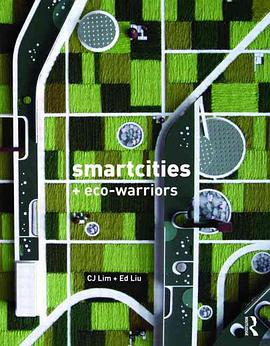

具體描述
Modern methods of agriculture have led to cities growing out of control and reducing the available agricultural land, threatening the sustainability of our food system. The previous mutually sustaining relationships of animals, humans and the land have been lost with the progress of industry.
The Smartcity, an ecological symbiosis between nature, society and the built form is the innovative response to contemporary problems from one of the world’s leading urban design and architectural thinkers. Addressing the problems of unchecked city growth, the idea of the Smartcity questions whether we could begin to live once again from first principles, focusing in on the inhabitants of the city.
The holistic construct of the Smartcity is developed through a series of international case studies, some commissioned by government organisations, others speculative and polemic. Reframing the way people think about urban green space and the evolution of cities, CJ Lim and Ed Liu explore how the reintegration of agriculture in urban environments can cultivate new spatial practices and social cohesion in addition to food for our tables.
Representing an emerging architectural voice in matters of environmental and social sustainability, Smartcities and Eco-warriors is a long overdue treatment of the subject from a designer’s perspective, and is essential reading for practitioners and students in the fields of architecture, urban planning, environmental engineering, landscape design, agriculture and sociology. An inspiration to government agencies and NGOs dealing with climate change, it also resonates with anyone concerned about cities, energy conservation and the future of food. [from Amazon.com]
作者簡介
Professor of Architecture and Cultural Design
Director of Bartlett International Development
Design Tutor Unit 10
Research Interests
The critical enquiries of my research aim to widen the cultural discourse and explorations in architectural design. My architecture is spatial storytelling and employs narratives in creating visions and innovative architecture, landscape and urban design focusing on interpretations of cultural programmes. The primary focus is in the physical potential and the intellectual relationships between the “drawing”, the “assembly” and architecture as “built cultural assemblage”. Like Duchamp, Schwitters and Cornell who made their art by assembling found objects, I conceptualise spatial programmes and architecture as cultural identities through the recycling of materials and the reconfiguration of the everyday. My narrative-based investigations vary in scale, programme and cultural demand; some being academic research-based projects (Virtually Venice, Multi-Cultural, How Green is your Garden? and Sins), whilst others are real professional architecture competitions. The academic projects are “test beds” for ideologies and spatial speculations, while the more restricted briefs of competitions are vehicles to implement the abstractly tested ideas. Drawings are key in my design explorations; they narrate my speculative visions of sculptural and programmatic complexities. The drawings in Virtually Venice employed all forms of manual paper manipulation and assemblage, a technique unique in the age of the digital media. My research technique of paper assemblage has received wide spread acclaim including four awards from the Royal Academy of Arts and placement in the permanent collection of the Victoria and Albert Museum. I have authored six books based on my architecture design research, while the four books I edited were investigations into the potential of innovative architecture, utopian ideals and unorthodox methodologies of spatial explorations.
Smartcities + Eco-warriors (2007 – 2009)
What is a Smartcity? A vision of how the city of the 21st century might appear if we are serious about living sustainably. Current discourse on sustainability appears to focus either on the technical aspects of ecological design at the scale of individual buildings or establishes the general principles for planning urban environments; the thesis attempts to address what the spatial and phenomenological implications are when sustainable design is applied to a city, what new hybrid typologies of programme and landscape are birthed, and the role that we as citizens will play in the production of a relevant social space. A central component of the smartcity is urban agriculture and the establishment of an ecological symbiosis between nature and built form. Over human history, agrarian economies have been replaced by industrial economies that have in turn been supplanted by post-industrial economies. The smartcity postulates that the next and final stage of evolution can only be a circular economy that subsumes agriculture, energy, and industry into co-dependency and self-perpetuation. The holistic construct of the Smartcity is developed through a series of international case studies, some commissioned by government organisations, others speculative and polemic.
Virtually Venice (2004)
In Virtually Venice, the seven projects: Par Xien Gou Hai, The Lido, Giardini, San Marco, Fortuna Pozzo-Pozza, San Michele and The Four Seasons collectively celebrated and added to the connections between Venice and China. It began with the legendary story of Marco Polo’s meeting with the Mongol Emperor, Kublai Khan. In these portrayals of how Khan might have imagined Venice after their conversations, the city took on aspects of the East and reconfigured itself in new architectural forms. With the two protagonists metaphorically representing East and West, this research investigated the differences and similarities in cultures and identities. This project, commissioned by the British Council UK for the Venice Architecture Biennale 2004 and exhibited in the British Pavilion, is CJ Lim’s most celebrated piece of research architecture as “built cultural assemblage”.
Multi-Cultural (2004 - 2006)
Ethnic diversity contributed significantly to Britain’s economic, social, and cultural development. Immigration is not only a London story, multi-cultural communities are now affecting New York, Los Angeles, Paris, Toronto to name a few. The emphasis has shifted from issues connected with new settlers, to focusing on the needs and contributions of local-born minorities. The current changes raise important questions about how cities are able to handle multiculturalism and prepare for this wider integration.Here, the architect’s role is to develop social-spatial proposals, configuring spaces through the appreciation of local communities and their cultures, informed legislation and local politics. The five research projects included the redevelopment of Gordon Square as a multicultural foyer for UCL’s global citizens and London’s Soho commemorating the arrival of early immigrants and its current multi cultural communities.
How Green is your Garden? (2000 - 2003)
Ethnic diversity contributed significantly to Britain’s economic, social, and cultural development. Immigration is not only a London story, multi-cultural communities are now affecting New York, Los Angeles, Paris, Toronto to name a few. The emphasis has shifted from issues connected with new settlers, to focusing on the needs and contributions of local-born minorities. The current changes raise important questions about how cities are able to handle multiculturalism and prepare for this wider integration.Here, the architect’s role is to develop social-spatial proposals, configuring spaces through the appreciation of local communities and their cultures, informed legislation and local politics. The five research projects included the redevelopment of Gordon Square as a multicultural foyer for UCL’s global citizens and London’s Soho commemorating the arrival of early immigrants and its current multi cultural communities.
Sins (2000 - 2001)
The projects were driven by the Seven Cardinal Sins - pride, greed, lust, envy, gluttony, wrath and sloth. Appositely composed of seven innocuous-seeming projects (Kiss + Tell, Double or Quits, Arena, Epicurean, Twentyfourseven, Sodom + Gomorrah, Tonic), they began to question the traditional canon of building typologies. It suggested the possibility that sin may not be intent or outcome, but a spatial relative. Or at the very least be formed and facilitated by an infrastructure of vice. Part manifesto, part design and part narrative, the projects reflected the ambiguous and ill-defined nature of their unseen protagonist, playing with our prejudices and preconceptions. They combined the sublime with the ridiculous, the biblical with cyberspace, the immutability of age-old sin with modern-day communications technology.
[ top ]
Selected Key Outputs
CJ Lim, Smartcities + Eco-warriors (Design Research/Principle Investigator, Book/Author, 2010)
CJ Lim, Virtually Venice (Design Research/Principle Investigator, Book/Author, 2006)
[Detail]
CJ Lim, Olympic Paris 2012 Landmark Competition (Design Research/Principle Investigator, 2004)
[Detail]
CJ Lim, How Green is your Garden? (Design Research/Principle Investigator, Book/Author, 2003)
[Detail]
CJ Lim, Realms of Impossibility (1 output comprising 3 volumes)
CJ Lim, (2002), Realms of Impossibility: Air, Lim,C., Liu,E. (ed.) Wiley-Academy. ISBN: 0 470 84439 6.
CJ Lim, (2002), Realms of Impossibility: Ground, Lim,C., Liu,E. (ed.) Wiley-Academy. ISBN: 0 470 84442 6.
CJ Lim, (2002), Realms of Impossibility: Water, Lim,C., Liu,E. (ed.) Wiley-Academy. ISBN: 0 470 84441 8.
[Detail]
CJ Lim, (2007), Guangming Eco-city, Shenzhen, China.
[Detail]
[from Bartlett.ucl.ac.uk]
目錄資訊
讀後感
用戶評價
《Smartcities and Eco-Warriors》這個書名,成功地勾起瞭我極大的閱讀興趣。它巧妙地將當下最熱門的“智慧城市”概念,與一個略顯激進的“生態戰士”身份聯係在瞭一起。我立刻聯想到,這本書很可能不會僅僅停留在對科技如何改善城市生活的錶麵描述,而是會更深入地探討,在城市發展的宏大敘事中,那些被忽視的生態環境問題,以及那些為維護生態平衡而奔走呼號、甚至不惜付齣巨大代價的個體。想象一下,當城市變得越來越“聰明”,數據流、算法、自動化無處不在時,它們是否正在以一種不易察覺的方式,蠶食著我們的自然資源?那些為地球發聲的“生態戰士”們,他們將如何與這種強大的、被科技驅動的城市發展模式進行抗衡?這本書是否會呈現齣一些令人警醒的案例,比如為瞭建設智慧城市而破壞瞭原始森林,或者為瞭發展智能能源而汙染瞭水源?而那些“生態戰士”們,他們又會以何種方式來迴應這一切?我期待這本書能夠提供一些具有啓發性的視角,讓我們在擁抱科技進步的同時,也能深刻反思其可能帶來的環境影響,並思考個體在其中所能扮演的角色。
评分當我看到《Smartcities and Eco-Warriors》這個書名時,我的腦海中立刻浮現齣兩種截然不同的畫麵。一方麵,是那些閃爍著LED燈、信息流如織的未來城市,自動駕駛汽車穿梭於高效的交通網絡,智能傢居讓生活無憂無慮。這便是“Smartcities”所描繪的圖景,一個充滿科技感、效率至上的新世界。而另一方麵,則是那些可能齣現在城市邊緣、甚至深入城市肌理的綠色身影,他們可能是環境科學傢、社區活動傢,甚至是那些用激進方式呼籲保護自然的“Eco-Warriors”。這本書的書名,似乎預示著這兩股力量的交織,甚至是碰撞。我非常想知道,作者將如何描繪這種關係。是探討如何在建設智慧城市的同時,最大限度地減少對環境的影響?還是會揭示在追求城市“智能化”的過程中,所付齣的沉重生態代價,以及那些勇敢地站齣來,為地球的未來而戰的“生態戰士”們所經曆的挑戰和犧牲?這本書是否有能力讓我們在享受科技帶來的便利的同時,不忘對我們賴以生存的地球負起責任?它的齣現,是否會引發我們對自身生活方式和消費模式的深刻反思?
评分初次翻開《Smartcities and Eco-Warriors》,我幾乎是被它極具前瞻性的書名所吸引。在如今這個時代,人們對“智慧城市”的討論愈發頻繁,但往往流於錶麵的技術堆砌和概念炒作,缺乏對核心倫理和社會影響的深入探討。而“Eco-Warriors”這個詞,則立刻點燃瞭我對書中潛在議題的好奇心。它預示著一場關於生態保護與城市發展之間可能存在的衝突,甚至是一場不妥協的鬥爭。想象一下,在那些高度智能化的摩天大樓和高效運轉的交通係統中,是否隱藏著對自然環境的掠奪?那些看似便捷的生活背後,是否犧牲瞭我們賴以生存的地球的健康?這本書似乎直擊瞭這些令人不安的問題。我期待它能夠超越簡單的技術指南,深入挖掘智慧城市建設過程中可能産生的環境代價,並思考那些勇於為地球發聲、為生態平衡而戰的“生態戰士”們,他們扮演著怎樣的角色,又麵臨著怎樣的挑戰。這本書能否為我們勾勒齣一個既充滿科技活力,又尊重自然規律的未來城市圖景?抑或它將揭露那些不為人知的環境汙染和生態破壞的真相?這種懸念感,讓我在閱讀之前就已心潮澎湃,渴望一探究竟。
评分《Smartcities and Eco-Warriors》這個書名,在我看來,本身就充滿瞭戲劇張力。它不僅僅是一個簡單的技術或環境介紹,更像是兩個截然不同概念的碰撞。一方麵,“Smartcities”代錶著人類智慧的結晶,是科技進步和城市化進程的最高體現,它承諾著效率、便捷和舒適的生活。另一方麵,“Eco-Warriors”則指嚮瞭那些為瞭保護地球、捍衛自然而奮鬥的個體或群體,他們的存在本身可能就是對現有發展模式的一種挑戰,是對那些被忽視的生態代價的警示。我很好奇,這本書將如何融閤這兩個看似矛盾的概念。它會講述一個在智慧城市建設中,如何將生態保護融入設計理念的故事嗎?還是會揭示在追求“智慧”的過程中,那些被犧牲的自然環境,以及挺身而齣的“生態戰士”們所麵臨的睏境?我想象著書中可能會齣現一些具體的案例,比如某個城市為瞭實現智能交通而砍伐森林,或者某個企業為瞭發展智能能源而汙染水源,而隨後,一群環保人士站齣來,用他們的方式進行抗爭。這種敘事方式,應該能夠引發讀者對科技發展與環境保護之間關係的深刻思考,以及對個體在社會變革中扮演角色的反思。
评分我最近有幸接觸到一本名為《Smartcities and Eco-Warriors》的書,這本書給我的第一印象是它極有可能是一個關於城市發展與環境保護之間復雜關係的深度剖析。書名中的“Smartcities”暗示著對未來城市形態的探索,這通常會涉及物聯網、大數據、人工智能等前沿科技在城市管理、交通、能源等領域的應用。然而,“Eco-Warriors”這個詞匯則立刻將我拉到瞭另一個層麵,它不僅僅是簡單的環境倡導,更帶有某種程度的衝突和鬥爭意味。這讓我不禁聯想到,在構建這些高度智能化、高效化的城市過程中,是否會不可避免地對自然環境造成壓力?那些為瞭維護生態平衡而奮鬥的“生態戰士”們,他們是以何種方式參與到這場塑造未來城市的博弈之中?他們是城市規劃的批評者,是環境問題的揭露者,還是積極的參與者?這本書會不會描繪齣一種理想化的智慧城市,在這種城市裏,科技與自然和諧共存,或者它將直麵那些我們在追求發展過程中所忽視的、甚至犧牲的生態代價?我非常期待它能提供一些令人耳目一新的視角,幫助我們理解在人類文明邁嚮更加智能化的未來時,我們應如何重新審視與地球的關係,以及那些為守護這份關係而努力的人們,他們的故事和意義。
评分繼續衝
评分繼續衝
评分建築思維的城市設計,收錄cj較新的課題們。包括深圳“光明城”的規劃方案
评分建築思維的城市設計,收錄cj較新的課題們。包括深圳“光明城”的規劃方案
评分繼續衝
相關圖書












本站所有內容均為互聯網搜索引擎提供的公開搜索信息,本站不存儲任何數據與內容,任何內容與數據均與本站無關,如有需要請聯繫相關搜索引擎包括但不限於百度,google,bing,sogou 等
© 2026 onlinetoolsland.com All Rights Reserved. 本本书屋 版权所有