
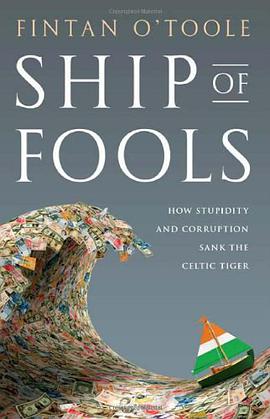

具体描述
The death of the Celtic tiger is not an extinction event to trouble naturalists. There was, in fact nothing natural about this tiger, if it ever really existed. The "Irish Economic miracle" was built on good old-fashioned subsidies (from the European Union) and the simple fact that until the 1980s Ireland was by the standards of the developed world so economically backward that the only way was up. And as it began to catch up to European and American averages, the Irish economy could boast some seemingly remarkable statistics. These lured in investors, the Irish deregulated and all but abandoned financial oversight, and a great Irish financial ceilidh began. It would last for a decade. When the global financial crash of 2008 arrived it struck Ireland harder than anywhere - even Iceland looked like a model of rectitude compared to the fiasco that stretched from Cork to Dublin. There was an avalanche of statistics as toxic as the property-based assets that lay beneath many of them: The International Monetary Fund was predicting that Ireland's Gross Domestic Product (GDP) would shrink by 13.5 per cent in 2009 and 2010 - the worst performance among all the advanced economies and one of the worst ever recorded in peacetime in the developed world. Government debt almost doubled in a year. In May 2008, 13.5 million was paid for a 450-acre farm in Warrenstown, County Meath - one of the highest prices ever paid for agricultural land anywhere in the world. By 2009 the level of debt among Irish households and companies was the highest in the European Union. The country's gross indebtedness was larger than Japan's, which has thirty times the population. Between 1994 and 2006, the average second-hand house price in Dublin increased from 82,772 to 512,461 - a rise of 519 per cent. By 2009 Irish house prices had fallen more rapidly than any others in Europe. With a fifth of its office spaces empty, Dublin had the highest vacancy rate of any European capital and was rated as having the worst development and investment potential of twenty-seven European cities. The Irish stock exchange fell by 68 per cent in 2008 The average Irish family had lost almost half its financial assets Unemployment rose faster than in any other Western European country, increasing by 85 per cent in a year. Ireland's bad bank, the National Assets Management Agency (Nama), which had to take over 90 billion in loans to developers from banks that would otherwise be insolvent holds more assets [sic] than any publicly quoted property company in the world, dwarfing giants such as GE Capital Real Estate and Morgan Stanley Real Estate, which own assets of 60 billion and 48 billion respectively. And under all this rubble lay the corpse of the Celtic Tiger. How Ireland managed to achieve such a spectacular implosion is a stunning story of corruption, carelessness and venality, told with passion and fury by one of Ireland's most respected journalists and commentators.
作者简介
目录信息
读后感
用户评价
这本书的语言风格,说实话,是极其华丽且充满个人印记的,这一点我必须承认。作者对词汇的掌控力毋庸置疑,那些精妙的比喻和排比,在某些章节确实达到了令人惊叹的文学高度,仿佛每一句话都经过了精心的打磨和雕琢,闪耀着一种古典的、近乎于巴洛克式的光芒。然而,这种过度的修饰最终却成了阻碍我理解的巨大障碍。我时常需要停下来,查阅那些生僻的、似乎是作者自创的复合词汇,或者去解构那些过于复杂的长句结构。叙事仿佛被一层厚厚的、精致的锦缎包裹着,美则美矣,却让人难以触及核心的肌理。我个人偏爱那种更为直接、更注重“述事”而非“辞藻堆砌”的文风,我希望文字是透明的、指向明确的媒介,而不是一个需要被层层剥开才能看到内容的艺术品。这种阅读体验,对我来说,更像是在参观一个过度装饰的博物馆,所有的展品都包裹在厚重的玻璃罩后,虽然工艺精湛,但缺乏了与观众的直接对话感。
评分角色塑造是这部作品令我感到最困惑的一环。书中的主要人物群像,缺乏了令人信服的、连贯的内在驱动力。他们似乎是围绕着特定的象征意义被搭建起来的,而非基于真实的人性复杂性而自然生成的。例如,那位被塑造成绝对理性的角色,在遭遇情感冲击时,其反应方式显得极其程式化,像是程序设定好的错误代码,而非人类面对突变时的真实混乱。我更喜欢那种充满瑕疵、矛盾重重,甚至行为上自我否定的角色,因为那才是真实生活的写照。在这里,所有的挣扎都太“文学化”了,太“概念化”了,少了一种泥土的芬芳和生活的烟火气。即便是配角,也往往沦为背景的符号,无法在我脑海中留下深刻的印象。读完后,我能回忆起作者构建的宏大世界观,却难以清晰地描摹出任何一个角色生动的面容和他们鲜活的个性。这使得整个阅读体验,最终变成了一次对抽象概念的巡礼,而非一次与鲜活生命的交谈。
评分结构和布局的处理上,该书表现出一种近乎于反传统的姿态,这在当代文学中并不少见。作者采用了多重叙事视角,时间线也如同被打碎的镜面一样,在不同的片段中跳跃、重组,试图构建一种非线性的全景图。初读时,这种破碎感确实带来了一种新奇的刺激,似乎每一个碎片都蕴含着等待被拼凑的意义。然而,随着阅读的深入,这种刻意的碎片化开始消耗读者的精力,而非提供洞察力。当不同视角的切换过于频繁,且缺乏清晰的标志性提示时,我发现自己不得不时刻紧绷神经,努力去分辨“谁在何时何地说了什么”。我更欣赏那些尽管在结构上有所创新,但始终能为读者提供清晰的锚点,引导我们进行探索的文本。这部作品的结构,与其说是引导探索,不如说更像是一场精心设计的迷宫,充满了岔路和死胡同,最终给人的感觉更多是疲惫而非豁然开朗的满足感。它更适合那些沉醉于形式实验的纯文学评论家,而非寻求一次流畅故事体验的普通读者。
评分这部作品的叙事节奏简直让人抓狂,就像是作者在刻意考验读者的耐心。开篇那些冗长、几乎与主线毫无关联的内心独白,占据了前三分之一的篇幅,让我一度怀疑我拿到的究竟是不是一本小说。人物的行动逻辑也常常显得飘忽不定,前一秒还在为某个微不足道的决定深思熟虑,后一秒却做出了完全违背之前铺垫的举动。我能理解作者试图营造一种后现代的解构感,或者探讨人类选择的随机性,但这种处理方式让故事的推进显得异常缓慢和拖沓。读到中间部分,我甚至需要频繁地回头查阅前文,试图找出那些被忽略的“重要线索”,结果却发现,所谓的线索常常只是作者为了炫技而设置的迷雾。如果不是我对作者以往作品的某种固执的期待,我恐怕早就合上书本,转投其他更清晰明朗的叙事世界了。这种阅读体验,与其说是享受故事,不如说是在进行一场艰难的智力拉锯战,而胜利的天平,似乎总是倾向于作者的故弄玄虚。我更倾向于那些能让我沉浸其中,而非不断跳出来审视文本结构的文学作品。
评分从主题的深度来看,这本书试图探讨的议题无疑是宏大且严肃的,涉及了存在主义的虚无感、社会结构的异化,以及个体在庞大系统中的无力感。这些都是引人深思的哲学命题,理论上应该能激发出强烈的共鸣。然而,作者处理这些深刻议题的方式,却显得有些疏离和说教。人物们更像是承载了作者某种哲学观点的载体,他们的痛苦和挣扎,更多是概念上的阐释,而非真正发自血肉的体验。我期待的是那种能够将哲学融入日常、让读者在情节发展中自然而然地领悟到世界观的作品。但在这里,哲思往往以一种突兀的、仿佛从讲台上突然转述下来的形式出现,破坏了故事的有机性。阅读过程中,我更多感受到的是一种智力上的被动接受,而非情感上的主动卷入。优秀的主题应该如同水渗透海绵,润物细无声;而这部作品,则更像是在宣讲一份厚厚的宣言,让人敬畏其思辨的广度,却难以对其情感的温度产生共鸣。
评分 评分 评分 评分 评分相关图书












本站所有内容均为互联网搜索引擎提供的公开搜索信息,本站不存储任何数据与内容,任何内容与数据均与本站无关,如有需要请联系相关搜索引擎包括但不限于百度,google,bing,sogou 等
© 2026 onlinetoolsland.com All Rights Reserved. 本本书屋 版权所有