
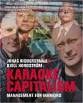

具体描述
"If you loved Funky Business as much as I did, you'll love Karaoke Capitalism. Weird? Most certainly. Different? Most definitely. But, if you want to re-imagine your organization and your career it's a thought-provoking place to start."
Tom Peters </P>
The creators will thrive at the expense of the copycats. Express yourself.</P>
In the long-awaited follow up to their internationally acclaimed Funky Business, Kjell Nordström and Jonas RidderstrSle have delivered a thought-provoking, workout for the wits in Karaoke Capitalism. A book that challenges individuals, businesses and nations to create originals rather than cover versions. Management guru Tom Peters said "If you loved Funky Business as much as I did, you'll love Karaoke Capitalism."</P>
The karaoke economy is dominated by individuals with endless choice. The trouble for business is that the karaoke club is also home to institutionalized imitation. Copy-cats abound. Only imagination and innovation place societies, organizations and individuals center-stage. </P>
Karaoke Capitalism is a call to arms. Kjell and Jonas are rebels with a cause. With their unorthodox combination of academic rigor, forceful logic and funky free-thinking they once again re-write the rules for revolutionaries. This is a true work-out for the wits. </P>
The book teaches us how to successfully compete on competencies, create capitalism with character, and how to have a great life while also making a living. It is required reading for all those wanting to be a first-rate version of themselves rather than a second-rate version of someone else.</P>
Karaoke Capitalism - create or cover?</P>
Karaoke Capitalism is a hitchhiker's guide to the galaxies of business. and practice is that business schools, benchmarking and best practice have transformed the entire world of commerce into a super-group of karaoke copying companies. And imitating someone else will never get you to the top - merely to the middle. </P>
Our societies are shaped by the glorious trio of technologies, institutions and galaxies of commerce. It is a book about people - management for mankind - the individuals prepared to grasp the microphone and express themselves. You have the rights. Now, you must learn to live them. </P>
The karaoke reality is a cosmopolitan club with endless individual choice but also a paltry place for institutionalized imitation. The dirty little secret of management theory values. Changes have now made abnormal the new normal. The bubble economy has given way to the double economy. Forget about appealing to the average. Success is a question of exploring the extremes.</P>
Corporations are no longer in control. Modern companies are facing the prospects of a two-front war: held hostage by talent and under siege by consumers. The winners know that wealth is created with wisdom, but to remain competitive they are forced </P>
to create knowledge networks that pose new and fundamentally different demands on the organization. </P>
In a world of economic Darwinism, survival is a question of being fit or sexy - competing on models and moods. Fitness boils down to using market imperfections to your advantage. Masters of mood exploit the imperfections of man by seducing or sedating consumer. Excellent companies re-invent innovation and re-energize the corporation. </P>
To develop the character of capitalism we have to accept individual responsibility. Look inside. Do you want to be a first-rate version of yourself or a second-rate version of someone else? </P>
"The Swedish economists, who shot to the top of the management guru charts in 2001 with their era-defining book, Funky Business, are back" Director magazine</P>
</P>
Kjell Nordstrom & Jonas RidderstraleDr. Jonas Ridderstrale and Dr. Kjell A Nordström are at the forefront of the new generation of business gurus. They cut through the madness and hyperbole surrounding the economy and their appeal is truly global. Jonas and Kjell have been featured on CNN and CNBC. They have appeared in Fortune, Fast Company, Time Magazine, Financial Times, Paris Match, and many other publications worldwide. The 2003 Thinkers 50, the bi-annual ranking of management thinkers, ranked Nordström and RidderstrSle at number 21.</P>
Kjell's and Jonas' uncompromising and decidedly fresh take on contemporary business life makes them two of the world's most sought after speakers. They also practice what they so persuasively preach. From their Stockholm base, Jonas and Kjell act as advisors and consultants to a number of multi- national corporations and are on the board of several companies.</P>
They both hold PhDs in international business from the Stockholm School of Economics and have been recognized as Sweden's outstanding young academics of the year.</P>
Their previous book, Funky Business: Talent makes capital dance quickly became an international bestseller, selling more than 250,000 copies. The book was recently ranked at number 16 in a survey of the greatest business books of all time.</P>
Praise for Funky Business</P>
"Funky Business is the antidote to bland writing and bland thinking." Tom Peters </P>
"It's the best un-businesslike business book I have ever read ....Funky Business is less of a business handbook and more of a religion. It should be treated like a chain letter - read it and pass it onto 10 other people." (or even better, tell 10 other people to buy it) . - Human Resources </P>
"Funky Business is a better book than most novels but it is not for bedtime. It will jerk you out of your complacency and make you question your very existence. It will transform your brain." - Customer Management </P>
"Funky Business is rigorously researched, witty and intelligent, and overflows with provocative ideas." Business Voice</P>
"Funky Business - the groovy bible of modern business philosophy" - Red magazine </P>
</P></P>
作者简介
目录信息
读后感
用户评价
这本书的叙事视角非常独特,它不像传统经济学著作那样聚焦于宏观的供需曲线,而是扎根于我们日常生活中那些看似琐碎的文化细节——比如如何选择一个背景音乐,或者如何包装一次家庭聚会。作者的洞察力在于,他能从这些微观层面,推导出整个社会价值取向的巨大转变。我非常欣赏书中对“效率至上”哲学如何侵蚀艺术和慢思考空间的讨论。它尖锐地指出了,当一切都被要求“快速变现”或“立刻产生价值”时,那些需要时间沉淀的、非功利性的精神活动,正在被无情地边缘化。整本书的论证过程充满了辩证思维,它承认了某些文化创新确实是市场驱动的,但同时又深刻揭示了这种驱动力背后潜藏的风险和异化。读完后,你可能会发现,就连你对这本书的赞美,也可能在无意中成为构建某种文化资本的一部分。这是一种后设的、令人深思的体验,它让你在肯定作者观点的同时,也对自己的评价行为进行了反思。
评分这本关于市场经济与流行文化的交织之作,读来令人耳目一新。作者似乎在探寻一个非常微妙的平衡点,即资本驱动的商业逻辑如何渗透到我们最个人化、最情感化的娱乐形式中去。我尤其欣赏书中对于“表演性消费”的剖析,那种在公共场合寻求被肯定的欲望,如何被精准地转化为可量化的经济价值。比如,书中提到那些精心策划的“网红打卡地”,表面上是追求美学体验,实则是参与了一场无声的、基于流量的竞争。叙事节奏拿捏得很好,它不像那种枯燥的学术分析,而是像一个老练的社会观察家在跟你娓娓道来那些隐藏在光鲜背后的潜规则。那些关于音乐版权、流媒体算法如何重塑“流行”定义的段落,真是让人脊背发凉,你突然意识到,你最爱的歌曲可能并不是因为其艺术价值而被推向顶峰,而是因为某些数据模型和商业协议的“合谋”。整本书在批判的力度和理解的深度之间找到了一条精妙的路径,它不只是简单地谴责,而是深入挖掘了我们作为消费者和生产者,是如何共同构建了这样一个既迷人又令人窒息的文化景观。它迫使你重新审视每一次点击、每一次点赞背后的经济动机。
评分老实说,这本书的论述密度非常高,需要反复咀嚼才能体会到其中蕴含的丰富层次。它似乎在探讨一个核心矛盾:在一个信息爆炸、选择过剩的时代,我们是如何反而失去了真正的“选择权”,转而被算法和主流叙事所牵引。作者对“怀旧”作为一种经济策略的分析尤其出色,它揭示了资本是如何巧妙地利用人们对过去纯真年代的向往,来推销那些本质上是新瓶装旧酒的产品和服务。书中没有太多情绪化的控诉,更多的是一种冷静到近乎冷酷的解构,仿佛是在给一个复杂的生态系统绘制详尽的解剖图。阅读过程中,我常常会想起某些现象级的文化事件,然后翻回去对照书中的理论,立刻就能找到对应的模型。这种即时的印证感,极大地增强了阅读的满足感。对于那些对文化消费和身份构建感兴趣的读者来说,这本书无疑是一份不可多得的指南,它不仅解释了“发生了什么”,更重要的是,它探讨了“为什么会这样”,以及“我们能做些什么来打破循环”。
评分读完这本书,我感觉自己像是在一个巨大的、霓虹闪烁的购物中心里迷失了方向,但同时又对这个商场的结构图了如指掌。作者的笔触极为细腻,仿佛能穿透那些五光十色的商品和浮夸的广告语,直达其冰冷的内核。特别是在探讨“情感商品化”的那几章,那种将人类的渴望、怀旧情绪,乃至脆弱性,打包成可销售产品的过程,描绘得入木三分。我记得书中对“体验经济”的批判尤为深刻,它指出我们追求的“真实体验”本身,已经变成了一种被设计好的、高度程式化的产品。这让我想起那些声称“回归自然”的豪华度假村,它们提供的不是自然,而是经过消毒和美化的“自然幻觉”。这本书的结构就像一个精密的钟表,每一个章节都环环相扣,将看似无关的文化现象(比如直播带货、限量版球鞋的炒作)串联起来,揭示出背后统一的驱动力。它不像某些批判著作那样空泛地指责“资本的邪恶”,而是用大量鲜活的、你我都能感知到的案例,构建起一个令人信服的论证链条。读它的时候,我常常需要停下来,对着屏幕或者书页上的文字陷入沉思,那种被洞悉的无奈感,是这本书最强大的后劲。
评分这本书的语言风格是极其现代且富有动感的,它不拘泥于传统的社会学框架,反而大量借鉴了媒体理论和流行文化评论的尖锐视角。作者擅长使用那些充满张力的对比手法,比如将工匠精神与工业化生产线上的“快速迭代”进行对比,从而揭示出价值判断的迁移。我最喜欢的部分是关于“微型企业家精神”的探讨,那种鼓吹每个人都要成为自己的CEO、将生活本身变成一个持续盈利项目的思潮,被剖析得淋漓尽致。这种内在的压力,迫使我们不断地优化自我表现,以适应不断变化的市场需求。书中对“个人品牌”的论述,非常精准地捕捉到了当代人的焦虑:你必须既是创作者,又是推广者,最后还要成为主要的消费者。这种角色的重叠,让“工作”和“生活”的界限彻底模糊。阅读过程中,我感觉作者就像一个技艺高超的魔术师,他一层层剥开我们习以为常的文化现象,让我们看到那些隐藏在表象之下的复杂齿轮是如何咬合转动的。它提供了一种全新的视角,去理解我们是如何自愿或不自愿地成为了“自我剥削”的积极参与者。
评分 评分 评分 评分 评分相关图书















本站所有内容均为互联网搜索引擎提供的公开搜索信息,本站不存储任何数据与内容,任何内容与数据均与本站无关,如有需要请联系相关搜索引擎包括但不限于百度,google,bing,sogou 等
© 2026 onlinetoolsland.com All Rights Reserved. 本本书屋 版权所有