

具体描述
在线阅读本书
Book Description
DISCOVER THE FUTURE OF BUSINESS
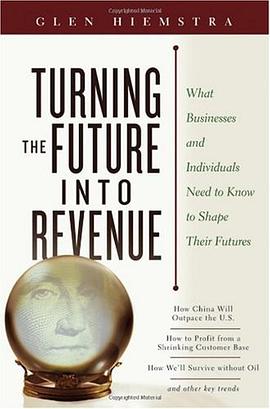
In Turning the Future into Revenue, Glen Hiemstra, founder of Futurist.com and noted expert on emerging business opportunities, explores how our changing world will transform private enterprise and public policy. From shifting demographics to global warming to new energy policies, change is coming. Turning the Future into Revenue shows how these new realities can be turned into profitable new ventures.
Some of the topics Hiemstra discusses include:
* Five long-term trends you should be prepared for
* Global warming and the urgent need for green business
* Profiting from technology and energy trends
* Predicting the future of your business or career
* Hedging your bets on future business
* Ten key practices of the future-oriented enterprise
* Future planning exercises, tools, and activities
* Tactics for forecasting the future
* Shaping your career for future success
From the Inside Flap
In business, it always helps to know what's coming. How can you take advantage of the business opportunities of tomorrow if you aren't planning for that tomorrow today?
In Turning the Future into Revenue, noted futurist and business consultant Glen Hiemstra explores the global changes that will revolutionize business and reveals the ways individuals and organizations can profit from those coming developments. Surprising demographic shifts, energy shortages, new technologies, environmental changes, and issues of race and religion will change the way we live. They will also lead to new and exciting business opportunities. Only those who foresee those opportunities will be in position to take advantage of them.
Hiemstra begins by offering a primer on the most important and surprising trends of the future and what effects they will have on people and businesses. Then he describes the kind of organizational planning required to be fully prepared. He outlines a structured three-stage future planning process that involves developing the ability of foresight, choosing a future direction, and deciding on a set of strategies that will get you there. This isn't the kind of planning you can manage over the course of a weekend retreat or during a round of golf. It takes time and effort.
What about the kind of short-term planning that affects the bottom line every day? Turning the Future into Revenue shows that short-term planning is generally much more effective when it's based on a long-term vision of the future, rather than on a quest for quick profits or market share. Hiemstra shows that the best way to develop short-term strategy is to work backwards from your long-term vision. It may seem contradictory, but the future isn't a one-way street; you can shape it with the right strategies today.
The most successful companies over the long-term will be those that not only anticipate near-term economic shifts, but those that take a much longer view than the current emphasis on organizational speed and agility encourages. Whatever comes, the future will certainly be a challenge. If you and your organization want to seize that future first, Turning the Future into Revenue offers invaluable insight on what will happen next—and how to predict, shape, and profit from it.
Book Dimension
length: (cm)22.9 width:(cm)16
作者简介
目录信息
读后感
用户评价
我是在一个非常偶然的机会下接触到这本书的,当时我正处于一个对当前社会发展方向感到迷茫的阶段,急需一些能够提供新视角的材料。这本书恰好满足了我的需求,但它的切入点非常独特,着重于探讨“非线性发展”的社会规律。作者似乎对传统的时间观和进步论持有一种审慎的怀疑态度,他更倾向于分析那些被主流叙事所忽略的“边缘效应”和“回溯性影响”。我尤其被他关于“技术异化”的论述所吸引,他没有用惯常的批判口吻,而是用一种近乎人类学的视角,去解构我们在被工具塑造的同时,是如何潜意识地反过来重塑了工具本身的意义。这本书的论证过程非常严谨,充满了大量的跨学科引证,从社会学到符号学,再到一点点神经科学的影子,让人感到作者的知识储备是多么扎实。虽然有些地方的理论模型构建相当复杂,需要读者付出额外的专注力,但一旦理解了那个核心逻辑框架,你会发现它能解释很多日常生活中看似无解的矛盾。
评分说实话,这本书的结构设计简直是教科书级别的范本。它完全打破了我对传统书籍“开篇-发展-高潮-结尾”的刻板印象。作者采用了多线叙事的手法,将三个看似毫无关联的主题——一个关于城市规划的历史案例、一组关于消费心理学的实验数据,以及一个关于未来劳动力市场的预测——巧妙地编织在一起。在书的前半部分,你可能会感到困惑,觉得这些碎片化的信息难以整合,但作者的功力就在于此,他让你在“等待连接”的过程中保持高度的紧张感。到了中段,随着关键信息点的逐步揭示,那些分散的线索如同被磁石吸引般迅速汇聚,那种豁然开朗的感觉,简直比解开一个复杂的谜题还要令人兴奋。这本书的章节划分也非常有技巧性,每一章的末尾都留有一个悬念,让你迫不及待地想知道作者接下来将如何构建下一个逻辑层次。这种层层递进的阅读体验,极大地增强了全书的可读性和探索性。
评分这本书给我最大的冲击,在于它对“身份认同”的解构。它没有停留在探讨民族、阶级这类宏大叙事下的身份构建,而是将焦点聚集在了数字时代个体身份的“流变性”上。作者提出了一种很有意思的观点:在高度互联的虚拟空间中,我们的身份不再是一个固定的坐标点,而更像是一个不断被刷新和验证的“算法集合”。这种对自我边界模糊化的深入探讨,让我产生了强烈的代入感和自我审视。书里举了一个关于社交媒体用户“人设”维护成本的例子,分析得入木三分,让人不禁思考自己在线上和线下呈现出的不同“版本”的真实性。它不是在批判,而是在冷静地描述这种新的生存状态带来的心理负荷和认知转变。这本书的洞察力是锐利的,它撕开了我们习以为常的舒适区,迫使我们直面那个在数据流中不断重塑的“我”。读完之后,我感觉自己对周围的人和事都多了一层理解的深度,理解了表象之下的运作逻辑。
评分这本书的语言风格简直是一股清流,充满了古典的韵味和现代的张力。我特别欣赏作者在描述复杂概念时,那种信手拈来的比喻和排比句式,读起来有一种强烈的节奏感和画面感,简直可以想象出作者在书桌前深思熟虑、斟酌字句的场景。比如,当他谈及集体记忆的脆弱性时,他用了一段非常长、但逻辑严密的排比句,将“遗忘的沙丘”、“被修改的碑文”和“耳语中的历史”串联起来,那种美感和力量感是任何简单的陈述句都无法比拟的。更难得的是,这种华丽的辞藻并没有掩盖其思想的深度。相反,它像是为深刻的洞察披上了一层优雅的丝绸外衣。我得承认,有些段落我需要反复阅读才能完全领会其中的深意,但每一次重读,都能从中挖掘出新的层次。这本书更像是一件精心打磨的艺术品,每一个词汇的选择都充满了匠心。它不仅是知识的传递,更是一种阅读体验的享受,让人沉醉其中,流连忘返。
评分哇,我最近翻阅的这本关于社会结构变迁的书简直让人眼前一亮!作者的笔触非常细腻,将宏观的历史脉络与微观的个体命运巧妙地编织在一起,读起来丝毫没有枯燥感。它不像那种严肃的学术著作,而是充满了对人性深处的洞察和对未来可能性的大胆猜想。特别是关于信息技术如何重塑人际交往模式的那一部分,简直是神来之笔。作者没有停留在表面的现象描述,而是深入挖掘了技术背后驱动力的伦理困境和潜在的权力转移。我记得其中有一章专门探讨了“共享经济”背后的劳动者权益问题,那种沉甸甸的思考和毫不留情的剖析,让我不得不停下来,重新审视我习以为常的生活方式。这本书的叙事节奏把握得极好,时而如涓涓细流,娓娓道来;时而又如惊涛骇浪,将你卷入思辨的漩涡。读完合上书的那一刻,我感觉自己的思维仿佛被重新校准过,对世界的认知又拓宽了一层维度。这本书的价值在于,它不提供标准答案,而是为你提供一套更高清的观察世界的“滤镜”。
评分 评分 评分 评分 评分相关图书











本站所有内容均为互联网搜索引擎提供的公开搜索信息,本站不存储任何数据与内容,任何内容与数据均与本站无关,如有需要请联系相关搜索引擎包括但不限于百度,google,bing,sogou 等
© 2026 onlinetoolsland.com All Rights Reserved. 本本书屋 版权所有