

具体描述
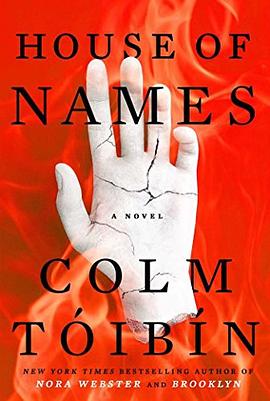
From the thrilling imagination of bestselling, award-winning Colm Tóibín comes a retelling of the story of Clytemnestra—spectacularly audacious, violent, vengeful, lustful, and instantly compelling—and her children.
“I have been acquainted with the smell of death.” So begins Clytemnestra’s tale of her own life in ancient Mycenae, the legendary Greek city from which her husband King Agamemnon left when he set sail with his army for Troy. Clytemnestra rules Mycenae now, along with her new lover Aegisthus, and together they plot the bloody murder of Agamemnon on the day of his return after nine years at war.
Judged, despised, cursed by gods she has long since lost faith in, Clytemnestra reveals the tragic saga that led to these bloody actions: how her husband deceived her eldest daughter Iphigeneia with a promise of marriage to Achilles, only to sacrifice her because that is what he was told would make the winds blow in his favor and take him to Troy; how she seduced and collaborated with the prisoner Aegisthus, who shared her bed in the dark and could kill; how Agamemnon came back with a lover himself; and how Clytemnestra finally achieved her vengeance for his stunning betrayal—his quest for victory, greater than his love for his child.
In House of Names, Colm Tóibín brings a modern sensibility and language to an ancient classic, and gives this extraordinary character new life, so that we not only believe Clytemnestra’s thirst for revenge, but applaud it. He brilliantly inhabits the mind of one of Greek myth’s most powerful villains to reveal the love, lust, and pain she feels. Told in fours parts, this is a fiercely dramatic portrait of a murderess, who will herself be murdered by her own son, Orestes. It is Orestes’ story, too: his capture by the forces of his mother’s lover Aegisthus, his escape and his exile. And it is the story of the vengeful Electra, who watches over her mother and Aegisthus with cold anger and slow calculation, until, on the return of her brother, she has the fates of both of them in her hands.
作者简介
Colm Toibin was born in Enniscorthy, Co. Wexford in 1955. He studied at University College Dublin and lived in Barcelona between 1975 and 1978. Out of his experience in Barcelona be produced two books, the novel ‘The South’ (shortlisted for the Whitbread First Novel Award and winner of the Irish Times/ Aer Lingus First Fiction Award) and ‘Homage to Barcelona’, both published in 1990. When he returned to Ireland in 1978 he worked as a journalist for ‘In Dublin’, ‘Hibernia’ and ‘The Sunday Tribune’, becoming features editor of ‘In Dublin’ in 1981 and editor of Magill, Ireland’s current affairs magazine, in 1982. He left Magill in 1985 and travelled in Africa and South America. His journalism from the 1980s was collected in ‘The Trial of the Generals’ (1990). His other work as a journalist and travel writer includes ‘Bad Blood: A Walk Along the Irish Border’ (1987) and ‘The Sign of the Cross: Travels in Catholic Europe’ (1994). His other novels are: ‘The Heather Blazing (1992, winner of the Encore Award); ‘The Story of the Night’ (1996, winner of the Ferro-Grumley Prize); ‘The Blackwater Lightship’ (1999, shortlisted for the IMPAC Dublin Prize and the Booker Prize and made into a film starring Angela Lansbury); ‘The Master’ (2004, winner of the Dublin IMPAC Prize; the Prix du Meilleur Livre; the LA Times Novel of the Year; and shortlisted for the Booker Prize); ‘Brooklyn’ (2009, winner of the Costa Novel of the Year). His short story collections are ‘Mothers and Sons’ (2006, winner of the Edge Hill Prize) and ‘The Empty Family (2010). His play ‘Beauty in a Broken Place’ was performed at the Peacock Theatre in Dublin in 2004. His other books include: ‘The Modern Library: the 200 Best Novels Since 1950’ (with Carmen Callil); ‘Lady Gregory’s Toothbrush’ (2002); ‘Love in a Dark Time: Gay Lives from Wilde to Almodovar’ (2002) and ‘All a Novelist Needs: Essays on Henry James’ (2010). He has edited ‘The Penguin Book of Irish Fiction’. His work has been translated into thirty languages. In 2008, a book of essays on his work ‘Reading Colm Toibin’, edited by Paul Delaney, was published. He has received honorary doctorates from the University of Ulster and from University College Dublin. He is a regular contributor to the Dublin Review, the New York Review of Books and the London Review of Books. In 2006 he was appointed to the Arts Council in Ireland. He has twice been Stein Visiting Writer at Stanford University and also been a visiting writer at the Michener Center at the University of Texas at Austin. He is currently Leonard Milberg Lecturer in Irish Letters at Princeton University.
目录信息
读后感
评分
评分
评分
评分
用户评价
这本书真是让人欲罢不能,我花了整整一个周末才把它读完,感觉就像经历了一场酣畅淋漓的冒险。作者的叙事手法极其老练,每一个转折都出人意料,却又在回味时觉得合乎情理。特别是对人物内心世界的刻画,细腻得让人心惊,仿佛能透过文字直接感受到他们的挣扎与渴望。我特别喜欢主人公在面对困境时展现出的那种坚韧与智慧,他不是那种完美的英雄,有着明显的缺点,但也正是这些不完美,让他显得如此真实可信。书中对社会阶层差异的描绘也非常深刻,那些隐晦的偏见和制度性的不公,都以一种不动声色却极具力量的方式呈现出来,引人深思。阅读过程中,我常常需要停下来,深吸一口气,整理一下纷乱的思绪,因为情节的张力实在太强了。那种悬而未决的紧张感,如同被一根无形的线牵引着,直到最后一页才彻底释放。不得不提的是,作者在场景描绘上简直是个天才,无论是古老宏伟的建筑,还是阴暗潮湿的小巷,都跃然纸上,让人身临其境。这本书不仅仅是一个故事,更像是一面镜子,映照出人性的复杂与幽微,读完后很长一段时间都无法从那种氛围中抽离出来。
评分说实话,我对这种类型的文学作品通常抱持着一种谨慎的态度,因为太多这类作品往往在设定上宏大叙事,但在细节处理上却显得苍白无力。然而,这部作品完全颠覆了我的预期。它的魅力在于其对细节的近乎偏执的关注。每一个道具的摆放,每一次眼神的交汇,都被赋予了不同的重量和含义。我尤其欣赏作者在构建世界观时所展现出的那种严谨性,无论是历史的渊源还是文化习俗的设定,都经过了精心的考量,没有丝毫的敷衍。这使得整个故事的逻辑链条异常坚固,即使情节跳跃较大,读者也能紧紧跟随。更难得的是,作者成功地在保持故事复杂性的同时,确保了阅读体验的流畅性。我很少需要回翻查阅前面的内容来理解当前的语境,这在长篇叙事中是一个巨大的优点。它就像一块打磨精良的宝石,从不同的角度看,都能折射出不同的光芒。那些看似不经意的对话,往往隐藏着推动情节发展的关键线索,需要读者具备相当的专注力才能捕捉到。读完之后,我立刻产生了去研究其背景设定的冲动,这证明了作者构建世界的成功。
评分我必须承认,这本书的开篇确实略显缓慢,需要一点耐心才能进入状态。起初,人物之间的关系铺陈得有些繁复,信息的密度也相当高,这让初次接触的读者可能会感到一丝压力。但是,一旦你跨过了那道初期的门槛,接下来的体验简直就是一次精神上的高强度训练。作者似乎非常擅长使用一种“冰山理论”的写作手法,表面上平静无波,水面下却涌动着巨大的暗流。我喜欢这种需要读者主动参与解码的过程,而不是被动接受信息。书中对于权力斗争的描写尤为精妙,它不是那种直白的争吵和武力对抗,而是通过一系列微妙的试探、联盟的建立与瓦解,以及信息战的博弈来展现,充满了智力上的交锋。那些老谋深算的政客和家族代表,他们的每一个微笑和沉默都可能意味着一次重大的战略调整。对于喜欢精妙权谋布局的读者来说,这本书无疑是一份盛宴。我甚至开始在脑海中为这些角色设计B计划和C计划,那种参与感是很多作品无法给予的。
评分这部作品最让我感到震撼的,是它对“选择”这一主题的探讨。它没有给出简单的对错之分,而是将角色置于一个又一个道德的灰色地带。你看着他们做出艰难的抉择,明知可能带来毁灭性的后果,却又理解他们为何非如此不可。这种对人性局限性的深刻洞察,使得这部作品超越了一般的娱乐范畴,达到了哲学思辨的层面。作者的语言风格是极其克制和精准的,很少有冗余的修饰词,每一个词语都像经过精确称重后放置在最恰当的位置。这种冷静的叙事风格,反而衬托出故事内核的炙热与残酷。我尤其欣赏作者在关键时刻选择“留白”的处理方式,将最激烈的情感爆发留给读者的想象空间,这比直接描绘出来更有冲击力。它迫使你审视自己的价值观,思考在极端环境下,自己会如何行事。这本书的后劲非常足,合上书本后,它依然会在你的脑海中反复播放那些关键场景,让你久久不能平静。
评分从文学技巧的角度来看,这部作品的结构组织堪称教科书级别。它巧妙地穿插了不同时间线和不同视角的叙事片段,但处理得干净利落,没有丝毫混乱感。作者对节奏的掌控达到了出神入化的地步,时而疾风骤雨,将你卷入高潮迭起的冲突;时而又回归到缓慢沉静的内心独白,让你得以喘息并消化之前接收到的信息。这种张弛有度的节奏感,是保持长篇阅读兴趣的关键。我注意到作者对环境声响和气味的运用非常出色,例如,描写某个重要会面时,空气中弥漫的陈旧雪茄味和窗外淅沥的雨声,这些感官细节极大地增强了场景的真实性和氛围的压抑感。它成功地构建了一个封闭而又广阔的世界,让你在阅读的同时,仿佛也掌握了这个世界运行的隐秘法则。这绝对是一部需要细细品味、反复研读的佳作,它奖励那些愿意投入时间和精力的读者,给予的回报远超预期。
评分还是前半部分好看,结尾部分显得冗长枯燥。
评分还是前半部分好看,结尾部分显得冗长枯燥。
评分还是前半部分好看,结尾部分显得冗长枯燥。
评分延续了《玛利亚的自白》的写法,能理解托宾的意图,但是这种通过描述心理活动赋予神话人物的行为以合理性有时候显得牵强,把他们当人来看,不如全部换了名字才好,神话人物的行为根本不需要合理性。这本鬼魂的因素加了很多(比《诺拉·韦伯斯特》。喜欢后半部分,喜欢重塑后的Electra。
评分还是前半部分好看,结尾部分显得冗长枯燥。
相关图书







本站所有内容均为互联网搜索引擎提供的公开搜索信息,本站不存储任何数据与内容,任何内容与数据均与本站无关,如有需要请联系相关搜索引擎包括但不限于百度,google,bing,sogou 等
© 2026 onlinetoolsland.com All Rights Reserved. 本本书屋 版权所有