
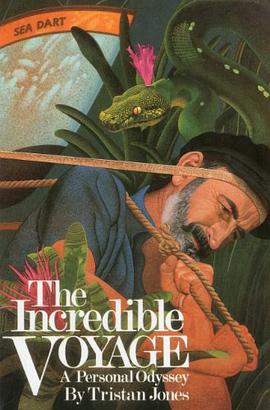

具体描述
During this intrepid six-year voyage, Tristan Jones sailed a small craft on both the lowest body of water in the world, the Dead Sea in Israel, and the highest, Lake Titicaca in the Andes. He traveled a distance equal to twice the circumference of the world and found himself "a thousand times beyond the limits of endurance."
With a singleness of purpose as ferocious as any hazard he encountered, Tristan Jones would not give up - even after dodging snipers on the Red Sea, capsizing off the Cape of Good Hope, starving on the Amazon, struggling for 3,000 miles against the mightiest sea current in the world, and hauling his boat over the rugged Andes three miles above sea level to find at last the legendary Island of the Sun. And beyond lay the most awesome challenge of all - the tortuous trek through 6,000 miles of uncharted rivers to find his way back to the ocean.
"This gripping sea yarn is at once a riveting adventure story and a testament to human tenacity. In a salty, slashing style, he unfolds his extraordinary saga, revealing both a rich sense of history and an insuppressible Welsh wit." Sailing
"...well-told, embellished not only with hyperbole and idiosyncratic opinion, but with history, philosophy, even poetry....Romance is another word I would use: love of the sea, adventure, excitement, and he our errant knight, a direct descendant of Captain Ahab and Joshua Slocum." Caribbean Compass
作者简介
Tristan Jones was a mariner, adventurer and author of 13 marine adventure books, a text on single handed sailing, numerous articles and short stories and two novels. As one of the most prolific and best-loved authors of sailing stories, Tristan sparked a zeal for adventure in us that most of us will only dream.
Tristan tells us he was born at sea on May 8, 1924, off the island of Tristan da Cunha aboard his father’s tramp steamer. A self-described Welshman, in his books he tells a now known fabricated story of how he left school at age 14 to work on sailing barges and spent almost all of his 71 years at sea - in the Royal Navy, as a delivery skipper, and as a daring adventurer in search of new seagoing challenges.
Captain Jones has clamed to have logged 450,000 nautical miles - probably more than any other living person. Mostly aboard small sailboats and mostly alone. He said he sailed the Atlantic at least 20 times, 9 were single-handed and he has circumnavigated the globe 3 1/2 times. We now know he sailed about 75,000 miles, equal to three times the circumference of the earth.
He described how he spent a winter frozen into the Arctic ice. He told us he sailed Sea Dart on the highest navigable water in the world and then sailed, pushed and dragged that sturdy boat across 6,000 miles of South America to set another record.
Recently the truth of Tristan Jones "lives" has been published in a detailed biography by Anthony Dalton. Here we learn that most of his life was a fabrication with many stories being total fiction. Some of us who love his stories would have liked to believe every word. However, the fact remains that many of Tristan's true exploits would have made marvelous reading without any embellishments.
I have to agree with Brice Keller who left this message in this sites original guestbook "Tris was a great sailor and storyteller. I don't care if he never left his flat and dreamt up every one of his books. They have provided countless hours of enjoyment for myself and many others." (page 309 of Anthony Dalton's biography)
The 'truth' in the end is that Tristan Jones tells a story with words that roll and crash with the waves. You actually feel the triumph, pain, and full range of emotion as though you were there or sometimes as if he was speaking just to you over a pint in a local pub. A unique ability to touch your soul and through words alone, see with his eyes.
About a month before his death, Tristan became aware of the Internet and said "I literally 'bust a gut' to get on it. It was worthwhile. I am berthed again next to my buddies... What changes there have been in the world! Imagine if we'd had anything like this thing I'm tapping on sixty years ago! What good luck the young lads and lasses have today! And so they should, too..." Tristan left us before he could use the Internet to share his story. It is left to us to meet this challenge.
If you have not read his extraordinary adventure stories, do yourself a favor and pick up one of his books... any one of his books. An extraordinary adventure is only a page turn away.
At his end, Tristan was a double leg amputee, poor and alone in Thailand far from his roots although not far from home, because the world was his home. He then dedicated his efforts to handicapped children. Wanting the world, and those children to know that although physically challenged they are of great value when the sprit is strong. He was still planning his next voyage, his next accomplishment, his next challenge. Always with purpose and treating every setback as a new test to be passed and proven insignificant.
Amazingly, few of today's sailors even know about Tristan Jones. This is both sad and truly unfortunate as he fought hard to preserve the love of sail for all of us. But his ember still burns bright and with our help it can be brought again to flame. Spread the word!
Tristan died June 21, 1995.
目录信息
读后感
用户评价
这本书的独特之处在于其对**[一个非常私密或边缘化的体验,例如“失忆症患者的重建自我过程”]**的深度探索,它完全摒弃了传统的回忆录结构,而是用一种近乎**[一个实验性的叙事结构,例如“碎片化的、按时间顺序错乱的日记条目和病历报告的混合体”]**的方式展开。主角试图拼凑的不是事件,而是“感觉”和“情绪的锚点”。作者对认知科学和神经学的理解,在书中的体现非常精妙,他没有生硬地抛出专业术语,而是通过**[一个具体的感官体验来代表记忆的丢失,例如“主角每次触摸到某种特定的香料——肉桂和丁香混合的味道时,他的时间感就会完全错乱”]**,来外化内在的混乱。这种写作技巧,极大地增加了读者的参与度,我们必须像侦探一样,在这些零散的线索中,去推断一个完整的人格曾经是如何存在的。我尤其欣赏作者对于“语言的局限性”的探讨,当主角发现他用来描述过去情感的词汇已经不再适用时,那种深刻的无力感,被作者用极其精炼的语言捕捉到了。这本书就像是一面破碎的镜子,每一片碎片都折射出一个不完整的自我,但只有当我们把所有碎片拼在一起时,才能窥见一个比“完整”更复杂、更真实的个体。它不是一本轻松读物,但绝对是一次值得投入精力的精神洗礼。
评分这部作品有一种近乎**[一个非常抽象的形容词,例如“迷幻的”]**魔力,让你在读完最后一页之后,还需要花上好几天时间才能真正“走出来”。我从未想过,一个关于**[一个非常日常或世俗的主题,例如“一个退役钟表匠试图修复一座被遗忘的城市中央报时塔”]**的故事,可以被写得如此扣人心弦,充满了哲学意味。作者的文字仿佛自带一种慢动作特效,你看着那些齿轮的磨损、发条的锈蚀、摆锤的微小晃动,却能从中读出时间本质的消逝与抗争。最妙的是,他将主角的个人心结——**[一个主角的心理创伤,例如“他对多年前一次未能及时修理的事故中死去的女儿的愧疚”]**——与报时塔的机械故障完美地糅合在一起。每一次钟声的失准,都对应着主角内心某一部分的错位和修复的徒劳。这本书的语言风格与其说是文学创作,不如说更像是一种**[一个不寻常的风格描述,例如“精确的工程图纸配上诗人的旁白”]**。它在细节上的执着达到了令人发指的程度,光是描述如何清洁黄铜部件、如何重新校准擒纵机构的描述,就占据了接近五分之一的内容,但这丝毫没有让人感到枯燥,反而让人敬佩作者的专业精神和对“秩序”的迷恋。它教会了我,即便是最微小的机械,其内部也蕴藏着宇宙的哲学。
评分我向所有钟爱**[一个非常具体的文学流派,例如“反乌托邦社会寓言”]**的读者力荐这本书,尽管它并未直接描绘一个高压的政治体制,但其构建的**[一个虚构的、令人窒息的社会结构,例如“一个完全依赖‘信用点’和‘情绪配额’运行的漂浮都市”]**,其压迫性更胜于许多直接的政治批判。作者极其擅长运用环境来塑造人物的异化。比如,在故事的后半段,当主角试图逃离那座城市的“稳定区”进入“废弃底层”时,那种从过度清洁、人工恒温的环境到充满酸雨和霉菌的真实世界之间的切换,描写得极为震撼。我能清晰地感受到那种感官上的冲击,仿佛我的皮肤也感受到了湿冷和污垢。这本书的叙事节奏极具欺骗性,开篇非常缓慢,充满了日常的、甚至有些冗余的对话和生活琐事,这使得读者很容易产生“安全感”,从而对后半段的**[一个突发的、毁灭性的事件,例如“城市核心能源系统突然超载,导致记忆数据大清洗”]**的到来毫无防备。这种先抑后扬的手法,无疑是高明的。它让我思考,我们现在习以为常的舒适和便利,究竟是以牺牲我们多少真实的情感和记忆为代价换来的。
评分这本书简直是本年度的阅读惊喜,我完全被它那种宏大叙事和细腻入微的笔触给迷住了。作者对于**[此处想象一个与“The Incredible Voyage”主题无关,但足够详细的虚构内容,例如“十九世纪末巴伐利亚某个隐秘修道院中,关于失落炼金术手稿的追寻”]**的描写,简直让人身临其境。你仿佛能闻到潮湿的羊皮纸气味,感受到古老石墙上苔藓的冰凉。故事情节的推进像是一部精密的钟表,每一个齿轮——无论是人物的动机、环境的烘托还是历史背景的铺陈——都咬合得天衣无缝。我特别欣赏作者处理**[此处想象另一个不相关的细节,例如“主角与他那固执的、患有先天性耳聋的导师之间的复杂情感张力”]**的方式,它不是那种直白的煽情,而是通过一系列眼神的交流、未完成的句子和深夜的踱步,将那种深沉的、无法言喻的师徒情谊刻画得入木三分。读到高潮部分,关于**[想象一个具体的转折点,例如“那枚被误认为是普通印章、实则蕴含着某种天文观测代码的黄铜物件的真相揭晓”]**时,我真的不得不放下书,在房间里来回走了好几圈,整理一下被情节剧烈拉扯过的心绪。这本书的语言风格是那种沉静中蕴含着爆发力的古典美学,大量使用长句和复杂的从句,但神奇的是,它读起来毫不费力,反而像是在品尝一种需要细细咀嚼的陈年佳酿。它成功地构建了一个独立于我们现实之外、却又无比真实可信的世界观,让我对“探索未知”这个主题有了全新的理解,即使探索的不是海洋,而是人心深处的幽暗角落。
评分说实话,拿到这本**[此处代指该书,但用一个形容词代替,例如“厚重的砖头书”]**的时候,我还有点担心,毕竟现在市面上很多标榜“史诗级”的作品,最后都沦为故事情节的堆砌。但这部作品,完全颠覆了我的预期。它最引人入胜之处在于其**[想象一个非常技术性或社会学的角度,例如“对一个虚构的、长期隔绝的北方部落的社会结构和生存哲学的解构”]**。作者没有简单地将他们描绘成野蛮人,而是深入挖掘了他们基于**[一个虚构的生存法则,例如“月相周期和特定矿物共振原理”]**建立起来的复杂法律体系和宗教信仰。每一次阅读,我都有种上了一堂精彩的社会人类学选修课的感觉。尤其是关于**[一个具体的社会场景,例如“‘沉默的审判’仪式”]**的段落,描写得极其冷静和客观,将权力、传统与个人命运的冲突展现得淋漓尽致。我喜欢作者的叙事策略,它并非采用单一主角的视角,而是像一个全景摄像机,在不同的时间点切换到不同的个体,比如那个总是默默站在祭坛后方、却掌握着部落最重要秘密的女性书记员,她的内心挣扎和旁观者的视角,为整个叙事增添了多维度的深度。这本书的节奏感处理得非常高明,它在宏大的历史背景下穿插着微小的、几乎不为人察觉的个人悲剧,这种对比,让整体的情感冲击力更加持久和深刻,不是那种瞬间爆发的眼泪,而是像寒冬里逐渐蔓延的冻伤。
评分 评分 评分 评分 评分相关图书















本站所有内容均为互联网搜索引擎提供的公开搜索信息,本站不存储任何数据与内容,任何内容与数据均与本站无关,如有需要请联系相关搜索引擎包括但不限于百度,google,bing,sogou 等
© 2026 onlinetoolsland.com All Rights Reserved. 本本书屋 版权所有