

具体描述
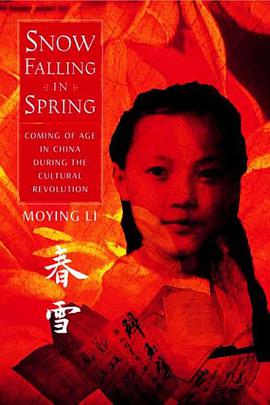
"Most people cannot remember when their childhood ended. I, on the other hand, have a crystal-clear memory of that moment. It happened at night in the summer of 1966, when my elementary school headmaster hanged himself. "In 1966 Moying, a student at a prestigious language school in Beijing, seems destined for a promising future. Everything changes when student Red Guards begin to orchestrate brutal assaults, violent public humiliations, and forced confessions. After watching her teachers and headmasters beaten in public, Moying flees school for the safety of home, only to witness her beloved grandmother denounced, her home ransacked, her father's precious books flung onto the back of a truck, and Baba himself taken away. From labor camp, Baba entrusts a friend to deliver a reading list of banned books to Moying so that she can continue to learn. Now, with so much of her life at risk, she finds sanctuary in the world of imagination and learning. This inspiring memoir follows Moying Li from age twelve to twenty-two, illuminating a complex, dark time in China's history as it tells the compelling story of one girl's difficult but determined coming-of-age during the Cultural Revolution. Moyling Li, one of the first students to leave China for study abroad after the Cultural Revolution, came to the United States in 1980 on a full scholarship from Swarthmore College. She holds an M.A., an M.B.A., and a Ph.D. She lives in Boston and Beijing. In 1966 Moying, a student at a prestigious language school in Beijing, seems destined for a promising future. Everything changes when student Red Guards begin to orchestrate brutal assaults, violent public humiliations, and forced confessions. After watching her teachers and headmasters beaten in public, Moying flees school for the safety of home, only to witness her beloved grandmother denounced, her home ransacked, her father's precious books flung onto the back of a truck, and Baba himself taken away. From labor camp, Baba entrusts a friend to deliver a reading list of banned books to Moying so that she can continue to learn. Now, with so much of her life at risk, she finds sanctuary in the world of imagination and learning. This inspiring memoir follows Moying Li from age twelve to twenty-two, illuminating a complex, dark time in China's history as it tells the compelling story of one girl's difficult but determined coming-of-age during the Cultural Revolution. ""Snow Falling in Spring" joins other important books about the Cultural Revolution . . . as childhood testimonies to national trauma, cautionary tales for our own time, and appreciations for homes, old and new." --"San Francisco"" Chronicle" ""Snow Falling in Spring" joins other important books about the Cultural Revolution . . . as childhood testimonies to national trauma, cautionary tales for our own time, and appreciations for homes, old and new."--"San Francisco"" Chronicle ""The simple, direct narrative will grab readers with the eloquent account of daily trauma and hope."--"Booklist" (starred) "Reports of family imprisonment, death, betrayal of people she thought she once knew, endless control of everyday life, were all commonplace in Moying Li's life during China's Cultural Revolution. Intimidation was often the weapon of choice, followed by destruction of personal and public property. Even siblings of school friends joined the Red Guards, Chairman Mao's youth group helped uphold Mao's teachings and instructions through brute force, threats, and hostility. Li's close family, teachers, and friends were all targeted, and political sentiments threatened to prevent Li from achieving a once in a lifetime opportunity. Although Li is not the outgoing protagonist that is organizing protests, she fights back in her own way. She reads banned books from a list supplied by her educated, imprisoned father, which include all of Shakespeare's writings, fairy tales, Jack London's "Call of the Wild, " Mark Twain's stories of "Tom Sawyer" and "Huckleberry Finn," respectively, as well as others from Russian, British, and American literature. Li continues to secretly educate herself, despite the fact her school, job, and location are assigned to her. As the major events begin in the mid 1960s, it is interesting to learn about a historical event that is not too far removed from today. The writing is so steady and calm; it only creates a larger contrast to the jarring events and gruesome disregard for humanity. This is a fantastic way to use history to stir up emotion and discussion about government control, loyalty, choice, and civil rights."--Renee Farrah, "Children's Literature ""In 1958, four-year-old Moying Li lived with her extended family in a "hutong," a neighborhood of traditional courtyard houses, in Beijing. By the fall of that year, the Great Leap Forward had begun, and their courtyard had been transformed by the addition of a huge brick furnace where family and neighbors worked unceasingly, throwing in bits of scrap metal, which produced only a useless, inferior steel. In her engaging memoir of growing up in China, Li tells the story of her family's efforts first to follow with enthusiasm Chairman Mao's dictates and then to comply with them despite disillusionment and fear. In 1963, when she was nine, Li went to the Foreign Language School, where she thrived. Her life changed in 1966, the beginning of the Cultural Revolution, when her beloved teachers were attacked by Red Guards and the headmaster of the school hanged himself. Her mother had been sent to the countryside to teach, and eventually her father was denounced and packed off to a labor camp. This beautifully written memoir joins a growing body of literature, such as Ji-Li Jiang's "Red Scarf Girl" (HarperCollins, 1997) and Chen Yu's "Little Green," about life in China during the Cultural Revolution. Because this book starts with the Great Leap Forward and extends beyond the end of the Cultural Revolution, i
作者简介
目录信息
读后感
用户评价
我向来偏爱那种文字密度高、需要反复咀嚼的作品,而《Snow Falling in Spring》无疑满足了我对“精妙”的全部想象。这本书的行文节奏掌握得炉火纯青,时而急促如骤雨,将人物推入困境,时而又放缓至近乎静止的冥想状态,让读者有足够的时间去消化那些沉甸甸的情感重量。我得承认,初读时我被它的抒情性略微“迷惑”了,以为它可能过于感伤,但随着情节的深入,我看到了其中蕴含的强大韧性和对生活近乎残酷的清醒认知。作者对待“痛苦”的态度非常成熟,她从不煽情,而是用一种近乎科学的冷静来剖析创伤,却又在字里行间流露出对人性深处的温情。例如,书中描绘的关于“失去”的部分,那种失落感不是嚎啕大哭,而是深入骨髓的习惯性空缺,是你拿起电话准备拨号却突然想起对方已不在身边的那个瞬间的僵硬。这种对细微情感的捕捉和呈现,让这本书的艺术价值得到了极大的提升,它不只是在讲述一个故事,更是在诠释一种生存的哲学。
评分我必须强调,这本书的语言本身就是一种享受。作者的词汇选择非常精准,没有一个词是多余的,仿佛每一个音节都经过了千锤百炼。它没有使用太多华丽的辞藻去堆砌氛围,而是通过极其精确的动词和名词的组合,构建出一种既古典又现代的独特语感。阅读时,我常常会停下来,在脑海中默默重复某些句子,品味它们在声韵上的和谐与节奏上的张弛。它处理“时间流逝”的方式尤其高明,它没有用生硬的日期标注,而是用季节的更替、光影的变化、角色外貌的细微衰老来展现岁月的无情。最精彩的一处,是描绘主角童年记忆的片段,那段回忆充满了夏日的喧嚣与躁动,与全书主体部分的宁静形成了鲜明的对比,这种对比不是为了炫技,而是为了凸显“回不去的过去”那种无可挽回的失落感。总而言之,这本书的价值在于它提供了一种观察世界、理解人性的全新视角,它安静、深沉、且拥有经久不衰的艺术魅力,强烈推荐给那些对文学深度有追求的读者。
评分阅读《Snow Falling in Spring》的过程,对我来说更像是一次心灵的深度对话。这本书最让我感到震撼的是它对“沉默”的描绘。在很多关键时刻,角色们都没有选择言语来解决或表达,而是让环境、动作、甚至是物体来代替他们发声。这种“留白”的处理,极其考验读者的解读能力,也极大地丰富了文本的层次感。我常常读完一章后,会合上书本,在原地坐上好几分钟,试图去梳理那些未被言明的潜台词。它迫使你主动参与到故事的构建中,而不是被动地接受信息。此外,这本书的象征意义运用得非常高明,那些反复出现的意象——比如融化的冰块、被风吹落的信件、或者那永不完全开放的花蕾——都承载着多重含义,每一次的出现都似乎在为之前或之后的情节提供新的注解。这不是一本可以“快速翻阅”的书,它需要你投入时间、心神,甚至是你个人过往的经验去共同完成阅读体验。如果你追求的是轻松愉快的消遣,那么这本书可能会让你感到有些沉重和晦涩,但如果你渴望一场深刻的思想冒险,那么它绝对值得你付出全部的注意力。
评分这本《Snow Falling in Spring》的封面设计真是充满了诗意,淡雅的米白色背景上,几片雪花若隐若现,仿佛能透过纸张感受到那种初春料峭的寒意与万物复苏的生机交织的微妙感觉。我是在一个偶然的机会下翻到这本书的,最初是被它名字里那种看似矛盾的意象所吸引——“雪”与“春”的碰撞,总让人联想到某种转折或未尽的故事。拿到书后,我立刻被作者的文字功底所折服。她对自然景物的描摹细腻入微,即便是最寻常的场景,经过她的笔触,也焕发出了令人惊喜的生命力。比如对清晨薄雾中泥土气息的捕捉,那种湿润、带着点青草味道的芬芳,简直让人身临其境。更令人称道的是,她并没有沉溺于纯粹的景物描写,而是巧妙地将人物的内心活动融入其中,使得环境不再是背景,而是情绪的投射和命运的隐喻。我尤其喜欢其中一段关于主角在雪中独自行走的场景,那段文字节奏舒缓,充满了哲思,让人不禁停下来思考自己生命中那些飘然而至又倏忽而逝的瞬间。这本书读起来,就像是品一杯陈年的清茶,初入口平淡,回味却悠长而醇厚,它不是那种情节跌宕起伏的小说,而更像是一部缓慢展开的、关于时间与记忆的精致画卷。
评分说实话,我抱着一种非常审慎的态度开始阅读这本书的,毕竟“春雪”这个主题在文学作品里太常见了,很容易写成陈词滥调。然而,我的担忧很快就被打消了。这本书的叙事视角非常独特,它似乎不是聚焦于某一个宏大的历史事件,而是紧紧抓住那些微小、几乎难以察觉的生活细节进行深度挖掘。作者在人物塑造上达到了令人惊叹的深度,每一个配角都像是活生生存在过的人,有着自己复杂的动机和不为人知的挣扎。我特别留意了作者如何处理对话——那些对话的张力,那种欲言又止的含蓄,比任何直白的倾诉都更具穿透力。有一对年迈的夫妇之间的互动,他们几乎没有明确的情感表达,但仅通过交换一个眼神,或者对一盆枯萎植物的共同照料,那种相濡以沫的深厚感情便扑面而来,让人感动得喉咙发紧。这本书的结构也很有意思,它不是线性的时间推进,更像是记忆的回旋,不同的时间点彼此渗透、相互印证,每一次重读都会发现新的关联和隐藏的线索,这极大地增加了阅读的趣味性和探索欲。
评分故事算不上特别精彩,但胜在真实
评分故事算不上特别精彩,但胜在真实
评分故事算不上特别精彩,但胜在真实
评分boring but sincere, totally different from Anchee Min
评分boring but sincere, totally different from Anchee Min
相关图书









本站所有内容均为互联网搜索引擎提供的公开搜索信息,本站不存储任何数据与内容,任何内容与数据均与本站无关,如有需要请联系相关搜索引擎包括但不限于百度,google,bing,sogou 等
© 2026 onlinetoolsland.com All Rights Reserved. 本本书屋 版权所有