

具体描述
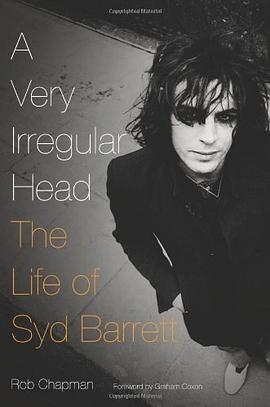
“I don't think I'm easy to talk about. I've got a very irregular head. And I'm not anything that you think I am anyway.”—Syd Barrett’s last interview, Rolling Stone, 1971 Roger Keith “Syd” Barrett (1946–2006) was, by all accounts, the very definition of a golden boy. Blessed with good looks and a natural aptitude for painting and music, he was a charismatic, elfin child beloved by all, who fast became a teenage leader in Cambridge, England, where a burgeoning bohemian scene was flourishing in the early 1960s. Along with three friends and collaborators—Roger Waters, Richard Wright, and Nick Mason—he formed what would soon become Pink Floyd, and rock ’n’ roll was never the same. Starting as a typical British cover band aping approximations of American rhythm ’n’ blues, they soon pioneered an entirely new sound, and British psychedelic rock was born. With early, trippy, Barrett-penned pop hits such as “Arnold Layne” (about a clothesline-thieving cross-dresser) and “See Emily Play” (written specifically for the epochal “Games For May” concert), Pink Floyd, with Syd Barrett as their main creative visionary, captured the zeitgeist of “Swinging” London in all its Technicolor glory. But there was a dark side to all this new-found freedom. Barrett, like so many around him, began ingesting large quantities of a revolutionary new drug, LSD, and his already-fragile mental state—coupled with a personality inherently unsuited to the life of a pop star—began to unravel. The once bright-eyed lad was quickly replaced, seemingly overnight, by a glowering, sinister, dead-eyed shadow of his former self, given to erratic, highly eccentric, reclusive, and sometimes violent behavior. Inevitably sacked from the band, Barrett retreated from London to his mother’s house in Cambridge, where he would remain until his death, only rarely seen or heard, further fueling the mystery. In the meantime, Pink Floyd emerged from the underground to become one of the biggest international rock bands of all time, releasing multi-platinum albums, many that dealt thematically with the loss of their friend Syd Barrett: The Dark Side of the Moon, Wish You Were Here, and The Wall are all, on many levels, about him. In A Very Irregular Head , journalist Rob Chapman lifts the veil of secrecy that has surrounded the legend of Syd Barrett for nearly four decades, drawing on exclusive access to family, friends, archives, journals, letters, and artwork to create the definitive portrait of a brilliant and tragic artist. Besides capturing all the promise of Barrett’s youthful years, Chapman challenges the oft-held notion that Barrett was a hopelessly lost recluse in his later years, and creates a portrait of a true British eccentric who is rightfully placed within a rich literary lineage that stretches through Kenneth Graham, Hilaire Belloc, Edward Lear, Lewis Carroll, John Lennon, David Bowie, and on up to the pioneers of Britpop. A tragic, affectionate, and compelling portrait of a singular artist, A Very Irregular Head will stand as the authoritative word on this very English genius for years to come.
作者简介
目录信息
读后感
评分
评分
评分
评分
用户评价
这本书的装帧设计简直是一场视觉盛宴,那种深沉的、带着微微泛黄的纸张质感,配合上烫金的书名字体,散发出一种古典而又神秘的气息。我几乎可以想象到,印刷厂的工匠们是如何一丝不苟地打磨每一个细节。内页的排版也十分考究,字里行间留有的呼吸空间恰到好处,让人在阅读时感到无比的放松,不会有那种拥挤和压迫感。特别是扉页上的那幅手绘插图,线条虽然看似随意,却蕴含着一种难以言喻的张力,仿佛预示着故事中即将发生的某种颠覆性的转折。我甚至花了好长一段时间,只是单纯地摩挲着封面,感受着那种皮革的纹理和微微的凹凸感。这样的实体书,与其说是一本书,不如说是一件精心制作的艺术品,值得在书架上被郑重地收藏和展示。它成功地在数字时代挽留住了“阅读的仪式感”,每一次翻阅都像是在进行一场郑重的告解或是一个私密的仪式,让人对手中的文字充满了敬畏之心。
评分从主题思想的深度来看,这本书毫不留情地撕开了现实的诸多面纱,它并非简单地讲述一个故事,而更像是一场关于存在本质的漫长拷问。它触及了一些非常宏大且令人不安的议题,诸如记忆的不可靠性、身份构建的脆弱,以及我们赖以生存的社会结构中那些隐藏的、不合逻辑的支撑点。每次当我以为我已经理解了作者的某种意图时,他总能在一个不起眼的角落里,埋下一个足以推翻我之前所有设想的线索,这使得整个阅读过程充满了智力上的挑战和乐趣。它迫使你跳出自己固有的思维定势,去质疑那些被视作“理所当然”的事物。这本书成功地创造了一种“认知失调”的体验,让你在合上书本时,对窗外的世界和身边的人投去一种带着审视和怀疑的目光,这正是优秀文学作品所应有的持久影响力。
评分作者在语言的运用上展现出一种近乎于炼金术士的功力,他似乎拥有将最寻常的词汇,通过奇特的组合和独特的句法结构,提炼出一种全新的、带有强烈个人印记的“语感”的能力。我尤其欣赏他对于描述的精确性,那不是那种教科书式的精准,而是一种浸透了情感的、高度个人化的观察。比如,他描述光线穿过百叶窗投射在地板上的阴影时,用的词汇不是简单的“条纹”,而是“被时间切割成碎片的光之残骸”,这种措辞的陌生化处理,迫使我的大脑必须停下来,重新构建这个画面,从而极大地加深了记忆和印象。通读下来,你会发现,这本书的语言本身就构成了一个独立于情节之外的复杂系统,它时而像锋利的冰锥刺穿平静的水面,时而又像厚重的丝绒包裹着秘密,其丰富的层次感令人叹为观止,感觉每读一页都在学习一种全新的表达方式。
评分我必须提及这本书的氛围营造,它有一种近乎于催眠的、持续弥漫的“场”。这种氛围的构建是多维度的,它不仅仅来自于情节的推进,更多的是源于作者对特定环境和心理状态的精妙捕捉。无论是描绘某个被遗忘的角落里凝滞的空气,还是刻画人物在巨大压力下产生的细微的生理反应,都带着一种令人不安的真实感。这种真实感并非肤浅的表象模仿,而是深入到了那种“难以言状”的情绪核心。阅读时,我发现自己不自觉地放慢了呼吸,房间里的温度似乎都随着书中的场景而变化,我能清晰地感觉到那种故事中特有的潮湿、沉重或者异常干燥的“质地”。这种强大的环境代入感,使得读者完全沉浸其中,仿佛真的成为了故事场景的一部分,不得不说,这种对“在场感”的极致追求,是这部作品最令人印象深刻的成就之一。
评分这部作品的叙事节奏把握得如同一个技艺精湛的指挥家在掌控一支庞大的交响乐团。开篇的处理极其克制,如同微弱的、不引人注意的引子,用一种近乎散文化的笔触勾勒出主要人物群像,让人感觉像是在观看一幕幕模糊的、远景的舞台调度,你只能捕捉到轮廓,细节被刻意地隐藏起来。然而,一旦进入到故事的中段,那种潜藏的能量突然爆发,节奏骤然加快,句子变得短促而有力,充满了强烈的动感和压迫感,仿佛鼓点在不断擂响,将你推向一个不可逆转的境地。最妙的是,作者懂得在哪里设置“停顿”——那些突然出现的、近乎哲学思辨的段落,就像是乐章中的休止符,给予读者一个喘息和反思的空间,让那些高速运动的情绪得以沉淀,为接下来的高潮积蓄力量。这种张弛有度的处理,使得阅读体验既不至于因过于平缓而乏味,也不会因为速度过快而令人迷失方向,真正做到了步步为营,引人入胜。
评分a bit lengthy
评分a bit lengthy
评分a bit lengthy
评分a bit lengthy
评分a bit lengthy
相关图书











本站所有内容均为互联网搜索引擎提供的公开搜索信息,本站不存储任何数据与内容,任何内容与数据均与本站无关,如有需要请联系相关搜索引擎包括但不限于百度,google,bing,sogou 等
© 2026 onlinetoolsland.com All Rights Reserved. 本本书屋 版权所有