

具体描述
Customer Reviews
A Great Book That Gives New Meaning to "Must-Have"
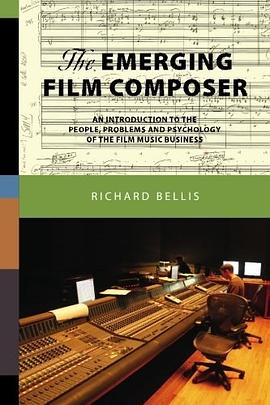
The key to this book lies not only in the title but the subtitle as well: "An Introduction to the People, Problems, and Psychology of the Film Music Business. Other possible titles, though already used, could also fit: "Everything You Always Wanted to Know About Being a Film Composer but were Afraid to Ask," or "Film Composing for the Rest of Us." This book fills a gap that no other book has filled to date and does the job so thoroughly, it may just be the final word on the day-to-day practicalities of being a film composer.
Can you work as a film composer without a college education? How much do you expect to earn per year as a film and television composer? Can you live - or more accurately - survive on that amount? Do you know how to break down the costs of doing a score into fees and hard costs? How many films would you have to score per year just to get by? And this is just the first two chapters.
Richard Bellis has been known point out that he may not be a "household word" in the music business, but he may showing some humility here, because for certain, he is a household word in the film music business and highly respected at that. (See his credentials above.) He also knows his audience, and identifies that there are the eight or so A-list composers who make millions of dollars, the next level down in the six-figure category, and finally the remaining 90 per cent - composers working on movies for television, games, TV series, independent features, documentaries, commercials, and so on. That's us, folks. That's who this book is for, the emerging composer, hopefully on his or her way to even bigger and better things down the film music road.
Chapter 3 is about the most sought-after knowledge, "Getting Work." Here, and elsewhere in the book, Bellis paints a very realistic portrait of how things work - or don't work - when it comes to actually getting work. It is best summed up in his statement, "This is a buyers market." And this is typical of the knowledge that Bellis imparts on the reader throughout the book - it's a very no-nonsense approach which not only deals with the difficulties, but with the inequities of landing the gig. He describes the "randomness" of the business which can work in your favor or against it, but in either case, you should not be discouraged from pursuing the goal, better put in his statement, "When you realize that everything good comes `out of left field,' your job is to go to the ballpark every day."
Bellis goes on to cover Spotting, the Writing Process, Recording and Podium Procedure, Delivery and the Dub, and fills in some of the blanks with Random Thoughts. As if that weren't enough, he wraps things up with great stories from other talented composers in the business, each filled with words of wisdom, sometimes in the form of truly hilarious experiences.
I have all the other books - great books - on the topic of film music. This one is a real gem. In addition to the great information it provides, it's written in a nice, easy style filled with wit and touches of wry humor. Because of that, it's more like a special treat - an invitation to hang out with Richard Bellis over a beer and discuss the film music biz. If you're an emerging composer trying to fill in a lot of the blanks, this book is a must-have. If you're an established composer trying to get a better handle on the biz, this book is a must-have. And if you're simply curious about the film music business and want a glimpse into how it all works, this book is, well you guessed it - it's a must-have. (But you can't have my copy, because I won't let it out of my sight!) Kudos to Bellis for even thinking of writing this highly valuable book.
A very practical and helpful book
I was very fortunate to be able to study film scoring with Richard Bellis at USC back in the early 1990's, and he was a wonderful teacher. I learned a great deal from him in those classes. So I was thrilled to discover that he had taken his vast knowledge of the film scoring industry and had written a book about it.
I've just finished the book, and I have to say it's been one of the most practical and helpful books of its kind that I've ever read -- and I've read MANY such books over the years. I'm having a major recording session for a film score in just a month, and reading this book was enormously helpful to me in preparing for the session.
While most books on film music focus either on interviews with famous film composers, OR, focus on the very technical side of writing music for film, Richard's book is unique in that it gives you all the practical, nuts-and-bolts things you need to know about being a film composer -- something that all of the other film music books seem to lack. The information in this book is presented in an honest, practical, and well organized way, and every page of it is helpful in some way -- so be prepared to highlight a lot of the text! :)
I highly recommend this book to anyone involved in film scoring. No matter what level of experience you may already have in this field, I guarantee that you will gain a number of valuable insights by reading this book.
Thanks, Richard, for having written such a practical and helpful book!
THANK YOU RICHARD BELLIS!
The music business is a tough one to break into, even for those that know what they are doing. Narrowing that down to film composition is even more difficult. I read this book cover to cover in one day because I found it absolutely fascinating. Anyone who is even thinking about a career in this industry should get a copy immediately.
Not only does Richard Bellis tell us the REAL DEAL of what goes on in the industry but even helps with time management, contracts and what is REALLY expected by the pros and does so in a light-hearted and enjoyable way. There is nothing left uncovered on the business side of the business.
By all means, learn all you can about composition, creativity, sound and recording. It is essential. But without this knowledge and insight, you'll have a tough time getting in the door!
作者简介
About the Author
Richard Bellis is an Emmy Award winning composer who, for the past 20 years, has found time to teach and mentor as well as compose. He has served on the faculty of the USC Scoring for Motion Pictures and Television program and taught film scoring for UCLA Extension. He is a past president of the Society of Composers & Lyricists and has served on the board of governors for the Academy of Television Arts and Sciences. In addition, he annually mentors a select group of emerging composers for the ?ASCAP Television & Film Scoring Workshop with Richard Bellis.?
目录信息
读后感
用户评价
这本书的体量和内容密度是惊人的,它就像是一部包罗万象的百科全书,但所有词条都围绕着一个核心的悖论——如何去描述一个尚未成形的事物。作者引入了大量的跨学科模型,例如从气候学中借鉴的“混沌边缘理论”来解释艺术风格的演变,以及从分子生物学中提取的“自我复制与突变”模型来套用在文化现象上。这些类比的力度非常强劲,让人不得不重新思考“发展”的真正含义。然而,阅读起来的体验是极其抽离的,你很少能找到一个可以抓住的“人”或“事”。它更像是一部关于“力的作用”和“能量转移”的教科书,只是力场被置换成了文化场。我花了很长时间才消化完其中关于“系统冗余度对创造性爆发的必要性”的那部分论述,这部分内容似乎在暗示,只有大量的“无效劳动”和“冗余信息”积累到一定程度,才会产生真正的突破。对于那些痴迷于效率和ROI(投资回报率)的创作者来说,这本书的观点无疑是反直觉的,但它提供的理论深度确实能让人跳出日常工作的泥淖。
评分这本书简直是一场思想的探险,它没有直接探讨任何与电影配乐或音乐创作技法相关的内容,却以一种极其巧妙的方式,构建了一个关于“创造力如何涌现”的宏大理论框架。作者的文笔极其老辣,充满了哲学思辨的深度,尤其是在探讨“灵感黑洞”与“风格固化”这两个概念时,简直是振聋发聩。书中花了大量篇幅去分析十九世纪末期欧洲社会结构对艺术思维模式的塑造,引用了大量晦涩难懂的社会学和符号学理论,比如某个意大利思想家关于“非线性叙事在早期工业革命中的投影”的论断,读起来像是在啃一本高阶的学术著作。我记得有一章专门讨论了某个不知名的小提琴家在1888年的一次失败演出如何间接影响了后来的建筑设计思潮,这种跨领域的跳跃性和类比的深度,让人不禁感叹作者知识面的广博。虽然对于急于寻找实用技巧的读者来说,这本书可能显得过于抽象和疏离,但如果你沉迷于探究“为什么我们会这样思考,而不是那样思考”的底层逻辑,这本书绝对能提供一种全新的、近乎于解构主义的视角来审视任何形式的“新兴”事物。它更像是一把精密的解剖刀,而非一支鼓舞人心的毛笔,让人在阅读后,对事物的“诞生”过程有了更深层次的敬畏与不解。
评分这本“书”的真正价值,或许在于它对阅读行为本身的解构。它并不是一本用来“读完”的书,而是一本用来“参考”和“困惑”的书。作者设置了大量的脚注,但这些脚注本身又包含着更长的、需要另行查阅的理论分支,形成了一个无限后退的知识链条。我发现自己经常被脚注牵引着脱离正文,最后发现自己花了一个下午研究的是某个十七世纪制图师对于地图边缘的绘制习惯,而不是任何与核心主题相关的信息。这种阅读体验极大地消解了阅读的目的性,变成了一种纯粹的知识漫游。书中对“边缘”和“过渡地带”的反复强调,似乎是对“新兴”这一概念最深刻的隐喻——即真正的创新发生在你明确定义的世界之外。它没有提供任何和弦、音阶或叙事结构,但它成功地将读者的心智置于一个高度敏感、极易被新事物触动的状态。读完后,我感觉自己的思维模式被轻微地重新校准了,虽然我依然不清楚这校准到底是为了什么,但这种不确定性本身就是一种强大的催化剂。
评分我不得不承认,这本书的语言风格极具侵略性,它不是在“引导”你,而是在“质问”你。作者的语调始终保持着一种居高临下的、近乎先知的姿态,仿佛他所揭示的规律是宇宙早已存在的真理,而我们只是后知后觉的凡人。书中对“创新”这个词汇进行了长达十页的词源学和语义学上的拆解,最终得出一个结论:我们对“新”的崇拜,本质上是对“旧”的恐惧的投射。这种激进的论调虽然令人不适,却也具有强大的冲击力。它几乎没有提供任何具体的实践建议,所有的内容都沉浸在对“状态”的描绘中,比如“介于发芽与枯萎之间的临界态”是如何具有最高的能量密度。我印象最深的是对“沉默”在沟通中的作用的分析,作者通过对比某种部落的口头历史传承与现代文本传播的效率差异,强行论证了“不言而喻”才是最高效的表达方式。如果你期待一本鼓励你动笔的指南,这本书会让你感到挫败,因为它似乎在鼓励你先学会如何“停止表达”。
评分这本书的结构简直是混乱的美学体现,它完全摒弃了传统传记或方法论书籍的线性叙事。更像是一本被精心策展的艺术装置集,章节之间的跳转毫无预兆,逻辑跳跃极大。比如,前一章还在详细描绘一个中世纪修道院图书馆的湿度对羊皮纸的影响,下一章立刻切换到对现代城市交通堵塞现象的诗意描述。作者似乎在刻意用这种破碎感来模仿某种“新兴”状态下的不稳定性和内在张力。我个人非常欣赏其中关于“无用之用的美学价值”的论述,尽管它与音乐创作本身风马牛不相及,但书中通过分析一种已经消亡的东欧传统编织技艺,阐释了“非功利性投入”如何催生出无法被量化的价值,这种哲学层面的探讨,给了我很多关于创作耐心的反思。阅读过程需要极大的耐心和对上下文的持续构建,稍有分神,就可能完全迷失在作者构建的迷宫中。它挑战了我们对“清晰”和“目的性”的固有期待,迫使读者主动去填补那些巨大的、故意的空白。这是一种非常先锋的写作方式,但绝对不适合寻求快速答案的读者。
评分讲述了电影音乐界的现状。
评分讲述了电影音乐界的现状。
评分讲述了电影音乐界的现状。
评分讲述了电影音乐界的现状。
评分讲述了电影音乐界的现状。
相关图书







本站所有内容均为互联网搜索引擎提供的公开搜索信息,本站不存储任何数据与内容,任何内容与数据均与本站无关,如有需要请联系相关搜索引擎包括但不限于百度,google,bing,sogou 等
© 2026 onlinetoolsland.com All Rights Reserved. 本本书屋 版权所有