
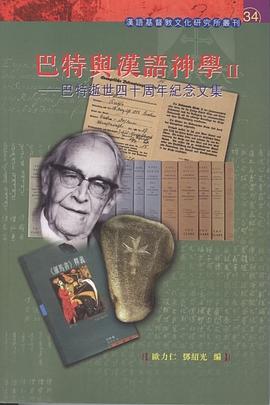

具体描述
在漢語文化的處境之中,對巴特神學有意識地吸收,要到二十世紀九十年代下半葉方才逐漸顯明出來。過去十年漢語學界先後出版了幾本專著,從不同角度討論巴特的神學,反映出十年以來漢語學界雖然沒有預先互通聲氣、共同籌劃巴特神學之研究和吸收,但卻不謀而合地朝著同一方向來發展。
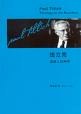
本書包含兩岸三地學者在內的文章,顯示出漢語神學界中的巴特研究早已累積了一股相當可觀的能量。除了藉本書懷念已經離世四旬的巴特,並向他致敬之外,更象徵著漢語世界裏的巴特研究又向前邁進了歷史性的一步。
二十世紀九十年代下半葉,漢語學界方才逐漸有意識地吸收巴特神學。二○○○年初版的《巴特與漢語神學——巴特神學的再思》(現重版)可說是漢語神學工作者對巴特研究的一個里程碑。乘巴特逝世四十周年,《巴特與漢語神學II——巴特逝世四十周年紀念文集》結集兩岸三地學者文章,顯示出漢語神學界中的巴特研究早已累積了一股相當可觀的能量。
作者简介
歐力仁
英國聖安德烈大學哲學博士,現任台灣私立中原大學宗教研究所副教授。著有《信仰的類比──巴特神學與詮釋學的顛覆與修正》,及《巴特宗教觀之再思》、《路德與加爾文論基督徒的公民義務與權利》等論文。
鄧紹光
英國聖安德烈大學哲學博士,現任香港浸信會神學院基督教思想(神學與文化)教授。著有《界限與倫理:潘霍華的倫理神學》、《詞語破碎處:言離道斷的神哲學反思》等。
目录信息
鄧序:走在漢語學界吸收巴特神學的路上/鄧紹光
神學絕不無聊!─一封來自巴特的信/巴特著、謝樂知譯、歐力仁校
第一部分:巴特神學總論
論巴特神學的意義/張旭
漢語神學對巴特神學的接受/賴品超 陳家富
巴特的基督中心神學/歐力仁
第二部分:歷史與文化
巴特的神學知識論淺述/劉錦昌
啟示與歷史─從《教會教義學》卷一看巴特的歷史觀/吳國安
巴特從類比與辯證中論文化的自由/趙崇明
論巴特思想中的觀念論痕跡與可能出路/林子淳
第三部分:教義學發微
三與一之間:巴特三一神學論述/林鴻信
論巴特神學人論中人與上帝的關係性/鄭順佳
巴特的神學人學/歐力仁
巴特的聖靈論/鄭順佳
巴特論主禱文/周學信
巴特的教會論及其對香港教會的提醒/李駿康
第四部分:比較研究
辯證神學的辯證品質:巴特與蒂利希/陳家富
康德式抑或海德格爾式─巴特與朋霍費爾的神學方法的差別/鄧紹光
巴特神學中的三一上帝啟示與信仰的類比:雲格爾的詮釋之神學意含/郭偉聯
內在三一與經世三一─論巴特和拖倫斯的三位一體神學/章雪富
禪宗與巴特的語言文字觀─取道德里達/鄧紹光
從天台佛學看巴特的基督論
從佛學看巴特的罪觀及人性論/賴品超
· · · · · · (收起)
读后感
评分
评分
评分
评分
用户评价
The title, 《巴特與漢語神學 II》, immediately signals a compelling intellectual project. Karl Barth, a theologian whose influence has reshaped modern theological discourse, brings a formidable body of thought to any dialogue. The addition of "Chinese Theology" opens up a rich and complex landscape of philosophical and religious traditions. I am intensely curious about how Barth’s radical emphasis on God's sovereignty, his dialectical method, and his focus on revelation can be understood and engaged with within a Chinese context, which often prioritizes immanence, harmony, and ethical cultivation. My expectation is that this book will delve deeply into the challenges and possibilities of such an encounter. It’s not merely about finding superficial correspondences, but about a rigorous examination of how Barth’s Christocentric theology might interact with concepts like "道" (dào), "仁" (rén), or the rich spiritual traditions found in Chinese history. The book, I hope, will address the fundamental differences in metaphysical assumptions and explore avenues for meaningful theological exchange. Furthermore, the "II" in the title suggests a continuation and perhaps a more advanced exploration of themes introduced in a prior volume. This leads me to anticipate a deeper dive into specific doctrines or a more nuanced engagement with the methodologies of cross-cultural theological inquiry. Could the book explore Barth's understanding of the Trinity in dialogue with Chinese cosmological principles, or his ethics in relation to Confucian social ideals? These are the kinds of complex questions that spark my intellectual curiosity. The sheer intellectual undertaking of bridging such distinct theological and philosophical traditions is immense. It requires a profound understanding of Barth's intricate system, as well as a sophisticated appreciation of the diverse currents within Chinese thought. I anticipate a work that will challenge readers to think critically and to broaden their theological horizons. I am particularly interested in how the book addresses Barth's concept of God's "otherness." In a Chinese philosophical landscape that often emphasizes the interconnectedness of all things and a certain inherent order, how is the radical transcendence of the Barthian God understood? This tension, I believe, is crucial for understanding the potential dialogue. The prospect of seeing Barth's ecclesiology, his robust understanding of the Church as the Body of Christ, interpreted through a Chinese lens is also a fascinating avenue. How might this concept resonate with or diverge from traditional Chinese notions of community, family, and social structure? The potential for this book to offer fresh perspectives on both Barth and the development of theology in Chinese-speaking contexts is significant. It could illuminate new dimensions of Barth's thought and provide valuable tools for Chinese theologians to articulate their faith in a globalized world. Moreover, the intellectual journey promised by such a book is invaluable. Engaging with Barth's complex theology demands careful study, and to see it brought into dialogue with another rich intellectual tradition suggests a work that will reward patient and thoughtful reading. In essence, 《巴特與漢語神學 II》 represents a bold and ambitious intellectual project that promises to enrich our understanding of theological discourse and foster deeper cross-cultural dialogue. I am eagerly awaiting the opportunity to engage with its insights.
评分Frankly, the very title of 《巴特與漢語神學 II》 has me hooked. It’s not just a book; it’s an invitation to a deep dive into the intricate weave of global theological discourse. Karl Barth, a name synonymous with a theological revolution in the 20th century, is a figure whose thought demands rigorous engagement. But the prospect of seeing his complex ideas – his relentless focus on God’s sovereignty, his dialectical method, his emphasis on revelation – brought into conversation with the rich tapestry of Chinese theological traditions is what truly sets my intellectual pulse racing. I'm not expecting a simplistic "East meets West" narrative. Instead, I anticipate a scholarly wrestling match, a careful unpacking of how Barth's theological edifice, so deeply rooted in the Western Christian tradition, can find resonance, or perhaps even meaningful friction, within a cultural and philosophical landscape shaped by centuries of Confucianism, Taoism, and Buddhism. What are the points of contact? Where do the fundamental assumptions diverge? These are the questions I hope this book will illuminate. Consider, for instance, Barth's radical distinction between God and humanity. How does this translate in a context where concepts of "天人合一" (tiān rén hé yī – the unity of heaven and humanity) or the inherent interconnectedness of all things are so deeply ingrained? This is not a minor detail; it strikes at the very heart of theological anthropology and cosmology. I’m eager to see how the book navigates these profound differences. Furthermore, the fact that this is "Volume II" implies a sustained and deeper engagement with these themes. It suggests that the groundwork laid in a previous volume has been built upon, perhaps exploring more nuanced aspects of Barth's theology or tackling even more intricate challenges in the cross-cultural dialogue. My imagination immediately drifts to specific theological doctrines. Could the book delve into Barth's understanding of the atonement in dialogue with Chinese concepts of karmic retribution or the pursuit of merit? Or perhaps his view of the Church as the visible manifestation of God's redemptive work in relation to traditional Chinese notions of community and social harmony? These are not easy comparisons, and the prospect of a thoughtful exploration is highly compelling. The sheer intellectual labor involved in synthesizing Barth's monumental Church Dogmatics with the vastness of Chinese thought is daunting, and therefore, deeply admirable. It speaks to a commitment to rigorous scholarship and a genuine desire to foster understanding across cultural and theological divides. I’m particularly interested in the specific theological questions that the book chooses to foreground. Is it Barth's doctrine of creation, and how it might engage with Chinese cosmology? Or perhaps his ethics, and how it could speak to contemporary Chinese society’s challenges? The focus of the inquiry will undoubtedly shape the book’s impact. The potential for this book to offer a fresh perspective on both Barth and Chinese theology is immense. It could reveal new dimensions of Barth’s thought, previously unseen through a purely Western lens. Simultaneously, it might equip Chinese theologians with new conceptual tools to articulate their faith in a globalized world. The anticipation is also about the intellectual rigor promised. Barth’s theology is demanding; it requires patience and dedication. To see this complexity engaged with another rich intellectual tradition suggests a work that will reward careful reading and contemplation. In essence, 《巴特與漢語神學 II》 represents a significant intellectual endeavor, promising to enrich our understanding of Karl Barth's enduring relevance and the dynamic development of theology in the Chinese context. I am keenly awaiting the opportunity to engage with its insights.
评分The very title, 《巴特與漢語神學 II》, immediately signals a compelling intellectual project that bridges two significant theological and philosophical worlds. Karl Barth, a theologian whose work fundamentally reshaped 20th-century Christian thought, represents a dense and complex theological system. The inclusion of "Chinese Theology" introduces a rich tapestry of philosophical and religious traditions that have their own deep roots and distinctive conceptual frameworks. My primary interest lies in understanding how Barth's radical emphasis on God's sovereignty, his dialectical method, and his profound focus on revelation might engage with, and potentially be re-contextualized within, the philosophical and spiritual landscape shaped by Confucianism, Taoism, and Buddhism. I anticipate that this book will not offer facile comparisons or simple equivalencies. Instead, I hope for a rigorous exploration of the points of convergence and divergence. How does Barth's understanding of the Word of God interact with Chinese notions of "道" (dào) or "理" (lǐ)? What are the implications of his Christology for a cultural context with its own rich traditions of sagehood and spiritual guidance? These are the profound questions I expect this book to tackle. Furthermore, the designation as "Volume II" suggests a continued and perhaps more advanced engagement with these intricate themes. This implies that the foundational work has been laid, and this installment will likely delve into more specific theological doctrines or address more complex methodological challenges in cross-cultural theological dialogue. My mind immediately turns to potential areas of focus: could the book explore Barth's doctrine of creation and its engagement with Chinese cosmological views, or his understanding of the Holy Spirit in relation to Chinese concepts of spiritual cultivation or inner transformation? The intellectual rigor required to bridge such distinct intellectual traditions is immense. It necessitates not only a deep understanding of Barth's intricate theological system but also a nuanced appreciation of the diverse philosophical and religious currents that have shaped Chinese intellectual history. I anticipate a work that will be both intellectually demanding and deeply rewarding, pushing the boundaries of our understanding. I am particularly intrigued by how the book might explore Barth's doctrine of God's radical otherness. In a cultural context that often emphasizes interconnectedness, harmony, and a certain inherent order in the cosmos, how is this fundamental Barthian assertion understood and integrated? This tension, I believe, is a crucial area for theological exploration and dialogue. The prospect of seeing Barth's understanding of the Church as the locus of God's activity in the world interpreted through a Chinese lens is also a fascinating avenue. How might this concept resonate with or diverge from traditional Chinese notions of community, social responsibility, and collective well-being? Moreover, the potential for this book to offer practical theological insights for Christian communities in Chinese-speaking contexts is significant. Barth's emphasis on justice, human dignity, and the church's prophetic role could provide valuable frameworks for addressing contemporary ethical and social challenges. In essence, 《巴特與漢語神學 II》 represents a significant intellectual endeavor that promises to enrich our understanding of global theological discourse and foster deeper cross-cultural dialogue and mutual understanding.
评分The title itself, 《巴特與漢語神學 II》, immediately signals a fascinating intersection of intellectual traditions that has long captured my imagination. Karl Barth, a towering figure in 20th-century theology, is known for his profound, often challenging, insights into the nature of God, revelation, and the Christian faith. The "Chinese Theology" aspect, however, introduces a layer of cultural and philosophical depth that promises to illuminate these concepts in entirely new ways. I'm particularly intrigued by how Barth's radical emphasis on God's transcendence and the absolute otherness of the divine might interact with Chinese philosophical traditions that often emphasize immanence, harmony, and the interconnectedness of all things. My anticipation is that this book will not shy away from the complexities of such a dialogue. It’s not simply about finding superficial parallels, but about engaging in a rigorous and nuanced exploration of how Barth’s theological framework can be understood, interpreted, and perhaps even transformed within the rich intellectual soil of Chinese thought. I envision the book grappling with questions such as: how does Barth's concept of the Word of God relate to Chinese understandings of "道" (dào) or "理" (lǐ)? What are the implications of his Christology for a cultural context that has its own rich traditions of spiritual masters and enlightened beings? Furthermore, the designation as "Volume II" suggests a sustained and deepened exploration of these themes. This implies that the initial groundwork has been laid, and this installment will likely delve into more specific doctrines or more intricate aspects of the interrelationship between Barth and Chinese theological discourse. I’m particularly eager to see if the book explores Barth’s doctrine of creation and its potential dialogue with Chinese cosmological views, or his understanding of the Holy Spirit in relation to Chinese concepts of spiritual cultivation or inner transformation. The prospect of seeing Barth’s robust theology of revelation, with its emphasis on God’s self-disclosure, engaged with Chinese traditions that have their own rich epistemological approaches, is a compelling one. How might the radical nature of Barth's "Yes" and "No" in his dialectic find resonance or present challenges within a framework that often values balance and synthesis? These are the kinds of profound theological and philosophical questions I hope to see addressed. The intellectual rigor required to navigate such a cross-cultural theological dialogue is immense. It demands not only a deep understanding of Barth's intricate thought but also a sophisticated grasp of Chinese philosophical and theological traditions. I anticipate a work that is both challenging and rewarding, pushing the boundaries of our understanding of both traditions. Moreover, the potential for this book to offer practical insights for contemporary Christian communities in Chinese-speaking contexts is significant. Barth's emphasis on the church's prophetic role and its engagement with social justice could provide valuable frameworks for navigating the complex ethical and social landscapes of today. The very act of bringing these two intellectual worlds into such close proximity is an ambitious undertaking. It speaks to a desire to foster genuine theological exchange and to contribute to the ongoing development of a global theological conversation. My excitement for 《巴特與漢語神學 II》 is rooted in the promise of intellectual discovery, the bridging of cultural divides, and the potential for a deeper, more nuanced understanding of Christian theology in its diverse expressions.
评分I'm really looking forward to diving into 《巴特與漢語神學 II》. The title itself, juxtaposing Karl Barth, a titan of 20th-century theology, with "Chinese Theology," immediately sparks my curiosity about the bridges that can be built between these seemingly disparate worlds. I’m particularly keen to see how the book tackles the inherent challenges of translating Barth's highly dialectical and Christocentric theology into a context steeped in millennia of philosophical and religious traditions like Confucianism, Taoism, and Buddhism. It's not a simple matter of finding equivalent terms; it's about engaging with fundamentally different ways of understanding reality, humanity, and the divine. What specific aspects of Barth's massive output, like his doctrine of the Word of God, his understanding of revelation, or his ecclesiology, are explored in relation to Chinese thought? I can imagine discussions around the concept of "天命" (tiānmìng) in relation to God's sovereign will, or perhaps how Barth's understanding of "grace" might intersect with concepts of "道" (dào) or "德" (dé). The book, I hope, will delve beyond superficial comparisons and engage in a deep, nuanced dialogue, revealing both the tensions and the potential for fruitful conversation. Furthermore, my excitement for 《巴特與漢語神學 II》 is fueled by the potential for a truly interdisciplinary approach. The interaction between theology and philosophy, especially when crossing cultural boundaries, often leads to profound insights. I am eager to see how the author(s) navigate the intricate philosophical underpinnings of both Barth's thought and various Chinese philosophical schools. It’s not just about theology, but about how theological ideas are shaped by and, in turn, can shape worldviews. The very nature of a "Volume II" suggests a sustained engagement with these complex questions. I anticipate that this book will not shy away from addressing the more challenging aspects of Barth’s theology, such as his strong emphasis on God's transcendence and the radical nature of divine revelation. How these concepts are understood and perhaps reinterpreted within a Chinese context, which often emphasizes immanence and the interconnectedness of all things, is a fascinating prospect. My mind races with possibilities: could the book explore Barth's Christology in light of Chinese notions of sagehood or spiritual attainment? Or perhaps his doctrine of the Trinity in relation to the Taoist concept of the "Tao" or Buddhist ideas of interdependent origination? These are not simple questions, and the prospect of a scholarly work grappling with them is incredibly appealing. The potential for shedding new light on both Barth and Chinese theological development is immense. By examining Barth through a Chinese lens, we might discover new dimensions to his thought that have been overlooked. Conversely, a dialogue with Barth could offer Chinese theology fresh perspectives and tools for engaging with contemporary global discourse. The anticipation is also about the intellectual journey the book promises. Barth's theology is not easily accessible; it requires dedicated study and careful consideration. To see this complex system brought into dialogue with another rich intellectual tradition, particularly one as distinct as Chinese thought, suggests a work of significant depth and scholarly rigor. I'm also very curious about the author's methodology. How does one approach such a monumental task? Does the book rely on direct textual comparisons, conceptual analysis, or perhaps case studies of how Barth's ideas have been received or adapted in Chinese-speaking Christian communities? The clarity and effectiveness of the methodology will be crucial to the book's success. The prospect of discovering how Barth's theology might speak to the social and ethical concerns prevalent in contemporary Chinese society is another aspect that draws me in. His emphasis on justice, human dignity, and the church's prophetic role could offer valuable insights for navigating complex contemporary challenges. In conclusion, 《巴特與漢語神學 II》 represents for me a significant intellectual undertaking that promises to enrich our understanding of both Karl Barth's enduring legacy and the burgeoning field of Chinese theology. I am eager to engage with its arguments and insights.
评分The title alone, 《巴特與漢語神學 II》, is a powerful statement, hinting at a rich intellectual confluence. Karl Barth, a theologian whose name evokes revolutionary theological thought, presents a formidable intellectual landscape. The inclusion of "Chinese Theology" immediately sparks my interest in how his profound insights might engage with distinct cultural and philosophical traditions. I am especially curious about how Barth's radical emphasis on God's sovereignty, his dialectical method, and his doctrine of revelation will find resonance, or perhaps generate new interpretations, within a context shaped by Confucianism, Taoism, and Buddhism. My anticipation is for a book that goes beyond superficial comparisons and delves into the intricate ways Barth's core theological concepts – his understanding of the Word of God, his Christology, his ecclesiology – might be interpreted and discussed in relation to Chinese philosophical and theological ideas. How does the concept of divine grace intersect with notions of natural virtue or spiritual effort? What are the implications of Barth's emphasis on God's "Yes" and "No" for a worldview that often values balance and harmony? These are the profound questions I hope this book will address. Furthermore, the designation as "Volume II" suggests a sustained and deepened engagement with these themes. This implies that the foundational work has been done, and this installment will likely tackle more complex doctrines or refine the methodologies for cross-cultural theological dialogue. I am eager to see if the book explores Barth's understanding of creation and its potential dialogue with Chinese cosmological views, or his doctrine of the Holy Spirit in relation to Chinese concepts of inner cultivation. The intellectual challenge of bridging such distinct intellectual traditions is immense. It requires not only a profound grasp of Barth's intricate theological system but also a nuanced appreciation of China's rich philosophical and religious heritage. I anticipate a work that will demand careful consideration and offer substantial intellectual rewards. I am particularly intrigued by how the book might explore Barth's doctrine of God's radical otherness. In a cultural context that often emphasizes interconnectedness and the inherent order of the cosmos, how is this fundamental Barthian assertion understood and integrated? This is a key area for exploration. The prospect of seeing Barth's understanding of the Church as the embodied reality of God's redemptive work interpreted through a Chinese lens is also fascinating. How might this concept interact with traditional Chinese notions of community and social responsibility? Moreover, the potential for this book to offer practical theological insights for Christian communities in Chinese-speaking contexts is substantial. Barth's emphasis on justice and human dignity could provide valuable frameworks for addressing contemporary ethical and social challenges. In essence, 《巴特與漢語神學 II》 represents a significant intellectual endeavor, promising to enrich our understanding of global theological discourse and foster deeper cross-cultural dialogue.
评分The very title, 《巴特與漢語神學 II》, is enough to make any intellectually curious individual lean in. Karl Barth, a name that resonates with the seismic shifts in 20th-century theology, represents a monumental intellectual edifice. To bring this edifice into conversation with "Chinese Theology" is a proposition filled with both promise and profound challenge. My immediate thought goes to the inherent differences in philosophical presuppositions and cultural frameworks. How does Barth’s God, so radically transcendent and revealed through the singular event of Jesus Christ, engage with Chinese traditions that often emphasize immanence, cosmic harmony, and ethical self-cultivation? I am anticipating a book that doesn’t shy away from these fundamental divergences. Instead, I hope for a rigorous exploration of how Barth’s key theological concepts – his doctrine of the Word of God, his understanding of reconciliation, his radical Christocentrism – might be interpreted, questioned, or even re-contextualized within the rich tapestry of Chinese thought, encompassing Confucianism, Taoism, and Buddhism. The potential for uncovering novel understandings of both Barth and Chinese theological expressions is immense. Furthermore, the inclusion of "II" suggests a continuation of an ongoing scholarly endeavor. This implies that the initial exploration has been fruitful, and this volume will likely delve deeper, perhaps into more specific areas of Barth's theology or more intricate aspects of the cross-cultural dialogue. My mind immediately jumps to potential areas of focus: could it be Barth's doctrine of creation and its engagement with Chinese cosmology, or his understanding of the Holy Spirit in relation to concepts of spiritual awakening or enlightenment? The intellectual feat of bridging such distinct traditions is considerable. It demands not only a deep mastery of Barth’s complex and systematic theology but also a nuanced understanding of the philosophical and religious currents that have shaped Chinese intellectual history. I expect a work that is both intellectually demanding and deeply rewarding, pushing the boundaries of our understanding. I am particularly intrigued by the potential for this book to illuminate how Barth’s emphasis on God's "otherness" and the radical discontinuity between the human and the divine might be understood in a context where concepts of interconnectedness and inherent order are so prevalent. This tension, I believe, is fertile ground for theological exploration. The prospect of examining Barth’s ecclesiology, his understanding of the Church as the tangible presence of God’s redemptive work in the world, through a Chinese lens is also a fascinating avenue. How might this concept interact with traditional Chinese ideas of community and social responsibility? Moreover, the potential for this book to offer practical theological insights for Christian communities in Chinese-speaking contexts is significant. Barth’s focus on justice and human dignity could provide valuable frameworks for addressing contemporary social and ethical challenges. In short, 《巴特與漢語神學 II》 represents a significant intellectual undertaking that promises to foster deeper understanding and bridge cultural divides in the realm of theological discourse.
评分The very title, 《巴特與漢語神學 II》, promises a profound intellectual exploration at the intersection of Western and Eastern theological thought. Karl Barth, a figure who redefined 20th-century theology with his rigorous and dialectical approach, brings a challenging and comprehensive theological system to the table. The addition of "Chinese Theology" opens up a vast and intricate landscape of philosophical and religious traditions that have shaped millennia of thought and practice. My immediate interest lies in how Barth's radical emphasis on God's sovereignty, his relentless focus on revelation, and his profound Christocentrism will engage with, and perhaps be transformed by, the distinct conceptual frameworks inherent in Chinese philosophical and theological traditions. I am anticipating a work that goes beyond superficial comparisons, seeking instead a deep and nuanced engagement with the core tenets of Barth's theology. How, for example, does his doctrine of the Word of God find echoes or points of divergence in Chinese concepts of "道" (dào) or "理" (lǐ)? What are the implications of his understanding of grace for a cultural context that places significant emphasis on ethical self-cultivation and the pursuit of virtue? These are the profound questions that I hope this book will illuminate. Furthermore, the designation as "Volume II" suggests a sustained and deepened inquiry into these complex themes. This implies that the initial groundwork has been laid, and this installment will likely delve into more specific theological doctrines or tackle even more intricate challenges in the methodology of cross-cultural theological dialogue. My mind immediately drifts to potential areas of focus: could the book explore Barth's doctrine of creation and its potential dialogue with Chinese cosmological views, or his understanding of the Holy Spirit in relation to Chinese concepts of spiritual awakening or inner transformation? The sheer intellectual undertaking of bridging such distinct intellectual traditions is immense. It requires not only a profound mastery of Barth's complex and systematic theology but also a sensitive and informed understanding of the diverse philosophical and religious currents that have shaped Chinese intellectual history. I anticipate a work that will demand careful consideration and offer substantial intellectual rewards. I am particularly intrigued by how the book might explore Barth's doctrine of God's radical otherness. In a cultural context that often emphasizes interconnectedness, harmony, and a certain inherent order in the cosmos, how is this fundamental Barthian assertion understood and integrated? This tension, I believe, is a crucial area for theological exploration. The prospect of seeing Barth's understanding of the Church as the locus of God's activity in the world interpreted through a Chinese lens is also a fascinating avenue. How might this concept resonate with or diverge from traditional Chinese notions of community, social responsibility, and collective well-being? Moreover, the potential for this book to offer practical theological insights for Christian communities in Chinese-speaking contexts is significant. Barth's emphasis on justice, human dignity, and the church's prophetic role could provide valuable frameworks for addressing contemporary ethical and social challenges. In essence, 《巴特與漢語神學 II》 represents a significant intellectual endeavor that promises to enrich our understanding of global theological discourse and foster deeper cross-cultural dialogue and mutual understanding.
评分The very title, 《巴特與漢語神學 II》, promises a journey into the fascinating terrain where a towering figure of Western theology meets the rich philosophical and spiritual heritage of China. Karl Barth, whose thought revolutionized Protestant theology in the 20th century, offers a profound and complex theological system. The prospect of engaging this system with "Chinese Theology" is inherently exciting, as it suggests a dialogue that could lead to novel insights and a deeper appreciation of both traditions. My immediate curiosity lies in how Barth's radical focus on God's sovereignty and revelation will be understood within a cultural context that often emphasizes immanence, harmony, and the intricate web of human relationships. I anticipate that this book will not offer simplistic comparisons, but rather a robust and nuanced engagement. It will likely explore the points of friction and the unexpected resonances as Barth's core doctrines – such as his understanding of the Word of God, his Christology, and his ecclesiology – are brought into dialogue with concepts like "天命" (tiānmìng), "道" (dào), or traditional ethical frameworks. The potential for illuminating new dimensions of both Barth's thought and Chinese theological expressions is substantial. Furthermore, the designation as "Volume II" implies a sustained and deepened exploration of these complex themes. This leads me to believe that the book will venture into more specific theological territories or address more intricate methodological challenges in cross-cultural theological dialogue. I am particularly eager to see if the book examines Barth's doctrine of the Holy Spirit and its potential interplay with Chinese concepts of spiritual cultivation or inner transformation. The intellectual rigor required to synthesize Barth's vast theological output with the multifaceted nature of Chinese thought is considerable. It demands not only a deep familiarity with Barth's often dense arguments but also a sensitive and informed understanding of China's philosophical and religious traditions. I anticipate a work that will reward careful and sustained reading. I am particularly interested in how the book addresses Barth's robust concept of God's radical otherness. In a cultural context that often emphasizes interconnectedness and a certain inherent order in the universe, how is this fundamental Barthian assertion understood and grappled with? This, I believe, is a crucial point of exploration. The prospect of seeing Barth's understanding of the Church as the locus of God's activity in the world interpreted through a Chinese lens is also a compelling area. How might this concept resonate with or diverge from traditional Chinese understandings of community and collective responsibility? Moreover, the potential for this book to offer practical theological insights for Christian communities in Chinese-speaking contexts is significant. Barth's emphasis on social justice and human dignity could provide valuable frameworks for addressing contemporary ethical challenges. In essence, 《巴特與漢語神學 II》 represents a significant intellectual undertaking that promises to enrich our understanding of global theological discourse and foster deeper cross-cultural understanding.
评分这本书的名字《巴特與漢語神學 II》本身就充满了引人入胜的潜力。作为一个长期以来对神学研究,特别是跨文化神学探讨充满好奇的读者,我一直很期待能有这样一部作品填补一些已有的空白。巴特,这位二十世纪伟大的新教神学家,他的思想体系之宏大、影响之深远,毋庸置疑,但如何将他如此复杂的思想与汉语神学这一特定语境相结合,却是一个充满挑战也极具价值的研究课题。我预设,《巴特與漢語神學 II》这本书,很可能是在前作的基础上,进一步深入挖掘巴特神学中的哪些面向,能够与汉语文化中固有的哲学、伦理、宗教观念产生共鸣,甚至引发对话。 这不仅仅是简单的概念移植,而是需要深厚的跨文化理解和神学洞察力。汉语文化,其根源可追溯至儒家、道家、佛教等多个思想传统,这些传统在理解“神”、“道”、“道义”、“德”等概念时,往往与西方神学中的“上帝”、“启示”、“恩典”等存在着显著的差异,但也并非完全无法沟通。我猜想,这本书会在诸如“上帝的临在与中国人的‘天命’观”、“基督的‘道成肉身’与中国人的‘圣凡一体’情结”、“救赎论在东西方语境下的张力与融合”等议题上进行深入探讨。 Furthermore, my anticipation for 《巴特與漢語神學 II》 stems from the inherent complexity and layered nature of Barth's theology. His dialectical theology, with its emphasis on the radical transcendence of God and the centrality of revelation, presents a formidable intellectual landscape. How this intricate theological framework interacts with the nuances of Chinese thought, which often prioritizes immanence, harmony, and ethical cultivation, is a question that ignites my academic curiosity. I envision the book exploring the potential points of convergence and divergence, seeking not to homogenize but to illuminate the unique contributions each tradition can offer. The prospect of examining Barth's Christology, for instance, through the lens of Chinese philosophical concepts like "仁" (rén) or "道" (dào) is particularly exciting. Would the concept of God's self-giving in Christ find any resonance in a cultural context that highly values selfless action and the pursuit of moral perfection? Or, in the realm of ecclesiology, how might Barth's robust understanding of the Church as the Body of Christ be discussed in relation to traditional Chinese notions of community, family, and social order? These are the kinds of profound questions I expect 《巴特與漢語神學 II》 to grapple with, offering a fresh perspective on both Barth and Chinese theological discourse. Moreover, the very act of naming the book as "II" suggests a continuation and deeper exploration of themes introduced in a prior volume. This implies a building upon established foundations, perhaps delving into more specific areas of Barth's thought or addressing more intricate challenges in the dialogue between Barth and Chinese theological traditions. My mind immediately drifts to potential areas of focus. Could it be Barth's doctrines of creation and reconciliation, and how they might speak to Chinese cosmological understandings and the contemporary search for ecological balance and social justice? The implications of Barth's emphasis on the "otherness" of God and the radical discontinuity between God and humanity are also a fascinating avenue to consider. In a Chinese cultural milieu that often emphasizes interconnectedness and a certain inherent goodness in creation, how would this radical theological assertion be understood and received? Would it necessitate a re-evaluation of certain traditional Chinese perspectives, or could it lead to a novel synthesis that enriches both theological traditions? The potential for exploring Barth's understanding of the Holy Spirit and its role in human transformation within the context of Chinese spiritual traditions is another area that piques my interest. Does the Spirit's work resonate with concepts of spiritual cultivation, enlightenment, or the pursuit of virtue found in East Asian philosophies? I anticipate a nuanced exploration of these intersections, avoiding superficial comparisons and instead engaging in a rigorous theological and philosophical analysis. The practical implications of Barth's theology, particularly his social ethics and his understanding of the church's role in society, are also of great interest. How might these insights inform contemporary Chinese Christian communities in their engagement with pressing social and ethical issues? The book could potentially bridge the gap between abstract theological discourse and tangible, lived faith within a distinct cultural context. The sheer intellectual rigor required to synthesize Barth's complex thought with the multifaceted nature of Chinese theological discourse is something I deeply admire and anticipate encountering in the pages of 《巴特與漢語神學 II》. It suggests a commitment to deep scholarship and a genuine desire to foster meaningful cross-cultural theological exchange. Ultimately, my anticipation for 《巴特與漢語神學 II》 is rooted in the belief that it will offer a significant contribution to the ongoing conversation between Western and Eastern theological traditions. It promises to be a challenging, insightful, and potentially transformative read for anyone interested in the future of global theology.
评分巴特逝世四十周年紀念文集,其中有位年青人寫了一篇很好的文章哦!另外要力讚出版的政治勇氣,願意隻字不改的登出這篇政治不政確的論文!
评分巴特逝世四十周年紀念文集,其中有位年青人寫了一篇很好的文章哦!另外要力讚出版的政治勇氣,願意隻字不改的登出這篇政治不政確的論文!
评分巴特逝世四十周年紀念文集,其中有位年青人寫了一篇很好的文章哦!另外要力讚出版的政治勇氣,願意隻字不改的登出這篇政治不政確的論文!
评分巴特逝世四十周年紀念文集,其中有位年青人寫了一篇很好的文章哦!另外要力讚出版的政治勇氣,願意隻字不改的登出這篇政治不政確的論文!
评分巴特逝世四十周年紀念文集,其中有位年青人寫了一篇很好的文章哦!另外要力讚出版的政治勇氣,願意隻字不改的登出這篇政治不政確的論文!
相关图书











本站所有内容均为互联网搜索引擎提供的公开搜索信息,本站不存储任何数据与内容,任何内容与数据均与本站无关,如有需要请联系相关搜索引擎包括但不限于百度,google,bing,sogou 等
© 2026 onlinetoolsland.com All Rights Reserved. 本本书屋 版权所有