
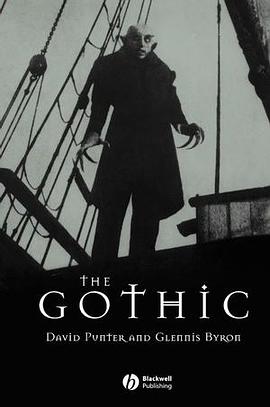

具体描述
This guide provides an overview of the most significant issues and debates in Gothic studies.
Provides an overview of the most significant issues and debates in Gothic studies.
Explains the origins and development of the term Gothic.
Explores the evolution of the Gothic in both literary and non-literary forms, including art, architecture and film.
Features authoritative readings of key works, ranging from Horace Walpole’s The Castle of Otranto to Bret Easton Ellis’s American Psycho.
Considers recurrent concerns of the Gothic such as persecution and paranoia, key motifs such as the haunted castle, and figures such as the vampire and the monster.
Includes a chronology of key Gothic texts, including fiction and film from the 1760s to the present day, and a comprehensive bibliography.
"The overall result is wonderfully informative and suggestive for the beginning student, while offering some striking additional insights spread across the book for advanced students of Gothic who have yet to consider such contexts for it as postcolonialism, 'goth' subcultures and 'Hallucination and the Narcotic'." Gothic Studies
作者简介
David Punter is Professor of English at the University of Bristol. He has previously taught at the Chinese University of Hong Kong and at Fudan University in Shanghai, among other institutions. His recent publications include Postcolonial Imaginings (2000), Writing the Passions (2000), Gothic Pathologies (1998), and The Literature of Terror (2 vols., 1996). He has also published four volumes of poetry.Glennis Byron is Reader in English Studies at the University of Stirling. She has also taught at the University of Alberta in Canada. Her previous publications include Dramatic Monologue (2003), Letitia Landon: The Woman Behind L.E.L (1995), and Elizabeth Barrett Browning and the Poetry of Love (1989).
How to Use This Book.
Chronology.
Introduction.
Backgrounds and Contexts.
Civilisation and the Goths.
Gothic in the Eighteenth Century.
Gothic and Romantic.
Science, Industry and the Gothic.
Victorian Gothic.
Art and Architecture.
Gothic and Decadence.
Imperial Gothic.
Gothic Postmodernism.
Postcolonial Gothic.
Goths and Gothic Subcultures.
Gothic Film.
Gothic and the Graphic Novel.
Writers of Gothic.
William Harrison Ainsworth (1805-82).
Jane Austen (1775-1817).
J. G. Ballard (1930-).
Iain Banks (1954-).
John Banville (1945-).
Clive Barker (1952-).
William Beckford (1760-1844).
E. F. Benson (1867-1940).
Ambrose Bierce (1842-1914).
Algernon Blackwood (1869-1951).
Robert Bloch (1917-1994).
Elizabeth Bowen (1899-1973).
Mary Elizabeth Braddon (1835-1915).
Charlotte Brontë (1816-1855) and Emily Brontë (1818-1848).
Charles Brockden Brown (1771-1810).
Edward George Bulwer-Lytton (1803-1873).
James Branch Cabell (1879-1958).
Ramsey Campbell (1946-).
Angela Carter (1940-1992).
Robert W. Chambers (1865-1933).
Wilkie Collins (1824-1889).
Marie Corelli (1855-1924).
Charlotte Dacre (1771/1772?-1825).
Walter de la Mare (1873-1956).
August Derleth (1909-1971).
Charles Dickens (1812-1870).
'Isak Dinesen' (1885-1962).
Arthur Conan Doyle (1859-1930).
Lord Dunsany (1878-1957).
Bret Easton Ellis (1964-).
William Faulkner (1897-1962).
Elizabeth Gaskell (1810-1865).
William Gibson (1948-).
William Godwin (1756-1836).
H. Rider Haggard (1856-1925).
Nathaniel Hawthorne (1804-1864).
James Herbert (1943-).
William Hope Hodgson (1877-1918).
E. T. A. Hoffmann (1776-1822).
James Hogg (1770-1835).
Washington Irving (1783-1859).
G. P. R. James (1799-1860).
Henry James (1843-1916).
M. R. James (1862-1936).
Stephen King (1947-).
Rudyard Kipling (1865-1936).
Francis Lathom (1777-1832).
J. Sheridan Le Fanu (1814-1873).
Sophia Lee (1750-1824).
Vernon Lee (1856-1935).
M. G. Lewis (1775-1818).
David Lindsay (1878-1945).
H. P. Lovecraft (1890-1937).
George MacDonald (1824-1905).
Arthur Machen (1863-1947).
James Macpherson (1736-1796).
Richard Matheson (1926-).
Charles Robert Maturin (1780-1824).
Herman Melville (1819-1891).
Joyce Carol Oates (1938-).
Margaret Oliphant (1828-1897).
Mervyn Peake (1911-1968).
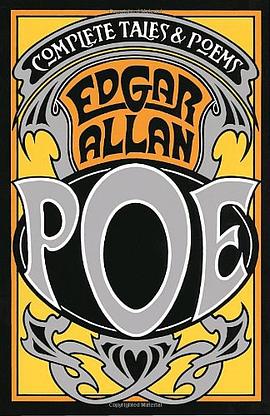
Edgar Allan Poe (1809-1849).
John Polidori (1795-1821).
Radcliffe, Ann (1764-1823).
Reeve, Clara (1729-1807).
G. W. M. Reynolds (1814-1879).
Anne Rice (1941-).
Walter Scott (1771-1832).
Mary Wollstonecraft Shelley (1797-1851).
Charlotte Smith (1740-1806).
Robert Louis Stevenson (1850-1894).
Bram Stoker (1847-1912).
Horace Walpole (1717-1797).
H. G. Wells (1866-1946).
Edith Wharton (1862-1937).
Oscar Wilde (1854-1900).
Key Works.
Horace Walpole, The Castle of Otranto (1764).
William Beckford, Vathek (1786).
Ann Radcliffe, The Mysteries of Udolpho (1794).
William Godwin, Caleb Williams (1794).
M. G. Lewis, The Monk (1796).
Mary Shelley, Frankenstein (1818, revised 1831).
C. R. Maturin, Melmoth the Wanderer (1820).
James Hogg, The Private Memoirs and Confessions of a Justified Sinner (1824).
Emily Brontë, Wuthering Heights (1847).
Wilkie Collins, The Woman in White (1860).
Sheridan Le Fanu, Uncle Silas (1864).
Robert Louis Stevenson, The Strange Case of Dr Jekyll and Mr Hyde (1886).
Bram Stoker, Dracula (1897).
Henry James, The Turn of the Screw (1898).
Robert Bloch, Psycho (1959).
Anne Rice, Interview with the Vampire (1976).
Stephen King, The Shining (1977).
Bret Easton Ellis, American Psycho (1991).
Themes and Topics.
The Haunted Castle.
The Monster.
The Vampire.
Persecution and Paranoia.
Female Gothic.
The Uncanny.
The History of Abuse.
Hallucination and the Narcotic.
Guide to Further Reading.
Index
目录信息
读后感
用户评价
说实话,我一开始被这本书的封面和名字吸引,以为会是那种老套的吸血鬼或者幽灵故事,结果完全出乎我的意料。作者的笔触非常细腻,简直像是在用油画笔描绘人物的内心世界。这本书的厉害之处在于,它没有把“哥特”仅仅停留在建筑风格上,而是将其内化为一种深入骨髓的、关于衰败与宿命的哲学探讨。情节推进得非常缓慢,但绝不拖沓,每一个转折点都像精心计算过的钟摆,在最恰当的时刻敲响,带来巨大的情感冲击。我特别喜欢他对环境心理学的运用,比如那个常年笼罩在雾气中的小镇,它不仅仅是一个背景,它本身就是一个有生命的、压抑的实体,直接影响着居民的每一个决定。而且,这本书对女性角色的刻画极其深刻,她们的坚韧、脆弱以及在父权社会中的挣扎,被描绘得立体而真实,而不是扁平化的受害者形象。对于那些追求文学深度和复杂人物关系的读者来说,这无疑是一场盛宴,但如果你期望看到直白的动作场面或快速解谜,你可能会觉得有些沉闷,因为它更注重“感受”而不是“事件”。
评分读完这本书,我整个人都像是经历了一场漫长而压抑的梦境,那种从心底泛起的寒意,跟外面冬天的冷风完全是两码事。这本书的叙事结构非常巧妙,它采用了多重视角的碎片化叙事,让你像一个拼图匠人,必须自己去拼凑出事件的全貌,而作者给出的每一块拼图都可能带有误导性。这一点非常高明,因为它极大地增强了读者的代入感和探索欲。我特别欣赏作者在语言上的考究,那些长句、那些复古的词汇,读起来有一种仪式感,仿佛真的穿越回了那个时代。然而,这种华丽的语言有时也成了双刃剑,初读时需要集中精力去消化,但一旦适应了作者的节奏,你会发现其间蕴含的强大张力。书中对于“身份认同”和“被禁锢的自由”这两个主题的探讨非常深刻,它让我们思考,究竟是外部的环境塑造了我们,还是我们内心的阴影驱使我们走向特定的命运。总体而言,这是一部需要反复阅读、细细咀嚼的精品。
评分我必须承认,这本书的阅读体验是相当“沉重”的。它并非那种可以轻松放在沙滩上消遣的读物,它要求你全身心地投入到那种阴冷、充满霉味的氛围中去。作者对气氛的营造达到了出神入化的地步,你甚至能闻到旧书页和潮湿石头的气味。最让我感到震撼的是,它成功地将古典的爱情悲剧元素,与后现代主义对宏大叙事的解构巧妙地结合在了一起。它不直接告诉你“发生了什么”,而是让你去感受“为什么会发生”,并将所有的解答权交还给了读者。这种开放式的结局和多重解读的可能性,使得这本书拥有了极高的耐读性。每一次重读,我都会发现自己之前因为太过关注情节而忽略掉的那些关于社会阶级、性别压迫的隐晦评论。它以一种看似缓慢而优雅的姿态,解剖了人性的幽暗角落和历史遗留下的伤痕。这是一部真正有“重量”的作品,值得被认真对待和反复琢磨。
评分这本小说着实让人耳目一新,作者构建了一个庞大而错综复杂的哥特式世界,那种阴郁、腐朽,却又带着一种病态美学的氛围拿捏得恰到好处。我尤其欣赏他对细节的描摹,无论是那些被常春藤缠绕的古老庄园,还是在微弱烛光下闪烁的贵族眼眸,都栩栩如生地呈现在眼前。故事的主线围绕着一个看似平静的家族秘密展开,但随着情节的层层深入,你会发现每个角色背后都隐藏着不为人知的黑暗动机和扭曲的欲望。那种让人毛骨悚然的悬念感,不是靠突兀的惊吓堆砌而成,而是源自于角色之间微妙的心理博弈和对命运的无力抗争。阅读过程中,我时不时会停下来,去回味那些充满象征意义的场景和对话,它们如同迷宫中的线索,引导着我不断探索隐藏在华丽辞藻之下的真相。这本书成功地将古典的文学韵味与现代心理惊悚的节奏感融合,读完之后,那种挥之不去的阴影感久久不能散去,让人不禁思考,在那些光鲜亮丽的外表下,人性究竟能堕落到何种地步。它需要的不仅仅是快速翻阅,更需要静心品味,才能真正体会到其深邃的内涵。
评分这本书给我的感觉,更像是一部结构精巧的室内剧,而非宏大的史诗。它将所有的冲突和高潮都压缩在了有限的空间——那几栋摇摇欲坠的宅邸之中。作者的功力在于,他能够用极少的外部事件,营造出极度的心理紧张感。比如,两位主要角色之间仅仅是眼神的交汇,或者一次不经意的碰触,其下的暗流汹涌足以让人屏住呼吸。我喜欢它对“理智与疯狂的边界”的模糊处理,你永远无法确定哪个角色是完全清醒的,哪个是被某种无形的力量牵引着走向深渊。书中没有明显的英雄或恶棍,每个人都有其存在的合理性,尽管他们的行为令人不齿。这本书的节奏控制得近乎完美,像是一台老旧的发条钟,滴答声越来越快,直到最后“咔嚓”一声,所有的张力瞬间释放,留下的只有无尽的唏嘘。对于热衷于深入剖析人物动机和心理侧写的读者来说,这本书简直是量身定做,它挑战了你对传统叙事套路的认知。
评分 评分 评分 评分 评分相关图书


本站所有内容均为互联网搜索引擎提供的公开搜索信息,本站不存储任何数据与内容,任何内容与数据均与本站无关,如有需要请联系相关搜索引擎包括但不限于百度,google,bing,sogou 等
© 2026 onlinetoolsland.com All Rights Reserved. 本本书屋 版权所有