
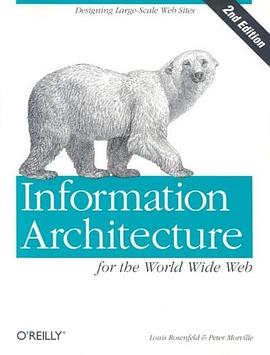
Information Architecture for the World Wide Web pdf epub mobi txt 電子書 下載 在線閱讀 2026
- Web
- IA
- 設計
- design
- UI
- Architecture
- 網頁
- World
- 信息架構
- 網頁設計
- 用戶體驗
- 可用性
- 交互設計
- 信息管理
- 網站規劃
- 內容策略
- 設計原則
- Web設計

具體描述
Today's web sites have moved far beyond "brochureware." They are larger and more complex, have great strategic value to their sponsors, and their users are busier and less forgiving. Designers, information architects, and web site managers are required to juggle vast amounts of information, frequent changes, new technologies, and sometimes even multiple objectives, making some web sites look like a fast-growing but poorly planned city-roads everywhere, but impossible to navigate. Well-planned information architecture has never been as essential as it is now. Information Architecture for the World Wide Web, 2nd Edition, shows you how to blend aesthetics and mechanics for distinctive, cohesive web sites that work. Most books on web development concentrate on either the graphics or the technical issues of a site. This book focuses on the framework that holds the two together. This edition contains more than 75% new material. You'll find updated chapters on organization, labeling, navigation, and searching; and a new chapter on thesauri, controlled vocabularies and metadata will help you understand the interconnectedness of these systems. The authors have expanded the methodology chapters to include a more interdisciplinary collection of tools and techniques. They've also complemented the top-down strategies of the first edition with bottom-up approaches that enable distributed, emergent solutions. A whole new section addresses the opportunities and challenges of practicing information architecture, while another section discusses how that work impacts and is influenced by the broader organizational context. New case studies provide models for creating enterprise intranet portals and online communities. Finally, you'll find pointers to a wealth of essential information architecture resources, many of which did not exist a few years ago. By applying the principles outlined in this completely updated classic, you'll build web sites and intranets that are easier to navigate and appealing to your users, as well as scalable and simple to maintain. Information Architecture for the World Wide Web, 2nd Edition is a treasure trove of ideas and practical advice for anyone involved in building or maintaining a large, complex web site or intranet.
作者簡介
Louis Rosenfeld是獨立信息架構顧問,也是Rosenfeld Media的創始人和齣版商。他與其他人共同成立瞭信息架構協會、uxnet,並舉辦瞭AsIs&T信息架構係列高峰會。他最近的客戶包括Accenture、Caterpillar、Ford、Microsoft,以及NCAA。他的博客地址是www.louisrosenfed.com。
目錄資訊
讀後感
序言裏就提一個井卦,唉,跟外國人比起來也傳統文化功底不足。。。慚愧慚愧。。。 一看以為是水在石上,不對,下麵不是艮,再想再猜,風在水下,搜索一下,井卦。 井。改邑不改井,無喪無得。往來井井。汔至亦未繘井,羸其瓶,凶。 象曰:木上有水,井。君子以勞民勸相 這個卦...
評分不知道是作者寫的太深奧,還是翻譯的原因,書中文字讀起來比較晦澀。書中理論研究部分較多,很多部分讀起來比較空洞,讀讀可以,但對實踐沒有太多製導意義,對於從事互聯網人士,還是自己勤加思考,實踐中總結經驗比較好。草草的瀏覽瞭此書,沒有讀完,可能是自己水平還相差太...
評分我覺的本書隻說明瞭一個現象(結果),但卻很少分析彆人是怎麼係統使用這個現象的(過程)。 比如,這本書他的核心之一就是說瞭一個現象,就是人們找東西受到橫嚮入口數量和縱嚮層級數量的影響。打個比方,如果要把100個東西分類,分類成幾個櫃子,每個櫃子分幾個抽屜來裝這些...
評分唉,跟外國人比起來也傳統文化功底不足。。。慚愧慚愧。。。 一看以為是水在石上,不對,下麵不是艮,再想再猜,風在水下,搜索一下,井卦。 井。改邑不改井,無喪無得。往來井井。汔至亦未繘井,羸其瓶,凶。 象曰:木上有水,井。君子以勞民勸相 這個卦辭的英譯居然這麼有味...
評分我覺的本書隻說明瞭一個現象(結果),但卻很少分析彆人是怎麼係統使用這個現象的(過程)。 比如,這本書他的核心之一就是說瞭一個現象,就是人們找東西受到橫嚮入口數量和縱嚮層級數量的影響。打個比方,如果要把100個東西分類,分類成幾個櫃子,每個櫃子分幾個抽屜來裝這些...
用戶評價
構架在很多學科裏都有,整理有序也是一門很精深的學問。前麵的內容還算能理解,後麵的內容基本上無法消化,狼吞虎咽的過瞭一遍,希望以後有機會能在反復讀一下。
评分越寫越爛啊!最後跳著看的
评分越寫越爛啊!最後跳著看的
评分how to organise the information, web design 背後其實很多理論
评分構架在很多學科裏都有,整理有序也是一門很精深的學問。前麵的內容還算能理解,後麵的內容基本上無法消化,狼吞虎咽的過瞭一遍,希望以後有機會能在反復讀一下。
相關圖書














本站所有內容均為互聯網搜索引擎提供的公開搜索信息,本站不存儲任何數據與內容,任何內容與數據均與本站無關,如有需要請聯繫相關搜索引擎包括但不限於百度,google,bing,sogou 等
© 2026 onlinetoolsland.com All Rights Reserved. 本本书屋 版权所有