

具体描述
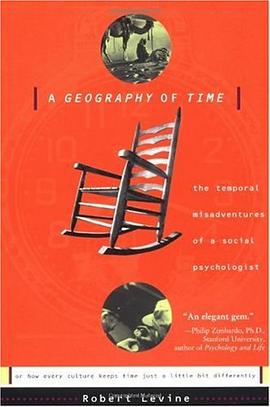
In this engaging and spirited book, eminent social psychologist Robert Levine asks us to explore a dimension of our experience that we take for grantedour perception of time. When we travel to a different country, or even a different city in the United States, we assume that a certain amount of cultural adjustment will be required, whether it’s getting used to new food or negotiating a foreign language, adapting to a different standard of living or another currency. In fact, what contributes most to our sense of disorientation is having to adapt to another culture’s sense of time.Levine, who has devoted his career to studying time and the pace of life, takes us on an enchanting tour of time through the ages and around the world. As he recounts his unique experiences with humor and deep insight, we travel with him to Brazil, where to be three hours late is perfectly acceptable, and to Japan, where he finds a sense of the long-term that is unheard of in the West. We visit communities in the United States and find that population size affects the pace of lifeand even the pace of walking. We travel back in time to ancient Greece to examine early clocks and sundials, then move forward through the centuries to the beginnings of ”clock time” during the Industrial Revolution. We learn that there are places in the world today where people still live according to ”nature time,” the rhythm of the sun and the seasons, and ”event time,” the structuring of time around happenings(when you want to make a late appointment in Burundi, you say, ”I’ll see you when the cows come in”).Levine raises some fascinating questions. How do we use our time? Are we being ruled by the clock? What is this doing to our cities? To our relationships? To our own bodies and psyches? Are there decisions we have made without conscious choice? Alternative tempos we might prefer? Perhaps, Levine argues, our goal should be to try to live in a ”multitemporal” society, one in which we learn to move back and forth among nature time, event time, and clock time. In other words, each of us must chart our own geography of time. If we can do that, we will have achieved temporal prosperity.
作者简介
目录信息
读后感
本书借自校图书馆。 时间地图,将时间和空间放在一起思考,全球化的视角,将时间与文化、与社会、与个人放在一起比较,注定这本书的不凡。 作者Levine从自己全球旅行的一个契机引入,以不同国家和民族的人们对待时间的态度为兴趣开展研究,从而开拓出时间心理学这一分支,此...
评分【時間地圖】 作者:勒范恩 譯者:馮克芸 黃芳田 陳玲瓏 出版社:台灣商務 蔡:談村上春樹的書使我有個希望,想要多鼓勵大家了解一下世界上不同的對於時間的態度,生活在台灣的人當然會一直在沿用台灣的人,對於時間的觀念...比方說要求你出席一個會議要準時,如果電...
评分Time is a common sense to us who get used to it very much. Time is very easy to track by watch/bell/phone and so on. Nevertheless, time is not easy to measure and apply into the life of human being years ago. Time has a culture difference based on the geogr...
评分Time is a common sense to us who get used to it very much. Time is very easy to track by watch/bell/phone and so on. Nevertheless, time is not easy to measure and apply into the life of human being years ago. Time has a culture difference based on the geogr...
评分Time is a common sense to us who get used to it very much. Time is very easy to track by watch/bell/phone and so on. Nevertheless, time is not easy to measure and apply into the life of human being years ago. Time has a culture difference based on the geogr...
用户评价
这本书的语言风格着实引人入胜,作者对叙事的掌控力令人惊叹。那种娓娓道来的感觉,仿佛一位经验丰富的说书人坐在你面前,为你徐徐展开一幅关于人类对时间感知和历史演变的宏大画卷。行文之间,没有那种刻意的学术腔调,反而是充满了对细节的敏锐捕捉和对普遍性体验的深刻洞察。我尤其欣赏它在处理那些跨越不同文明和地理区域的概念时所展现出的细腻笔触。它不是简单地罗列事实,而是巧妙地将时间这一抽象概念,通过具体的地域故事和人物命运编织起来,形成了一种既有深度又极具画面感的阅读体验。每次翻开它,都感觉像是在进行一次跨越时空的对话,那些原本僵硬的历史时间线,在作者的笔下变得柔软、富有生命力,让人不禁思考自己身处的时间洪流中的位置。这种叙事上的成熟度,是许多同类题材作品难以企及的。
评分我个人认为,这本书最成功之处在于它对“地方感”的重塑。我们通常认为时间是普世的,但作者有力地证明了,时间感是高度地方化的产物,深深烙印在每一寸土地的物质形态和文化记忆之中。通过对不同地域在面对气候变化、殖民历史、或技术革新时的反应的对比分析,这本书揭示了权力如何在时间维度上进行分配和控制。它不仅仅是在描述“过去在哪里”,更是在探讨“我们如何被允许去拥有过去”。这种对时间-空间关系的政治经济学批判,使这本书的价值超越了单纯的知识传递,而上升到了一种对我们生活世界的深刻反思层面。读完之后,我对地图和时间表的态度都变得更加审慎和批判了。
评分读完此书,我最大的感受是它彻底颠覆了我对“地方”与“时间”之间关系的固有认知。过去总觉得,地理环境是相对固定的背景,而时间是均匀流淌的主线。然而,这本书却巧妙地拆解了这种二元对立,展示了不同文化群体如何根据其生存环境、社会结构乃至宗教信仰,主动地、甚至是对抗性地“塑造”或“压缩”时间感。比如,书中对某些边缘社群如何发展出非线性的时间观念的描绘,简直是教科书级别的洞察力展现。它没有满足于提供一个宏观的、俯瞰一切的视角,而是扎根于具体的田野观察和历史文本,挖掘出那些潜藏在日常生活肌理中的时间差异。这种将宏大理论与微观经验紧密结合的写作方式,使得全书的论证力量非常扎实,读起来酣畅淋漓,充满了智力上的满足感。
评分从纯粹的文本结构来看,这本书的组织逻辑相当精妙,它并非按照传统的编年史顺序推进,而是采用了一种主题式、螺旋上升的结构。每一章都像是一个切片,从一个特定的地理概念(也许是河流、山脉、或者边界的迁移)出发,延展出其背后隐藏的时间维度和权力关系。这种多层次的解读框架,要求读者保持高度的专注力,但回报也是巨大的。它迫使你不断地在空间感和时间感之间进行灵活的转换和校准。我特别喜欢作者在引入新概念时那种循序渐进的处理方式,就像是在为你铺设一条蜿蜒曲折的小径,引领你逐步深入到理论的核心地带,而不是简单地将结论砸在你面前。这使得阅读过程更像是一场主动的探索,而非被动的接受。
评分这本书在学术深度和可读性之间找到了一个近乎完美的平衡点。对于那些对人类学、历史地理学或哲学稍有涉猎的读者来说,它无疑提供了丰富的思想养料,那些关于“永恒之城”与“瞬时性”的思辨非常到位。但更难能可贵的是,即便是对相关领域不甚熟悉的普通读者,也能从中获得极大的启发。作者似乎有一种天赋,能用清晰、富有画面感的语言,将复杂的地缘政治演变和深奥的时间哲学阐释得深入浅出。它成功地超越了专业壁垒,变成了一本真正意义上的“公共知识读物”。我能想象许多人会因为这本书开始留意自己所在城市规划的深层历史逻辑,或者重新审视日历和钟表对我们生活的隐性控制。
评分Time is a common sense to us who get used to it very much. Time is very easy to track by watch/bell/phone and so on. Nevertheless, time is not easy to measure and apply into the life of human being years ago. Time has a culture difference based on the geography.
评分Time is a common sense to us who get used to it very much. Time is very easy to track by watch/bell/phone and so on. Nevertheless, time is not easy to measure and apply into the life of human being years ago. Time has a culture difference based on the geography.
评分Time is a common sense to us who get used to it very much. Time is very easy to track by watch/bell/phone and so on. Nevertheless, time is not easy to measure and apply into the life of human being years ago. Time has a culture difference based on the geography.
评分Time is a common sense to us who get used to it very much. Time is very easy to track by watch/bell/phone and so on. Nevertheless, time is not easy to measure and apply into the life of human being years ago. Time has a culture difference based on the geography.
评分Time is a common sense to us who get used to it very much. Time is very easy to track by watch/bell/phone and so on. Nevertheless, time is not easy to measure and apply into the life of human being years ago. Time has a culture difference based on the geography.
相关图书













本站所有内容均为互联网搜索引擎提供的公开搜索信息,本站不存储任何数据与内容,任何内容与数据均与本站无关,如有需要请联系相关搜索引擎包括但不限于百度,google,bing,sogou 等
© 2026 onlinetoolsland.com All Rights Reserved. 本本书屋 版权所有