

具体描述
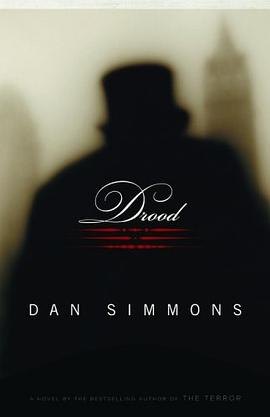
Drood by Dan Simmons
(2009-02-16)
Submit Your Own Review
3 comments / Submit comment
February 2009
Little, Brown and Company
ISBN 978-0316007023
784 Pages
http://www.dansimmons.com
Already an acknowledged master at his craft (Hugo Award, Bram Stoker Award, British Fantasy Award, World Fantasy Award), Dan Simmons may have written his most accomplished novel in Drood. The novel gives readers what could be a bird eye view on Charles Dickens during the last five years of his life following the writer near fatal rail crash. While the novel does center on those years, it is through the eyes of Dickens Wilkie Collins, a successful novelist in his own right and prot嶲?and friend to Dickens and in Collins mind rival.
At the outset, Collins seems a rather affable, if slightly proud individual. Considering the critical and financial success he attained, Collins is probably allowed some leeway in feeling good about what he does. As the novel progresses, Collins becomes a more self-important, pretentious, arrogant, spiteful, and bitter individual. This only made the novel all the more addictive and difficult to put down, much like the laudanum Collins consumes in greater quantities as the story progresses.
But, what of Dickens? Well, the story truly becomes more about Collins than Dickens and much of the power Dickens holds over Collins. Collins both loves Dickens and seeks his approval, but comes to despise and wish death upon the great writer. In many ways, I was reminded of how Gollum/Smeagol felt about the One Ring and himself. Dickens is inescapable throughout the novel. His presence is felt even in his absence, as Collins cannot stop thinking about him. Throughout the novel, Dickens comes across as a larger-than-life character, with an affable, confident nature that is like a sun in a galaxy, ever drawing people to him to share in his power. Many times in the novel, Collins refers to Dickens by one of his nicknames, the Inimitable, for that is truly the feel Simmons evokes for Dickens. There is and can only be one Dickens and what he is in the novel is the epitome of Cult of Personality ?he works the media, he works the crowd, and is able to convince the engender the general populace to side with him in a divorce he initiated because of his passion for another woman.
But what of Drood? Even more so than Dickens, his absence for a majority of the narrative is a looming thing. With only Collins as our source of information, just who or what Drood is comes into question for a majority of the novel. Early on it becomes relatively clear that Wilkie Collins is one of a long line of Unreliable Narrators. Dickens tells Collins he came across the person of Drood amidst the wreckage of the infamous Staplehurst Rail crash of 1865 in which 10 people died and 40 were injured. Drood, through Collins relay of Dickens account, comes across as almost a Grim-Reaper figure, but is much more than that. His presence haunts Collins narrative as a sometimes figure of evil, retribution, injustice, death, and the unknown.
Many of the flaws in Collins character, in a "who he is" sense rather than "a person in a story" sense, are what help to make him such an engaging narrator. It bears repeating what an arrogant man he comes across as because it isn a major element at the outset of the novel. This progression and inflation of his ego is paralleled with the increasing amounts of laudanum Collins ingests to offset his rheumatic gout, a form of arthritis. Collins speaks of a ghostly doppelg鄚ger who has visited him for most of his life. Clearly, Collins is not only unreliable as a narrator, but can considered unstable in general.
The feel of the novel is rich and exquisitely evokes Victorian London. Since I can really travel back in time to check on Simmon veracity in his ability to evoke the time and place, I can only go with my gut and it tells me Simmons hit the mark in this respect. In that sense, the novel haunted feel is only strengthened by the time and place ?an era of gaslights, trains and a world at the cusp of vast technological change. The London of Drood, especially the London nights, is very much hidden in shadows with smoke ound the corner and hints of danger and otherworldy Underworlds.
Both Collins and Dickens take mythic journeys in this novel, most notably to the Underworld of London. A vast cavern of tunnels underneath the great city where day laborers live in abject poverty and opium dens are visited by men of society, including Collins. It is a dangerous place, a place where vagrants live, where "lost boys" roam the catacombs, and where the dark figure of Drood and his two steersmen usher Dickens on a gondola to the deepest recesses of Underworld. The mythic parallels to Charon, and more explicitly, the Egyptian god of the dead, Anubis are evocative and resonant in their power. Here again, Collins role as Unreliable Narrator comes into play, if not during these scenes as much as they do later upon reflection of the events.
While Drood himself is said to have Egyptian heritage, and the catacombs of the Underworld of London are marked with Egyptian hieroglyphics, I couldn help but feel a bit of a Lovecraft flavor as well. The Lovecraftian elements are not blatant, but the talk of ancient gods to whom Drood is loyal bears some parallels to much of the Lovecraftian/Cthulhu mythos. This is probably more from Lovecraft drawing inspiration from Egyptian mythology than anything else.
In many ways, Drood is also a novel for bibliophiles and (obviously) lovers of Victorian literature and culture. Throughout the novel, many allusions are made to past works of Dickens, the inspiration for characters in his novels as well as the characters, plots and genesis of much of Collins fiction. Drood has encouraged me to dip my toes into both Dickens fiction and Collins fiction
So in the end, what is Drood about? Many things ?the power of creativity, imagination, the haunting specter of death, jealousy, addiction, the written word, story, delusion, artistry, and many more things. What Dan Simmons has done in Drood is nothing short of breathtaking and captivating, in evoking such a genuine feel for these people and the world in which they inhabit, but by also creating a narrator/character who is both something of a prick, but also a vastly compelling storyteller. I can recommend this staggering and immersive novel highly enough.
?2009 Rob H. Bedford
作者简介
Biography
Simmons received a B.A. in English from Wabash College in 1970, and, in 1971, a Masters in Education from Washington University in St. Louis, Missouri. He subsequently worked in elementary education until 1989. He soon started to write short stories, although his career did not take off until 1982, when, through Harlan Ellison's help, his short story "The River Styx Runs Upstream" was published and awarded first prize in a Twilight Zone Magazine story competition. His first novel, Song of Kali, was released in 1985.
Summer of Night (1991) recounts the childhood of a group of pre-teens who band together in the 1960s to defeat a centuries-old evil that terrorizes their hometown, Elm Haven, Illinois. This novel, which was praised by Stephen King, is similar to King's It, in its focus on small town life, the corruption of innocence, the return of an ancient evil, and the responsibility for others that emerges with the transition from youth to adulthood. In the sequel to Summer of Night, A Winter Haunting, the protagonist, now an adult, revisits his boyhood town to come to grips with mysteries that have disrupted his adult life. Another pseudo-sequel is Children of the Night which features a much older Mike O'Rourke, now a Roman Catholic priest, who is sent on a mission to investigate bizarre events in an European city. Another Summer of Night character, Dale's younger brother, Lawrence Stewart, appears as a minor character in Simmons' thriller Darwin's Blade while the adult Cordie Cooke appears in Fires of Eden. Soon after Summer of Night, Simmons, who had written mostly horror fiction, began to focus on writing science fiction.
Cover for an omnibus edition of the Hyperion Cantos, Simmons's most famous work.Science fiction
Simmons became famous in 1989 for Hyperion, winner of Hugo and Locus Awards for the best science fiction novel. This novel deals with a space war, and is inspired in its structure by Boccaccio's Decameron and Chaucer's Canterbury Tales. From the beginning, Simmons was noted as skilled in developing plots and as one of the best science-fiction authors in the quality of his prosody; his plots too are enriched by his familiarity with the classics: many of his works have similarly strong ties with classic literature:
Carrion Comfort derives its title and many of its themes from Gerard Manley Hopkins' poem
"Vanni Fucci Is Alive and Well and Living In Hell", a 1988 short story lampooning televangelists included in Prayers to Broken Stones, is about a brief return to earth by the title character, an inhabitant of Dante's Inferno
The basic structure of Hyperion is taken from the medieval poem The Canterbury Tales. A varied group of individuals are on a pilgrimage to solicit a kind of demon-god called "the Shrike" on the planet "Hyperion" in a universe on the edge of the apocalypse. Each pilgrim tells his or her tale of why they are going to see the Shrike. The Fall of Hyperion is the conclusion to the story of the pilgrims rather than a stand-alone sequel. Hyperion and Fall of Hyperion are essentially one work in two volumes.
The Hollow Man (1992) is influenced by Dante's Inferno and T. S. Eliot
A short story from 1993, "The Great Lover", is inspired by the World War I War Poets.
In The Fall of Hyperion, John Keats appears as one of the main characters.
His Ilium/Olympos cycle is inspired by Homer's works. Both Shakespeare and Proust are mentioned as well.
The character of Ada and her home Ardis Hall in the Ilium cycle are inspired by Vladimir Nabokov's novel Ada or Ardor, which was Nabokov's foray into the science fiction genre and alternate history.
Movie adaptation
In January 2004, it was announced that the screenplay he wrote for his novels Ilium and Olympos would be made into a film by Digital Domain and Barnet Bain Films, with Simmons acting as executive producer. Ilium is described as an "epic tale that spans 5,000 years and sweeps across the entire solar system, including themes and characters from Homer's The Iliad and Shakespeare's The Tempest." In July 2004, Ilium received a Locus Award for best science fiction novel of 2003.
Works
Hyperion Cantos
Hyperion (1989) - Hugo Award 1990, Locus Award 1990 (Science Fiction)
The Fall of Hyperion (1990)
Endymion (1996)
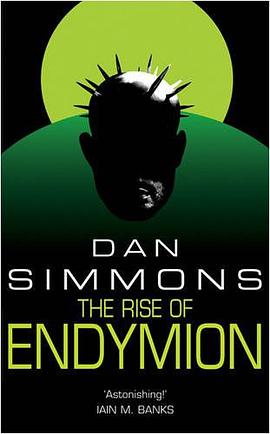
The Rise of Endymion (1997)
Ilium/Olympos
Ilium (2003) - Locus Award 2004
Olympos (2005)
Joe Kurtz
Hardcase (2001)
Hard Freeze (2002)
Hard as Nails (2003)
Other books
Song of Kali (1985) - World Fantasy Award 1986
Carrion Comfort (1989) - Bram Stoker Award 1989
Phases of Gravity (1989)
Entropy's Bed at Midnight (1990)
Prayers to Broken Stones (1990, short story collection)
Summer of Night (1991)
Summer Sketches (1992, short story collection}
Children of the Night (1992) - Locus Award 1993 (Horror)
Lovedeath (1993, short story collection)
The Hollow Man (1992)
Fires of Eden (1994)
The Crook Factory (1999)
Darwin's Blade (2000)
A Winter Haunting (2002)
Worlds Enough & Time (2002, short story collection)
The Terror (2007)
Drood (forthcoming)
目录信息
读后感
丹•西蒙斯的作品一如既往地铺垫着大量庞杂繁复的描写,由于改编自历史事件,关于狄更斯的每个真实细节都被丝丝入扣进字里行间,在一定程度上还原出当时年代的真实面貌,形成一条透明又流畅的时间线串起整个故事,历史的真实与虚构的魔幻最终交融为一体。 书中对人物与情感的...
评分 评分专文推荐 侦探书屋探长/谭端(台) (本文为《谋杀狄更斯》繁体中文版导读。商周出版,2015/10) 在推理小说界很少人不把爱伦坡当成侦探小说的鼻祖。但要说连作家本身的经历都成为“传奇”,狄更斯的经历已令所有悬疑故事作家无法企及。推理天后阿加莎·克里斯蒂曾神秘失踪;...
评分 评分丹•西蒙斯的作品一如既往地铺垫着大量庞杂繁复的描写,由于改编自历史事件,关于狄更斯的每个真实细节都被丝丝入扣进字里行间,在一定程度上还原出当时年代的真实面貌,形成一条透明又流畅的时间线串起整个故事,历史的真实与虚构的魔幻最终交融为一体。 书中对人物与情感的...
用户评价
这部作品的结构犹如一个极其精密的钟表机械,所有的零件——无论是闪回的片段、旁白中的插叙,还是突然插入的无关紧要的细节——最终都精准地咬合在一起,共同驱动着最终的结局。这种对叙事结构的近乎强迫症般的控制力,令人叹为观止。我喜欢作者在叙事声音上的不断变换,从第一人称的亲密絮语,到冷峻的第三人称全知视角,再到一些近乎诗歌体裁的内心独白,每一次转换都巧妙地服务于当时的情感氛围或信息传递的需要。这种声音的“变奏”极大地丰富了阅读的层次感。尽管整体基调偏向阴郁和内省,但作者巧妙地在某些转折点设置了极其明亮、近乎瞬间的希望之光,这些光亮的存在,使得长久的黑暗更具冲击力。阅读过程中,我不断地在“理解”和“感受”之间徘徊,它既满足了智力上的探索欲,也触动了情感深处的共鸣点,是一次非常完整且令人满足的文学体验。
评分初次接触这部小说时,我感到有些不知所措,它的语言风格极其华丽且充满古典韵味,大量运用了晦涩的典故和复杂的句式,初读之下,像是被卷入了一场由古老词汇编织而成的华丽风暴。然而,一旦适应了这种独特的语境,那种扑面而来的文学厚重感便让人欲罢不能。它更像是一件精心打磨的艺术品,而非简单的故事载体。作者似乎对语言的每一个音节都抱持着近乎偏执的尊重,每一个词的选择都精确且富有韵律感,读起来有一种独特的音乐性。情节的推进显得次要,真正引人入胜的是作者如何用文字去解构和重塑现实的感知。我花了很长时间去揣摩某些段落的真正含义,每一次重读都会带来新的感悟,这要求读者投入极大的耐心和专注力。它成功地营造了一种疏离而又极具美感的世界观,挑战了我们对传统叙事逻辑的固有期待。这是一部需要“品味”而非“速读”的经典之作,它所蕴含的文学价值是毋庸置疑的。
评分坦白说,一开始我有点抗拒这种过于“概念化”的写作方式。这部小说的核心似乎更侧重于探讨某种宏大、抽象的哲学命题,而非仅仅讲述一个引人入胜的故事线。它仿佛在用叙事的外衣,包裹着一整套复杂的思想体系,关于时间、存在或记忆的本质。这种处理方式使得情节的连贯性在某些时刻显得松散,需要读者不断地在具体的场景与抽象的思考之间来回切换。然而,正是这种挑战性,使得这部作品拥有了不同于一般小说的持久生命力。它迫使读者走出舒适区,去直面那些通常被我们下意识回避的深刻问题。书中的象征手法运用得极为大胆且富有创新性,常常一个简单的物品或场景,就被赋予了多重甚至相互矛盾的意义,构建了一个多维度的解读空间。看完之后,我需要花很长时间来“消化”它,那种感觉就像刚从一次漫长而艰苦的智力徒步中归来,虽然疲惫,但收获颇丰。
评分这部作品的叙事手法简直令人拍案叫绝,它以一种近乎意识流的方式,将读者带入一个光怪陆离的内心世界。作者对人物心理的刻画入木三分,那些潜藏在日常言行之下的暗流涌动,被描绘得淋漓尽致,让人在阅读过程中不断反思自身的局限与偏见。故事的节奏时而舒缓,仿佛一场漫长的梦境,时而又骤然紧张,像心跳漏了一拍,这种张弛有度的掌控力,使得即便是看似平淡的章节,也充满了令人窒息的张力。我特别欣赏作者对于环境细节的捕捉,那些细微的光影变化、空气中弥漫的气味,甚至是墙壁上苔藓的纹理,都成为了烘托氛围、推动情节发展的无声角色。阅读体验是高度沉浸式的,仿佛我不是在阅读文字,而是在亲身经历着主人公的每一次抉择与挣扎。这本书的结构非常精巧,像一座复杂的迷宫,每一条线索都可能导向不同的理解,需要读者反复咀嚼,才能品味出其中深藏的哲思。总而言之,这是一次对人性复杂性和叙事可能性的深度探索,绝非一部可以轻松翻阅的消遣之作。
评分这本书带给我的感觉非常奇特,它在营造一种强烈的“局外人”视角方面做得非常出色。我总感觉自己像一个站在玻璃墙外观察的幽灵,看着书中的世界井然有序地运转,却无法真正触及核心。这种距离感并非是负面的疏离,而是一种清醒的审视,它迫使我从一个冷静的观察者角度去剖析事件的动机和后果。角色之间的互动充满了试探与隐藏,没有人是完全透明的,每个人都像戴着多层面具的表演者,每一次对话都暗藏着心照不宣的潜台词。这种微妙的权力平衡和信息不对称,让整个故事的张力始终保持在高位。我尤其欣赏作者对环境的描绘,那种略带荒凉和颓废的美学,与人物的内心状态形成了完美的共振,构建了一个既真实又略显魔幻的舞台。对于那些喜欢在字里行间寻找蛛丝马迹、热衷于深度解读人物动机的读者来说,这本书无疑是一座宝藏,每一次深入挖掘都会有新的发现。
评分Dan Simmons 目前比较差的作品。其中许多情节和叙述,在後来的 Black Hill 中呈现得比较好。
评分Dan Simmons 目前比较差的作品。其中许多情节和叙述,在後来的 Black Hill 中呈现得比较好。
评分Dan Simmons 目前比较差的作品。其中许多情节和叙述,在後来的 Black Hill 中呈现得比较好。
评分Dan Simmons 目前比较差的作品。其中许多情节和叙述,在後来的 Black Hill 中呈现得比较好。
评分Dan Simmons 目前比较差的作品。其中许多情节和叙述,在後来的 Black Hill 中呈现得比较好。
相关图书












本站所有内容均为互联网搜索引擎提供的公开搜索信息,本站不存储任何数据与内容,任何内容与数据均与本站无关,如有需要请联系相关搜索引擎包括但不限于百度,google,bing,sogou 等
© 2026 onlinetoolsland.com All Rights Reserved. 本本书屋 版权所有